Evolution of a novel chimeric maltotriose transporter in Saccharomyces eubayanus from parent proteins unable to perform this function
- PMID: 30946740
- PMCID: PMC6448821
- DOI: 10.1371/journal.pgen.1007786
Evolution of a novel chimeric maltotriose transporter in Saccharomyces eubayanus from parent proteins unable to perform this function
Abstract
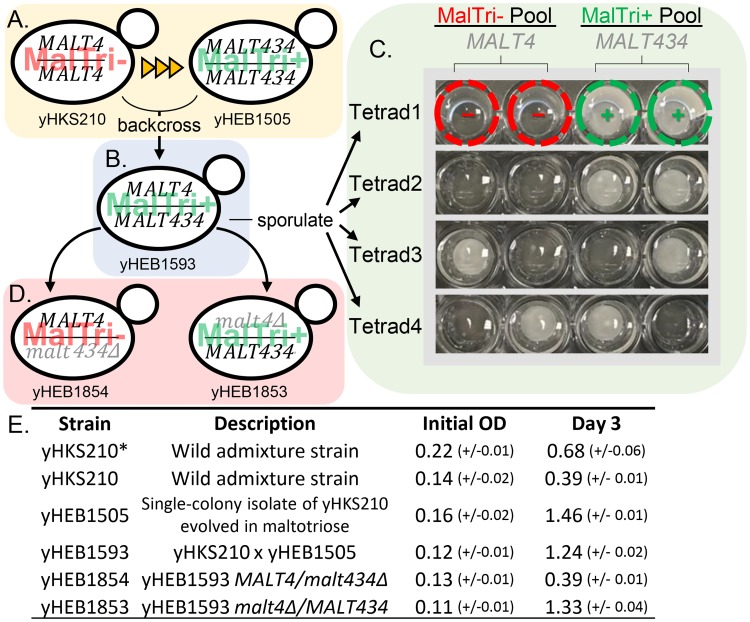
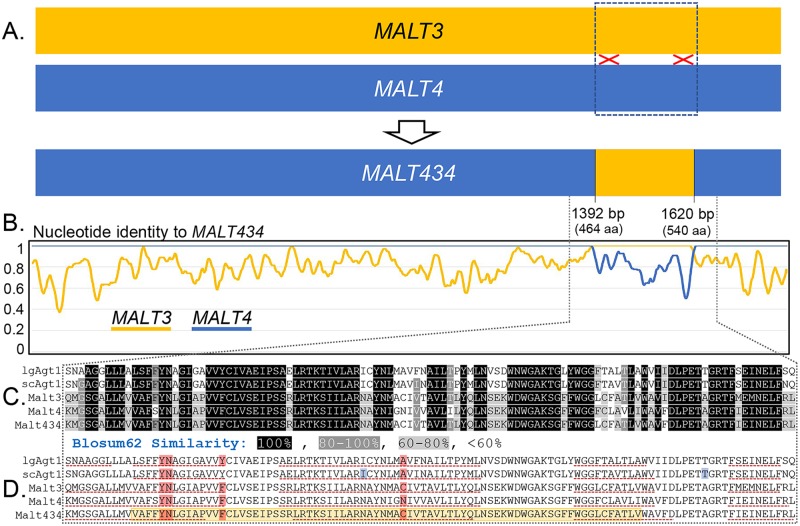
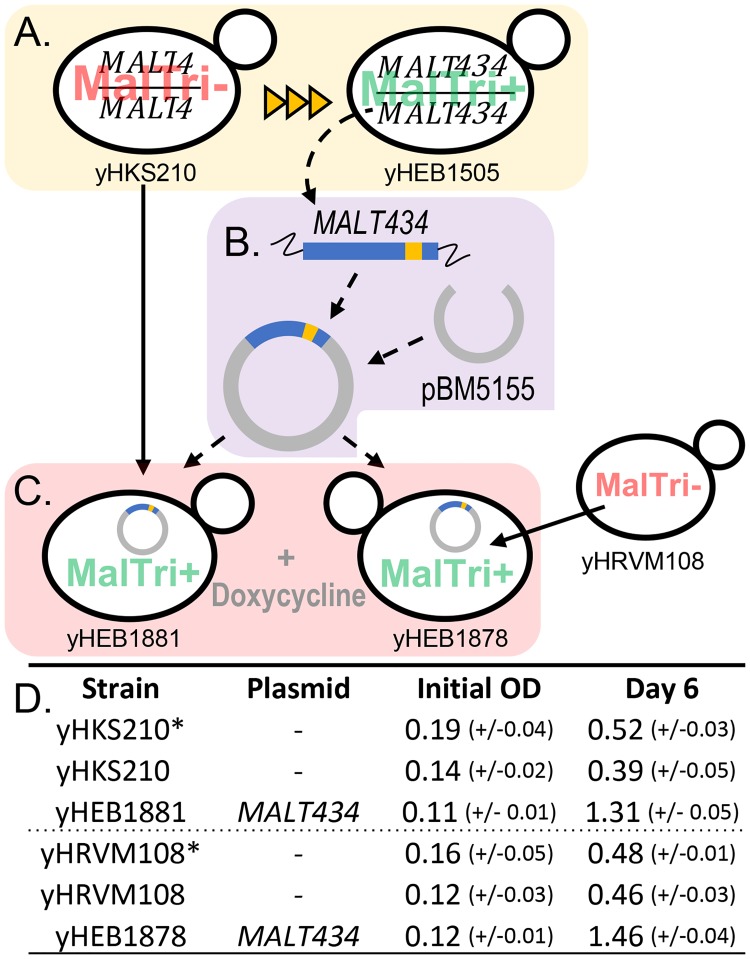
At the molecular level, the evolution of new traits can be broadly divided between changes in gene expression and changes in protein-coding sequence. For proteins, the evolution of novel functions is generally thought to proceed through sequential point mutations or recombination of whole functional units. In Saccharomyces, the uptake of the sugar maltotriose into the cell is the primary limiting factor in its utilization, but maltotriose transporters are relatively rare, except in brewing strains. No known wild strains of Saccharomyces eubayanus, the cold-tolerant parent of hybrid lager-brewing yeasts (Saccharomyces cerevisiae x S. eubayanus), are able to consume maltotriose, which limits their ability to fully ferment malt extract. In one strain of S. eubayanus, we found a gene closely related to a known maltotriose transporter and were able to confer maltotriose consumption by overexpressing this gene or by passaging the strain on maltose. Even so, most wild strains of S. eubayanus lack native maltotriose transporters. To determine how this rare trait could evolve in naive genetic backgrounds, we performed an adaptive evolution experiment for maltotriose consumption, which yielded a single strain of S. eubayanus able to grow on maltotriose. We mapped the causative locus to a gene encoding a novel chimeric transporter that was formed by an ectopic recombination event between two genes encoding transporters that are unable to import maltotriose. In contrast to classic models of the evolution of novel protein functions, the recombination breakpoints occurred within a single functional domain. Thus, the ability of the new protein to carry maltotriose was likely acquired through epistatic interactions between independently evolved substitutions. By acquiring multiple mutations at once, the transporter rapidly gained a novel function, while bypassing potentially deleterious intermediate steps. This study provides an illuminating example of how recombination between paralogs can establish novel interactions among substitutions to create adaptive functions.
Conflict of interest statement
I have read the journal’s policy and the authors of this manuscript have the following competing interests: EB and CTH, together with the Wisconsin Alumni Research Foundation, have filed a provisional patent application entitled, "POLYPEPTIDE AND YEAST CELL COMPOSITIONS AND METHODS OF USING THE SAME." All strains and constructs are freely available for non-commercial research.
Figures
References
-
- Ohno S. Evolution by Gene Duplication. Berlin, Heidelberg: Springer Berlin Heidelberg; 1970.
Publication types
MeSH terms
Substances
LinkOut - more resources
Full Text Sources
Other Literature Sources
Molecular Biology Databases