


Traditional Salads and Soups with Wild Plants as a Source of Antioxidants: A Comparative Chemical Analysis of Five Species Growing in Central Italy
- PMID: 30949221
- PMCID: PMC6425424
- DOI: 10.1155/2019/6782472
Traditional Salads and Soups with Wild Plants as a Source of Antioxidants: A Comparative Chemical Analysis of Five Species Growing in Central Italy
Abstract
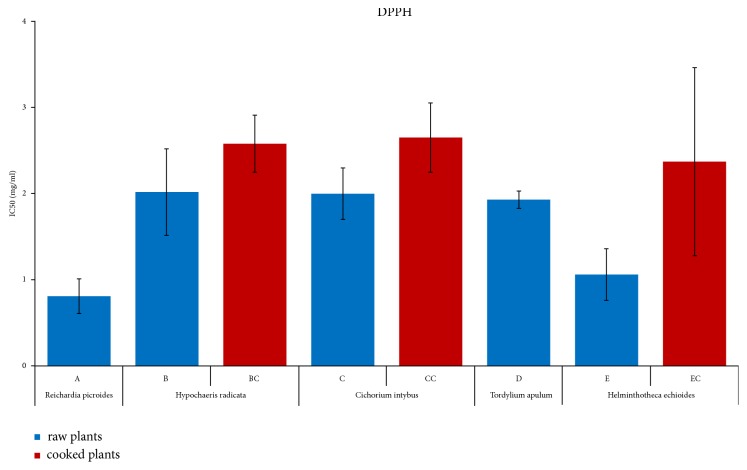
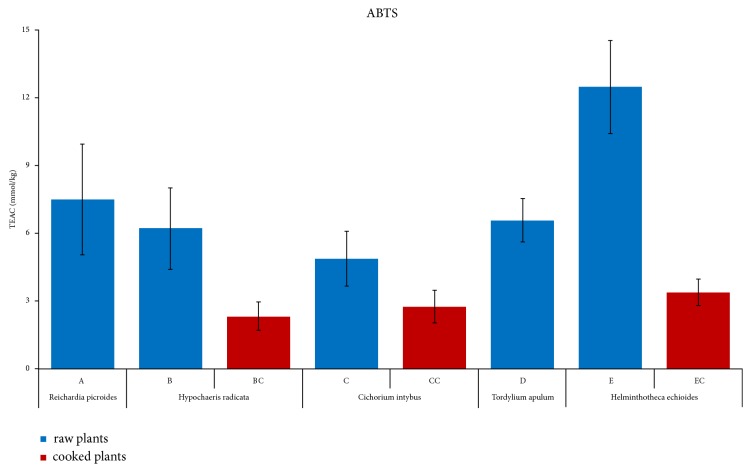
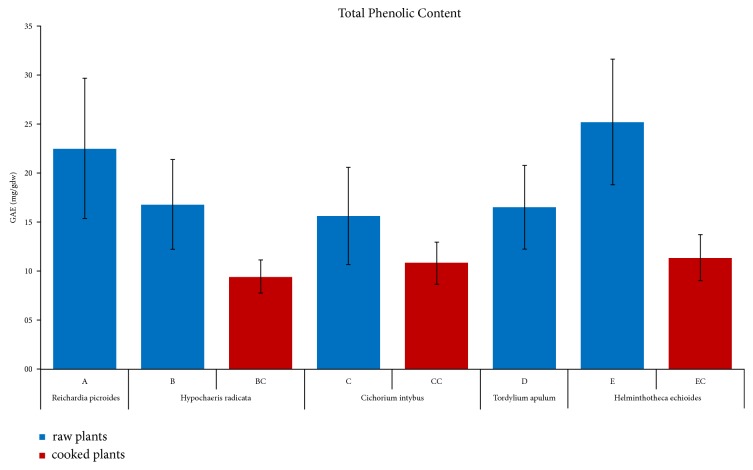
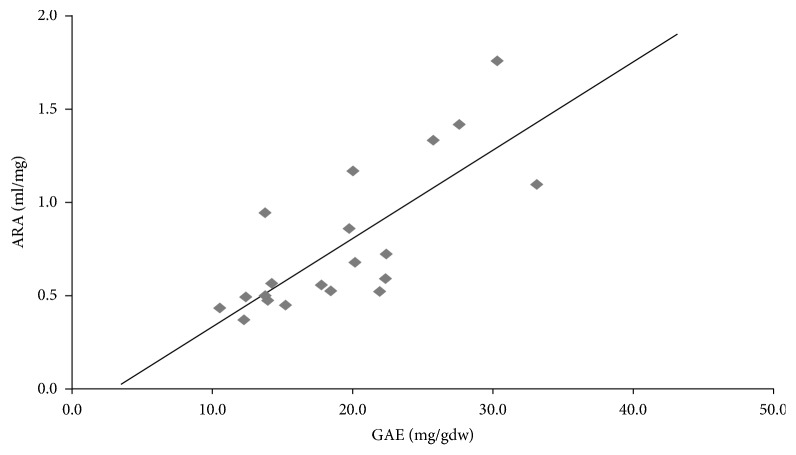
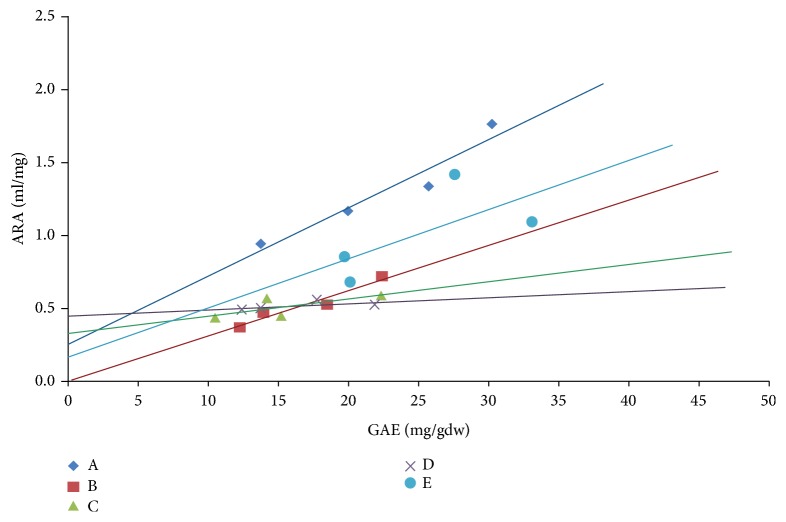
The interest and demand for nutraceuticals are rapidly increasing in many industrialized countries due to the emergence of health risks associated with the increased consumption of processed foods. Several wild Mediterranean plants used as traditional foods are an extraordinary source of nutraceutical substances with antioxidant properties. This study has two main aims: (1) to quantify the antioxidant properties of traditional wild food plants and (2) to determine if their use in soups (i.e., the cooking process) can alter their beneficial properties. We have evaluated the antioxidant capacity (ABTS, DPPH) and the Total Phenolic Content (Folin-Ciocalteu) of five herbaceous plants traditionally consumed in several areas of Central Italy: (A) Reichardia picroides (L.) Roth, (B) Hypochaeris radicata L., (C) Cichorium intybus L., (D) Tordylium apulum L., and (E) Helminthotheca echioides (L.) Holub. Our analyses show good levels of antioxidant capacity for all plants, with Reichardia picroides and Helminthotheca echioides having the highest levels. There is a high correlation between the antioxidant activity and the Total Phenolic Content especially in Reichardia picroides (R2=0.92) and Hypochaeris radicata (R2=0.93). Boiling the species caused a general decrease in the antioxidant activity and polyphenols. Our study confirms the health benefits of consuming wild plants, especially raw ones in salads. It also supports the use of ethnobotanical information to study and then promote the consumption of wild food plants.
Figures
References
-
- The local Food-Nutraceuticals Consortium. Understanding local Mediterranean diets: a multidisciplinary pharmacological and ethnobotanical approach. Pharmacological Research. 2005;52:353–366. - PubMed
-
- Heinrich M., Müller W. E., Galli C. Local Mediterranean Food plants. Basel, Switzerland: Karger; 2006.
-
- Martins D., Barros L., Carvalho A. M., Ferreira I. C. F. R. Nutritional and in vitro antioxidant properties of edible wild greens in Iberian Peninsula traditional diet. Food Chemistry. 2011;125(2):488–494. doi: 10.1016/j.foodchem.2010.09.038. - DOI
-
- Morales P., Carvalho A. M., Sánchez-Mata M. C., Cámara M., Molina M., Ferreira I. C. F. R. Tocopherol composition and antioxidant activity of Spanish wild vegetables. Genetic Resources and Crop Evolution. 2012;59(5):851–863. doi: 10.1007/s10722-011-9726-1. - DOI
LinkOut - more resources
Full Text Sources
