. 2019 Apr 5;15(4):e1008009.
doi: 10.1371/journal.pgen.1008009. eCollection 2019 Apr.

Reverse GWAS: Using genetics to identify and model phenotypic subtypes

Affiliations

Reverse GWAS: Using genetics to identify and model phenotypic subtypes

Andy Dahl et al. PLoS Genet. .

Abstract

Recent and classical work has revealed biologically and medically significant subtypes in complex diseases and traits. However, relevant subtypes are often unknown, unmeasured, or actively debated, making automated statistical approaches to subtype definition valuable. We propose reverse GWAS (RGWAS) to identify and validate subtypes using genetics and multiple traits: while GWAS seeks the genetic basis of a given trait, RGWAS seeks to define trait subtypes with distinct genetic bases. Unlike existing approaches relying on off-the-shelf clustering methods, RGWAS uses a novel decomposition, MFMR, to model covariates, binary traits, and population structure. We use extensive simulations to show that modelling these features can be crucial for power and calibration. We validate RGWAS in practice by recovering a recently discovered stress subtype in major depression. We then show the utility of RGWAS by identifying three novel subtypes of metabolic traits. We biologically validate these metabolic subtypes with SNP-level tests and a novel polygenic test: the former recover known metabolic GxE SNPs; the latter suggests subtypes may explain substantial missing heritability. Crucially, statins, which are widely prescribed and theorized to increase diabetes risk, have opposing effects on blood glucose across metabolic subtypes, suggesting the subtypes have potential translational value.


Conflict of interest statement

The authors have declared that no competing interests exist.

Figures
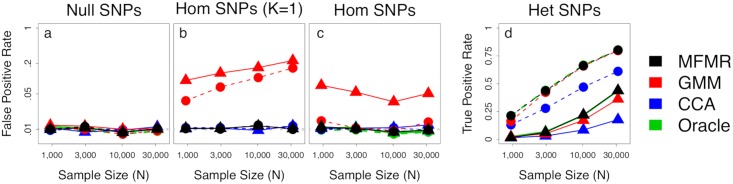
Fig 1
Fig 1. SNP heterogeneity tests at nominal p = .01.
SNPs are either null (a); homogeneous (Hom, c); or truly heterogeneous (Het, d); we also test Hom SNPs in simulations with no subtypes (b). FPR is shown on the log scale. Hom SNPs explain 4% of variance and Het SNPs explain .4% (triangles) or vice versa (circles).
Fig 2
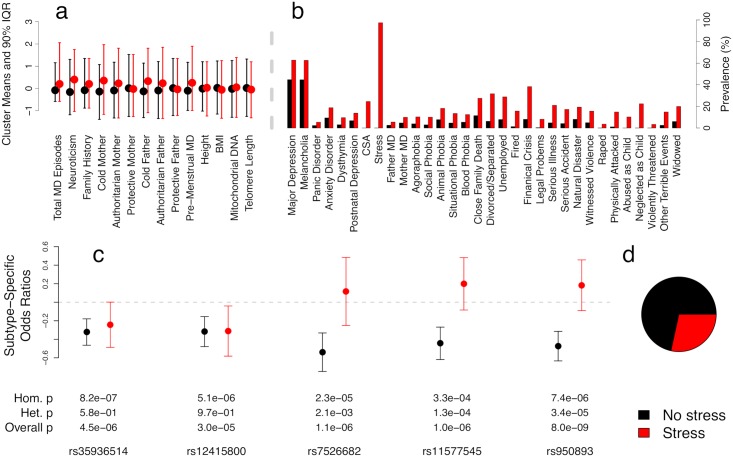
Fig 2. Genetic heterogeneity in the CONVERGE major depression dataset.
Quantitative trait 90% inter-quantile ranges (a) and binary trait prevalences (b) are shown for each subtype. (c) Per-subtype odds ratios (±2 s.e.) for two SNPs discovered by (homogeneous) GWAS [43] (left) and three SNPs discovered using known subtypes [44] (right).
Fig 3
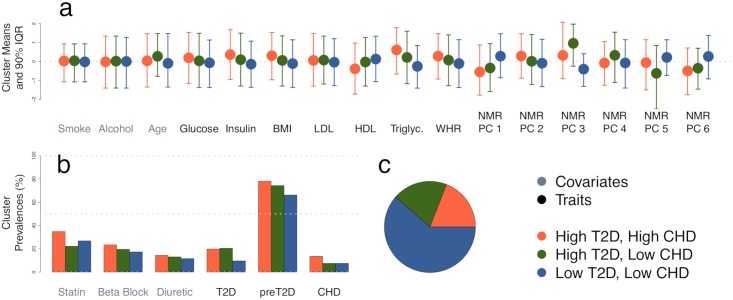
Fig 3. Three inferred metabolic subtypes in METSIM.
(a) Quantitative and (b) binary distributions for covariates (grey labels, left) and traits (black labels, right). (c) Subtype sizes.
Fig 4
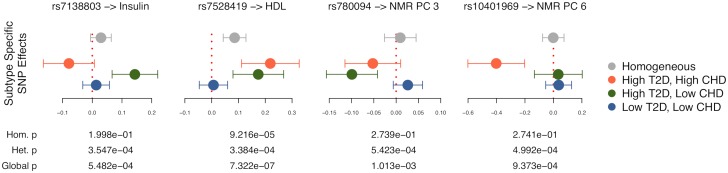
Fig 4. Metabolic subtype-specific SNP effects across the 16 traits used for subtyping.
Subtype-specific effect estimates are shown ± 2 s.e. for significantly heterogeneous SNPs out of 81 known metabolic SNPs (p = .05/81).
Fig 5
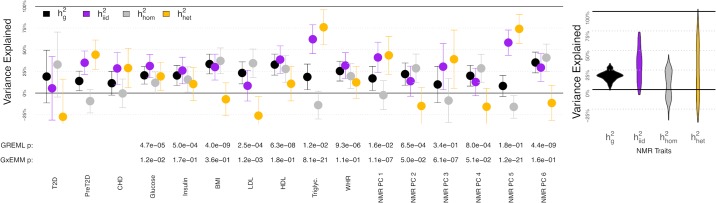
Fig 5. Polygenic heterogeneity in the inferred metabolic subtypes.
Left: Point estimates ± 2 s.e. for traits used in MFMR clustering. Right: Across-trait estimate distribution for all 228 raw NMR traits. hg2 is the standard heritability estimate from GREML [54]. hhom2 and hhet2 are the homogeneoues and subtype-specific heritability estimates from IID GxEMM, and hiid2 is the sum of hhom2 and hhet2.

References

    1. Iqbal J, Ginsburg O, Rochon PA, Sun P, Narod SA. Differences in breast cancer stage at diagnosis and cancer-specific survival by race and ethnicity in the United States. JAMA. 2015;313(2):165–173. 10.1001/jama.2014.17322 - DOI - PubMed
    1. Milne RL, Kuchenbaecker KB, Michailidou K, Beesley J, Kar S, Lindström S, et al. Identification of ten variants associated with risk of estrogen-receptor-negative breast cancer. Nature Genetics. 2017;49(12):1767–1778. 10.1038/ng.3785 - DOI - PMC - PubMed
    1. Dominantly Inherited Alzheimer Network, Ringman JM, Goate A, Masters CL, Cairns NJ, Danek A, et al. Genetic Heterogeneity in Alzheimer Disease and Implications for Treatment Strategies. Current Neurology and Neuroscience Reports. 2014;14(11):429 10.1007/s11910-014-0499-8 - DOI - PMC - PubMed
    1. Jeste SS, Geschwind DH. Disentangling the heterogeneity of autism spectrum disorder through genetic findings. Nature reviews Neurology. 2014;10(2):74–81. 10.1038/nrneurol.2013.278 - DOI - PMC - PubMed
    1. Gibson P, Tong Y, Robinson G, Thompson MC, Currle DS, Eden C, et al. Subtypes of medulloblastoma have distinct developmental origins. Nature. 2010;468(7327):1095–1099. 10.1038/nature09587 - DOI - PMC - PubMed

Publication types

MeSH terms