Circadian Preference as a Moderator of Depression Outcome Following Cognitive Behavioral Therapy for Insomnia Plus Antidepressant Medications: A Report From the TRIAD Study
- PMID: 30952216
- PMCID: PMC6457514
- DOI: 10.5664/jcsm.7716
Circadian Preference as a Moderator of Depression Outcome Following Cognitive Behavioral Therapy for Insomnia Plus Antidepressant Medications: A Report From the TRIAD Study
Abstract
Study objectives: We previously presented results from a randomized controlled trial that examined the effects of antidepressant medication plus cognitive behavioral therapy for insomnia (CBT-I) among patients with major depressive disorder (MDD) and insomnia. The current secondary analysis aims to examine whether circadian preference moderated the reduction in depression and insomnia symptom severity during this trial.
Methods: A total of 139 adult participants with MDD and insomnia disorder were treated with antidepressant medication and randomized to receive 7 sessions of CBT-I or a control therapy (CTRL). Circadian preference (eveningness) was measured using the Composite Scale of Morningness (CSM). Depression symptom severity was assessed using the Hamilton Depression Rating Scale (HDRS); insomnia symptom severity was assessed using the Insomnia Severity Inventory (ISI). The moderating role of circadian preference on changes in HRSD and ISI was assessed via latent growth models within the framework of structural equation modeling.
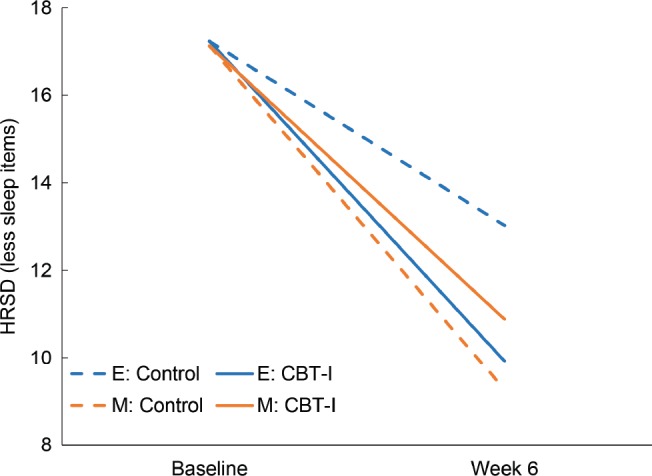
Results: Greater evening preference was associated with smaller reduction in HDRS (P = .03) from baseline to week 6 across treatment groups. The interaction between CSM and treatment group was also significant (P = .02), indicating that participants with greater evening preference in the CTRL group had significantly smaller HDRS reduction than those with greater evening preference in the CBT-I group. Circadian preference did not share significant associations with ISI (all P > .30).
Conclusions: Individuals with MDD and insomnia who have an evening preference are at increased risk for poor response to pharmacological depression treatment augmented with either CBT-I or CTRL behavioral insomnia treatment. However, evening types have better depression outcomes when treated with CBT-I than with CTRL for insomnia.
Trial registration: ClinicalTrials.gov NCT00767624.
Keywords: CBT-I; circadian; depression; eveningness; insomnia.
© 2019 American Academy of Sleep Medicine.
Figures