


Cancer in the context of aging: Health characteristics, function and caregiving needs prior to a new cancer diagnosis in a national sample of older adults
- PMID: 30952516
- PMCID: PMC6774923
- DOI: 10.1016/j.jgo.2019.03.019
Cancer in the context of aging: Health characteristics, function and caregiving needs prior to a new cancer diagnosis in a national sample of older adults
Abstract
Introduction: As cancer trajectories change due to screening, earlier diagnoses, living longer with illnesses, and new successful treatments, cancer is increasingly a disease of older adults. While cancer diagnoses themselves are very stressful for patients and families, little is known about the health status, functional limitations, and social resources of older patients before they face a new cancer diagnosis.
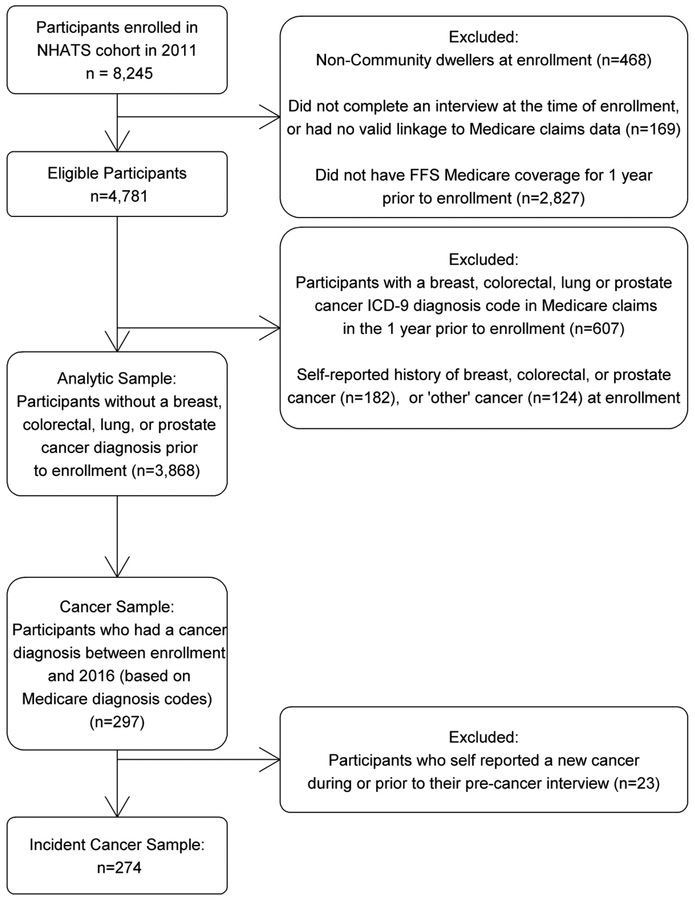
Materials and methods: Using the National Health and Aging Trends Study (NHATS), a national survey of older Medicare beneficiaries linked to Medicare claims data, we examined the health characteristics, functional limitations and social and financial resources of older adults before a new diagnosis of lung, breast, prostate or colorectal cancer and how these factors vary by race/ethnicity.
Results: We identified 274 community-dwelling older adults with incident cancer diagnoses: lung (30.6%), breast (20.3%), prostate (30.8%), and colorectal (18.3%) representing 1,202,920 older Medicare beneficiaries. The sample was 81% Non-Hispanic White, 10% Non-Hispanic Black, and 9% Hispanic/Other. Before diagnosis, patients had an average of three comorbidities and 29% of patients reported poor/fair health. Almost one-third were living alone, 13% received help with at least one activity of daily living (ADL), 11% had probable dementia and nearly one in ten already received financial help from family members.
Discussion: Before an older adult has ever been diagnosed with a major cancer, many face significant health and financial challenges and are dependent on others for care. These needs vary based on cancer type and race/ethnicity and must be considered as clinicians develop individualized care plans for patients alongside caregivers.
Copyright © 2019 Elsevier Inc. All rights reserved.
Conflict of interest statement
Conflicts/Disclosures
Dr. Smith received an honorarium from Teva Pharmaceuticals. No others disclosures
References
-
- Li D, de Glas NA & Hurria A Cancer and Aging: General Principles, Biology, and Geriatric Assessment. Clin. Geriatr. Med 32, 1–15 (2016). - PubMed
Publication types
MeSH terms
Grants and funding
LinkOut - more resources
Full Text Sources
Medical
Research Materials
