. 2019 Jul 1;25(13):4104-4116.
doi: 10.1158/1078-0432.CCR-18-3179. Epub 2019 Apr 5.

Clinical and Genome-wide Analysis of Cisplatin-induced Tinnitus Implicates Novel Ototoxic Mechanisms

Affiliations

Clinical and Genome-wide Analysis of Cisplatin-induced Tinnitus Implicates Novel Ototoxic Mechanisms

Omar El Charif et al. Clin Cancer Res. .

Abstract

Purpose: Cisplatin, a commonly used chemotherapeutic, results in tinnitus, the phantom perception of sound. Our purpose was to identify the clinical and genetic determinants of tinnitus among testicular cancer survivors (TCS) following cisplatin-based chemotherapy.

Experimental design: TCS (n = 762) were dichotomized to cases (moderate/severe tinnitus; n = 154) and controls (none; n = 608). Logistic regression was used to evaluate associations with comorbidities and SNP dosages in genome-wide association study (GWAS) following quality control and imputation (covariates: age, noise exposure, cisplatin dose, genetic principal components). Pathway over-representation tests and functional studies in mouse auditory cells were performed.

Results: Cisplatin-induced tinnitus (CisIT) significantly associated with age at diagnosis (P = 0.007) and cumulative cisplatin dose (P = 0.007). CisIT prevalence was not significantly greater in 400 mg/m2-treated TCS compared with 300 (P = 0.41), but doses >400 mg/m2 (median 580, range 402-828) increased risk by 2.61-fold (P < 0.0001). CisIT cases had worse hearing at each frequency (0.25-12 kHz, P < 0.0001), and reported more vertigo (OR = 6.47; P < 0.0001) and problems hearing in a crowd (OR = 8.22; P < 0.0001) than controls. Cases reported poorer health (P < 0.0001) and greater psychotropic medication use (OR = 2.4; P = 0.003). GWAS suggested a variant near OTOS (rs7606353, P = 2 × 10⁻⁶) and OTOS eQTLs were significantly enriched independently of that SNP (P = 0.018). OTOS overexpression in HEI-OC1, a mouse auditory cell line, resulted in resistance to cisplatin-induced cytotoxicity. Pathway analysis implicated potassium ion transport (q = 0.007).

Conclusions: CisIT associated with several neuro-otological symptoms, increased use of psychotropic medication, and poorer health. OTOS, expressed in the cochlear lateral wall, was implicated as protective. Future studies should investigate otoprotective targets in supporting cochlear cells.


Conflict of interest statement

Disclosure of Potential Conflicts of Interest

The authors declare no potential conflicts of interest.

Figures
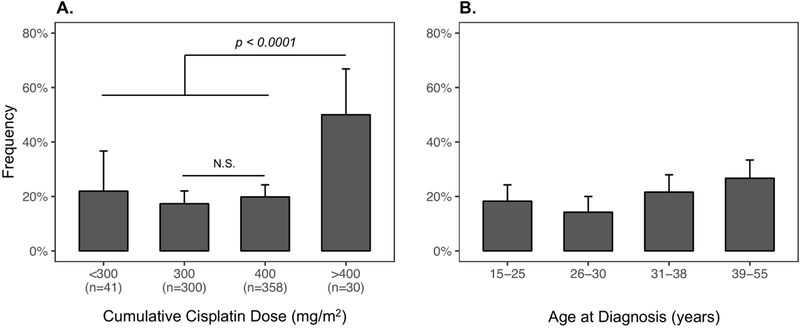
Figure 1.
Figure 1.. Tinnitus Frequency by Cumulative Cisplatin Dose and Age at Testicular Cancer Diagnosis (quartiles).
A. Bar plot showing the frequency of tinnitus by cumulative cisplatin dose group (<300, 300, 400, and >400 mg/m2) illustrates that the significant association between dose and tinnitus (logistic regression OR = 1.38, 95% CI: 1.1–1.7, P=0.007) is due to the significantly increased risk of tinnitus in patients treated with doses > 400 mg/m2 (post-hoc Chi-squared P < 0.0001). The number of subjects per category is presented on the x-axis under the dose group label. B. Bar plot representing the frequency of tinnitus by age at diagnosis quartile shows positive association with cisplatin risk (OR by decade = 1.31, 95% CI: 1.1–1.6, P = 0.006). Error bars represent the binomial 95% CIs for each subgroup. N.S = not significant.
Figure 2.
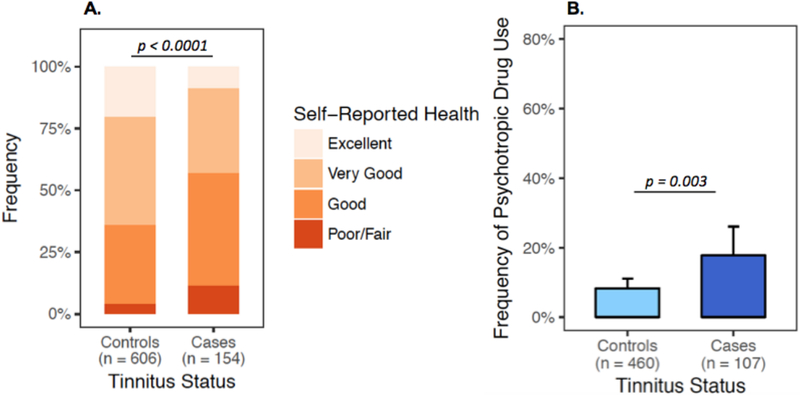
Figure 2.. Self-reported Health and Use of Psychotropic Medications by Tinnitus Status.
A. Bar plot of the distribution of self-reported health according to tinnitus status. Patients were asked: “How would you rate your overall health?” and responded on a poor-excellent ordinal scale, which was converted to a numeric scale (0 = poor/fair, 1 = good, 2 = very good, 3 = excellent). Logistic regression revealed significant negative correlation between tinnitus status and self-reported health (OR=0.54, 95% CI: 0.4–0.7, P<0.0001). B. Bar plot of psychotropic medication use by tinnitus status shows significantly higher prevalence of psychotropic medication use in tinnitus cases (OR= 2.4, 95% CI: 1.3–4.4, P=0.003). Patients were dichotomized to “Yes” and “No” psychotropic medication use based on receiving medications from a list of frequently prescribed antidepressants, anxiolytics, and antipsychotics (Supplemental Methods, (15)). The number of subjects per category is presented on the x-axis. Error bars represent the binomial 95% CIs for each subgroup.
Figure 3.
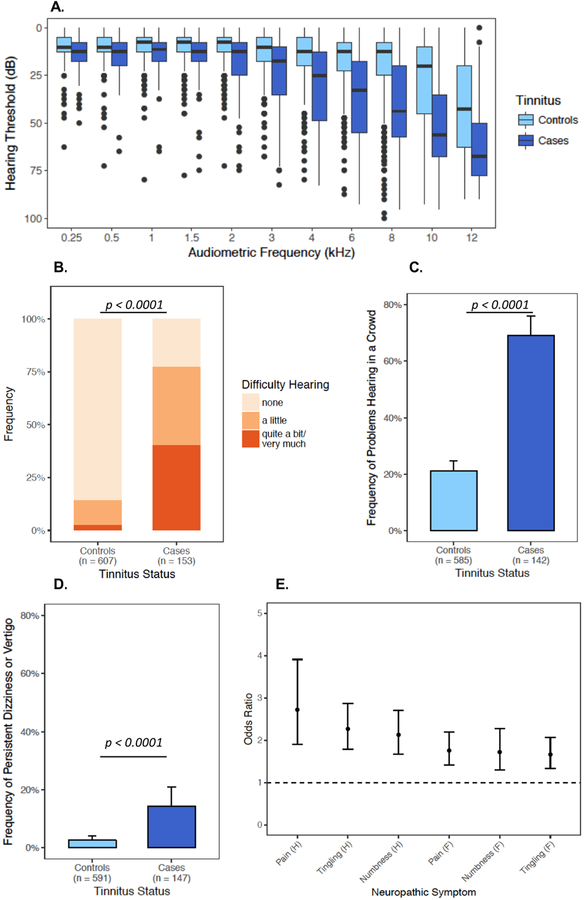
Figure 3.. Associations of Tinnitus with Subjective and Objective Hearing Loss, Problems Hearing, Vertigo, and Neurological Symptoms.
A. Box plot of audiometric hearing thresholds (y-axis, dB) across all tested audiometric frequencies (x-axis, kHz) showing significantly worse hearing in tinnitus cases at each frequency (P < 0.0001 at each frequency). Box centers indicate medians, hinges indicate interquartile regions (IQRs), and whiskers indicate 1.5x IQRs. Points outside the range of 1.5x IQR are shown. Bar plots of self-reported B. difficulty hearing (OR = 6.36, 95% CI: 4.8–8.5, P < 0.0001), C. problems hearing in a crowd (OR = 8.2, 95% CI: 5.5–12.5, P<0.0001), and D. persistent dizziness or vertigo (OR = 6.40, 95% CI: 3.2–12.9, P<0.0001). Error bars represent the binomial 95% CIs for subgroup. E. Forest plot showing the odds ratio (OR, center points) and 95% confidence intervals (error bars) of the association between tinnitus and neurotoxic symptoms from the EORTC-CIPN20. “H” denotes hands/fingers. “F” denotes feet/toes. Responses to EORTC-CIPN20 items were converted from a none-very much Likert scale to a numerical ordinal scale (0–3). Associations in B-E were evaluated using logistic regression adjusted for age at diagnosis.
Figure 4)
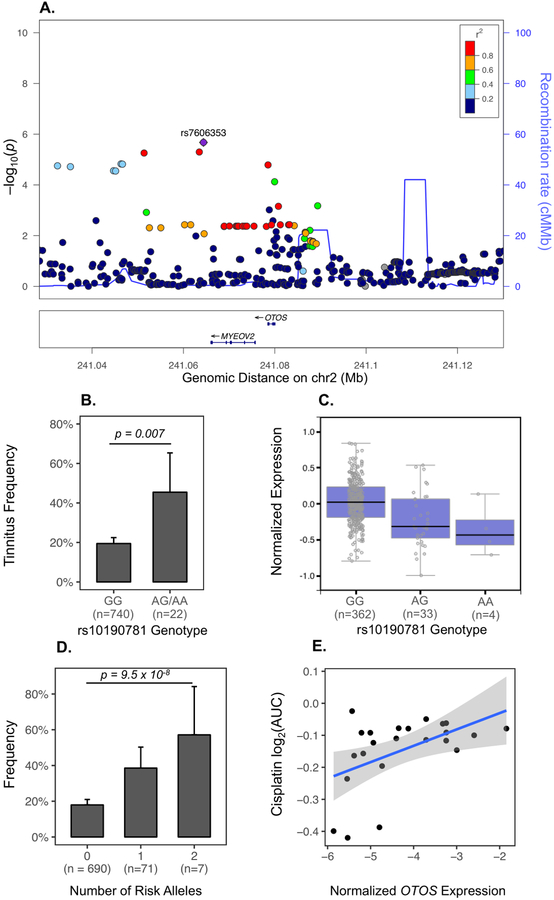
Figure 4). GWAS of Cisplatin-Induced Tinnitus Reveals Genetic Loci Near OTOS gene.
A. LocusZoom plot of the third most significant GWAS signal near two adjacent genes: OTOS and MYEOV2. Each point represents a SNP. The x-axis indicates chromosomal position. The left y-axis shows –log10(p-value) of association with CisIT and the right y-axis and blue line indicate the recombination rate in centimorgans/megabase (cM/MB). The color of each variant indicates the linkage disequilibrium R2 with the top signal in the region, rs7606353 (purple). B. Bar plot of CisIT frequency by genotype of OTOS eQTL, rs10190781. The minor allele (G) increases CisIT risk (OR = 3.42, P = 0.007). Error bars represent the binomial 95% CIs. C. Boxplot of OTOS expression in thyroid by rs10190781 genotype indicates that the minor allele is associated with lower expression of OTOS. Data were obtained from the GTEx Portal on 04/28/18 D. Bar plot of number of risk alleles for both rs7606353 and rs10190781 shows additive allele effects (OR = 3.77, 95% CI: 2.3–6.2], P=9.5 × 10⁻⁸. E. Scatter plot of cisplatin resistance as a function of normalized OTOS expression. Cisplatin resistance, measured as the area under the cisplatin dose-response curve, for all central nervous system tumor lines (19 glioma and 4 neuroblastoma lines) was extracted from CancerRX and normalized OTOS expressions were downloaded from the Cancer Cell Line Encyclopedia. Correlation was assessed non-parametrically using Spearman’s Rank method (Rho = 0.46, P = 0.03).
Figure 5)
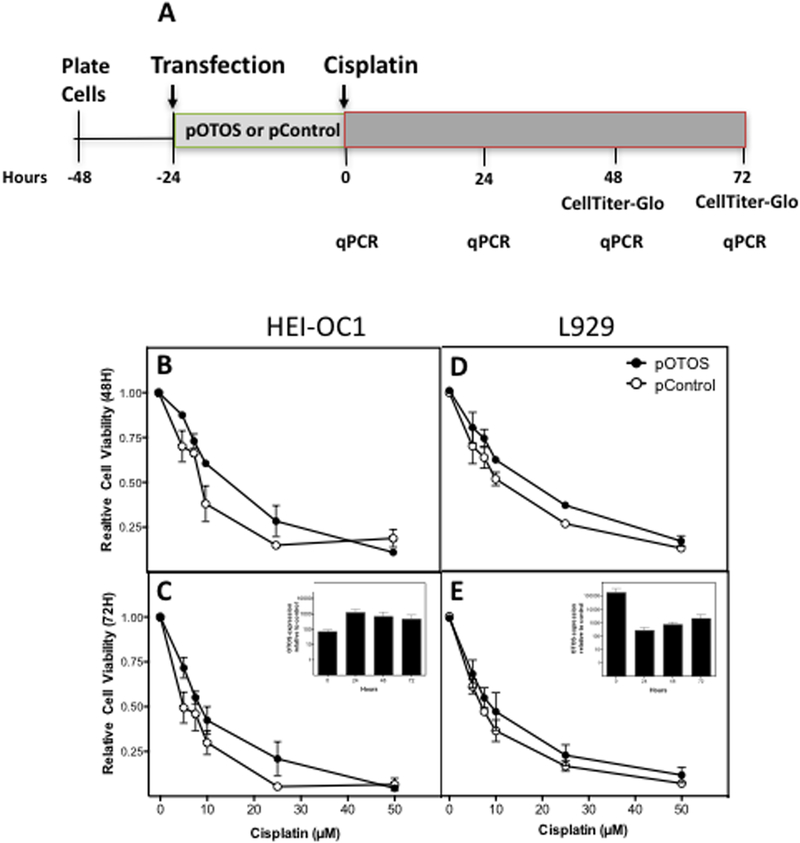
Figure 5). Effects of OTOS Overexpression on Cisplatin Sensitivity in HEI-OC1 Mouse Cochlear and L929 mouse fibroblast cell lines.
A. Experimental scheme of transfection and cisplatin treatment, followed by cell viability and qPCR analysis. Cells were transfected with human OTOS (pOTOS) or a control plasmid (pControl) for 24 hours prior to cisplatin treatment. B. Cell viability of HEI-OC1 cells transfected with either pOTOS (closed circles) or the control plasmid (pControl; open circles) following treatment with increasing concentrations of cisplatin for 48 hours (P=0.004) or C. 72 hours (P=0.008). Inset: Human OTOS mRNA expression in HEI-OC1 cells corresponding to 0, 24, 48, and 72 hours after cisplatin treatment (24, 48, 72, and 96 hours after transfection) depicted as pOTOS relative to pControl. D. Cell viability of L929 fibroblasts transfected with either pOTOS (closed circles) or the control plasmid (pControl; open circles) following treatment with increasing concentrations of cisplatin for 48 hours (P=0.006) or E. 72 hours (P=0.03). Inset: Human OTOS mRNA expression in L929 fibroblasts corresponding to 0, 24, 48, and 72 hours after cisplatin treatment (24, 48, 72, and 96 hours after transfection) depicted as pOTOS relative to pControl. Data shown are from 3 independent experiments, with each concentration or time point within an experiment evaluated in duplicate or triplicate. Error bars reflect S.E.M. Statistical significance was determined using 2-way ANOVA analysis with Sidak correction for multiple comparisons.

References

    1. Bhatt JM, Lin HW, Bhattacharyya N. Prevalence, Severity, Exposures, and Treatment Patterns of Tinnitus in the United States. JAMA Otolaryngol Head Neck Surg. 2016;142(10):959–65. doi: 10.1001/jamaoto.2016.1700. - DOI - PMC - PubMed
    1. Weidt S, Delsignore A, Meyer M, Rufer M, Peter N, Drabe N, Kleinjung T. Which tinnitus-related characteristics affect current health-related quality of life and depression? A cross-sectional cohort study. Psychiatry Res. 2016;237:114–21. doi: 10.1016/j.psychres.2016.01.065. - DOI - PubMed
    1. Friberg E, Jansson C, Mittendorfer-Rutz E, Rosenhall U, Alexanderson K. Sickness absence due to otoaudiological diagnoses and risk of disability pension: a nationwide Swedish prospective cohort study. PLoS One. 2012;7(1):e29966. doi: 10.1371/journal.pone.0029966. - DOI - PMC - PubMed
    1. Vona B, Nanda I, Shehata-Dieler W, Haaf T. Genetics of Tinnitus: Still in its Infancy. Front Neurosci. 2017;11:236 Epub 2017/05/24. doi: 10.3389/fnins.2017.00236. - DOI - PMC - PubMed
    1. Langguth B, Kreuzer PM, Kleinjung T, De Ridder D. Tinnitus: causes and clinical management. Lancet Neurol. 2013;12(9):920–30. doi: 10.1016/S1474-4422(13)70160-1. - DOI - PubMed

Publication types

MeSH terms