


Efficacy and safety of evolocumab in individuals with type 2 diabetes mellitus: primary results of the randomised controlled BANTING study
- PMID: 30953107
- PMCID: PMC6509076
- DOI: 10.1007/s00125-019-4856-7
Efficacy and safety of evolocumab in individuals with type 2 diabetes mellitus: primary results of the randomised controlled BANTING study
Abstract
Aims/hypothesis: The study aimed to examine the efficacy of 12 weeks of monthly evolocumab or placebo in lowering LDL-cholesterol (LDL-C) in individuals with type 2 diabetes and hypercholesterolaemia or mixed dyslipidaemia and on a maximum-tolerated statin of at least moderate intensity.
Methods: For this randomised, placebo-controlled outpatient study, eligible individuals were ≥18 years old with type 2 diabetes, HbA1c <10% (86 mmol/mol), had been on stable pharmacological therapy for diabetes for ≥6 months and were taking a maximum-tolerated statin dose of at least moderate intensity. Lipid eligibility criteria varied by history of clinical cardiovascular disease. Participants were randomised 2:1 to evolocumab 420 mg s.c. or placebo. Randomisation was performed centrally via an interactive web-based or voice recognition system. Allocation was concealed using the centralised randomisation process. Treatment assignment was blinded to the sponsor study team, investigators, site staff and patients throughout the study. Co-primary endpoints were mean percentage change in LDL-C from baseline to week 12 and to the mean of weeks 10 and 12. Additional endpoints included LDL-C <1.81 mmol/l, LDL-C reduction ≥50% and other lipids. Exploratory analyses included percentage changes in fasting and post mixed-meal tolerance test (MMTT) lipoproteins and lipids, glucose metabolism variables and inflammatory biomarkers.
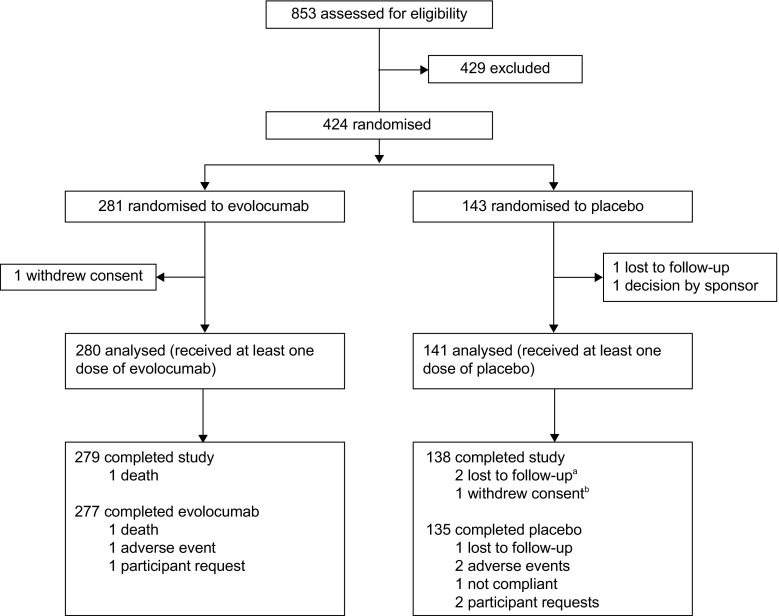
Results: In total, 421 individuals were randomised and analysed, having received evolocumab (280 participants) or placebo (141 participants) (mean [SD] age 62 [8] years; 44% women; 77% white). Evolocumab decreased LDL-C by 54.3% (1.4%) at week 12 (vs 1.1% [1.9%] decrease with placebo; p < 0.0001) and by 65.0% (1.3%) at the mean of weeks 10 and 12 (vs 0.8% [1.8%] decrease with placebo; p < 0.0001); it also decreased non-HDL-cholesterol (HDL-C) by 46.9% (1.3%) at week 12 (vs 0.6% [1.8%] decrease with placebo) and by 56.6% (1.2%) at the mean of weeks 10 and 12 (vs 0.1% [1.6%] decrease with placebo). Evolocumab significantly improved levels of other lipids and allowed more participants to reach LDL-C <1.81 mmol/l or a reduction in LDL-C levels ≥50%. After an MMTT (120 min), there were favourable changes (p < 0.05; nominal, post hoc, no multiplicity adjustment) in chylomicron triacylglycerol (triglycerides), chylomicron cholesterol, VLDL-C and LDL-C. Evolocumab had no effect on glycaemic variables and was well tolerated.
Conclusions/interpretation: In statin-treated individuals with type 2 diabetes and hypercholesterolaemia or mixed dyslipidaemia, evolocumab significantly reduced LDL-C and non-HDL-C. Favourable changes (p < 0.05) were observed in postprandial levels of chylomicrons, VLDL-C and LDL-C.
Trial registration: ClinicalTrials.gov NCT02739984 FUNDING: This study was funded by Amgen Inc.
Data availability: Qualified researchers may request data from Amgen clinical studies. Complete details are available at www.amgen.com/datasharing .
Keywords: Diabetes; Diabetic dyslipidaemia; Hypercholesterolaemia; Lipid-lowering therapy; PCSK9 inhibition.
Figures
References
-
- Lloyd-Jones DM, Morris PB, Ballantyne CM, et al. 2017 focused update of the 2016 ACC Expert Consensus Decision Pathway on the role of non-statin therapies for LDL-cholesterol lowering in the management of atherosclerotic cardiovascular disease risk: a report of the American College of Cardiology Task Force on Expert Consensus Decision Pathways. J Am Coll Cardiol. 2017;70(14):1785–1822. doi: 10.1016/j.jacc.2017.07.745. - DOI - PubMed
-
- Giugliano RP, Cannon CP, Blazing MA, et al. Benefit of adding ezetimibe to statin therapy on cardiovascular outcomes and safety in patients with versus without diabetes mellitus: results from IMPROVE-IT (Improved Reduction of Outcomes: Vytorin Efficacy International Trial) Circulation. 2018;137(15):1571–1582. doi: 10.1161/CIRCULATIONAHA.117.030950. - DOI - PubMed
Publication types
MeSH terms
Substances
Associated data
LinkOut - more resources
Full Text Sources
Medical
Miscellaneous
