


Impact of early detection of acute invasive fungal rhinosinusitis in immunocompromised patients
- PMID: 30953465
- PMCID: PMC6451285
- DOI: 10.1186/s12879-019-3938-y
Impact of early detection of acute invasive fungal rhinosinusitis in immunocompromised patients
Abstract
Background: Early diagnosis of acute invasive fungal rhinosinusitis (AIFRS) is vital to improving outcomes in immunocompromised patients. This study evaluated the impact of a systematic protocol with nasal endoscopy and biopsies to early detect AIFRS in immunocompromised patients. Additionally, we compared the accuracy of frozen-section biopsy and culture with formalin-fixed paraffin-embedded (FFPE) biopsy.
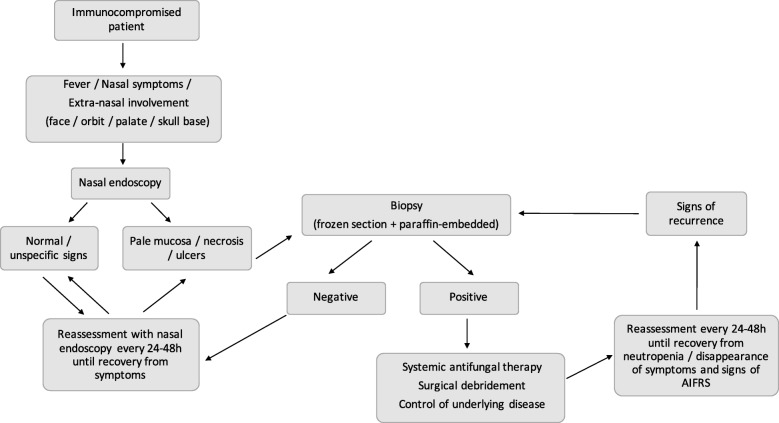
Methods: Retrospective cohort in a Tertiary Referral Hospital. Patients with the suspected diagnosis of AIFRS were evaluated following a standardized protocol, including serial nasal endoscopies and biopsies when necessary. The sensitivity and specificity of frozen-section biopsy and culture were also compared with FFPE.
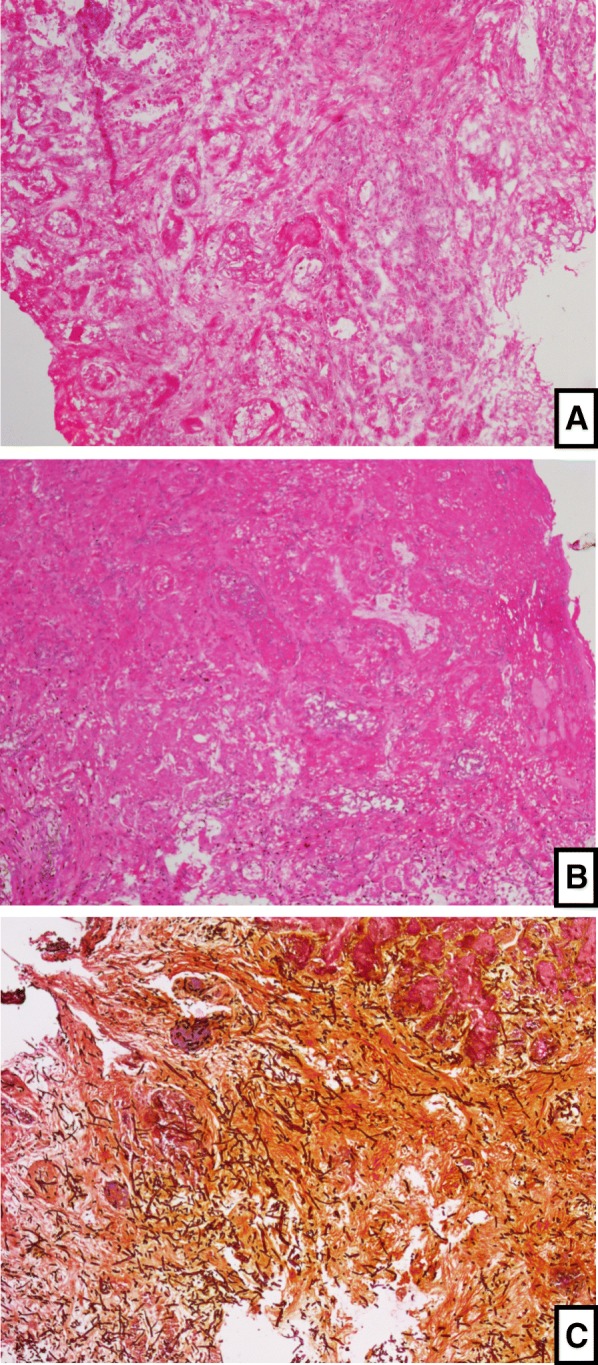
Results: The mortality rate related to AIFRS of this standardized cohort (13/43) was 30.2%. Better outcomes were observed in patients with disease limited to the turbinates and in those with higher peripheral neutrophils count. Frozen-section biopsy positivity correlated with FFPE findings for fungi detection (p-value < 0.0001), with a sensitivity of 90.6%, specificity of 72.7%, and accuracy of 86.0%.
Conclusion: Implementation of this standardized protocol was related to a considerably low mortality rate among patients with suspected AIFRS at our Institution. Frozen-section biopsy revealed high accuracy to diagnose AIFRS. The current protocol including frozen-tissue biopsy improved the evaluation and survival rates of immunocompromised patients with presumed AIFRS.
Keywords: Accuracy; Acute invasive fungal rhinosinusitis; Frozen-section biopsy; Fungi; Mortality rate; Paraffin-embedded paraffin; Rhinosinusitis.
Conflict of interest statement
Ethics approval and consent to participate
This study was approved by the local IRB, under the number of CAAE 62294116.6.0000.5440. As this was a retrospective cohort, and data was collected from medical records, exemption to obtain informed consent was demanded to local IRB, and it was considered approved.
Consent for publication
Not applicable
Competing interests
The authors declare that they have no competing interests.
Publisher’s Note
Springer Nature remains neutral with regard to jurisdictional claims in published maps and institutional affiliations.
Figures
References
-
- Ruhnke M, Böhme A, Buchheidt D, Cornely O, Donhuijsen K, Einsele H, et al. Diagnosis of invasive fungal infections in hematology and oncology-guidelines from the infectious diseases working party in Haematology and oncology of the German Society for Haematology and oncology (AGIHO) Ann Oncol. 2012;23:823–833. doi: 10.1093/annonc/mdr407. - DOI - PubMed
MeSH terms
LinkOut - more resources
Full Text Sources
Medical
