Meta-Analysis
. 2019 Apr 6;19(1):55.
doi: 10.1186/s12883-019-1281-y.

Systematic review and meta-analysis of propofol versus barbiturates for controlling refractory status epilepticus

Affiliations
Meta-Analysis

Systematic review and meta-analysis of propofol versus barbiturates for controlling refractory status epilepticus

Qing Zhang et al. BMC Neurol. .

Abstract

Background: Several studies have compared the efficacy and safety of propofol and barbiturates in the treatment of refractory status epilepticus (RSE). This study aims to quantitatively assess the advantages and disadvantages of propofol and barbiturates in controlling RSE.

Methods: We searched for studies with relevant data from the PubMed, Embase, Ovid, Cochrane Library, Springer Link, Web of Science, and China National Knowledge Infrastructure databases. By calculating odds ratios and standardized mean differences with 95% confidence intervals, we assessed the disease control rate (DCR), case fatality rate (CFR), average control time (ACT), average tracheal intubation placement time (ATIPT), and incidence of hypotension between propofol and barbiturates in treating RSE.

Results: Seven studies with 261 patients were included in this analysis. Meta-analysis revealed that the DCR of propofol was higher than that of barbiturates (p < 0.001) and that the CFR (p = 0.382) between the two treatment did not significantly differ in controlling RSE. Propofol shortened the ACT (p < 0.001) of RSE and reduced the ATIPT (p < 0.001) of patients with RSE more extensively than did barbiturates and did not increase the incidence of hypotension (p = 0.737).

Conclusions: In comparison with barbiturates, propofol can control RSE and shorten ATIPT in a more efficient and timely manner. Moreover, the drug does not increase the incidence of hypotension and CFR.

Keywords: Barbiturates; Meta-analysis; Propofol; RSE; Refractory status epilepticus.


Conflict of interest statement

Ethics approval and consent to participate

Ethical approval is not required for this review.

Consent for publication

Not applicable.

Competing interests

The authors declare that they have no competing interests.

Publisher’s Note

Springer Nature remains neutral with regard to jurisdictional claims in published maps and institutional affiliations.

Figures
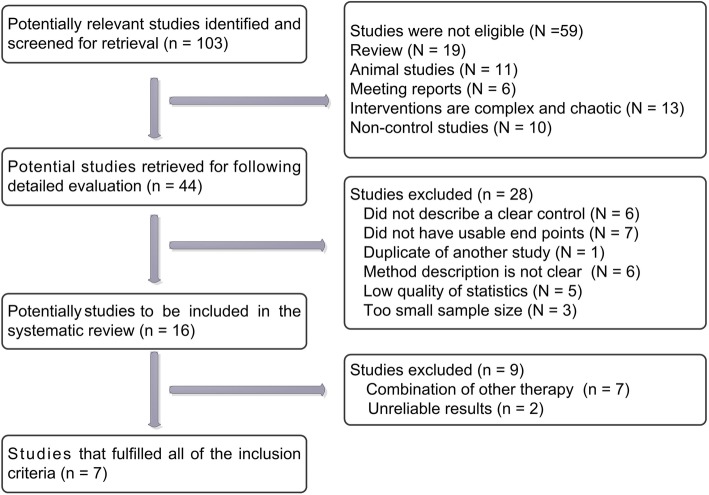
Fig. 1
Fig. 1
Flow chart of selection process for studies included in meta-analysis. At first, 103 investigations were defined to be closely correlated to the conception of this study. After a careful screening, a total of 7 studies met the inclusion criteria, which were searched from the database of Medline/PubMed, EMBASE, Cochrance Library, Web of Science and China National Knowledge Infrastructure Database
Fig. 2
Fig. 2
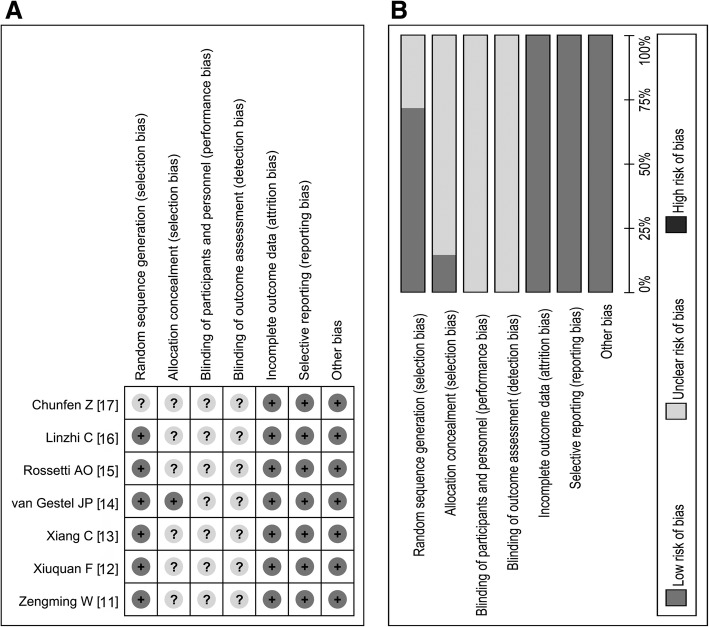
Quality assessment of included studies. a According to the Cochrane Handbook of Systematic Review, Summary analysis indicated that included studies had moderate to high study quality. b Except the blinding and allocation concealment, all of seven studies included did a good job in other areas and had moderate to high study quality
Fig. 3
Fig. 3
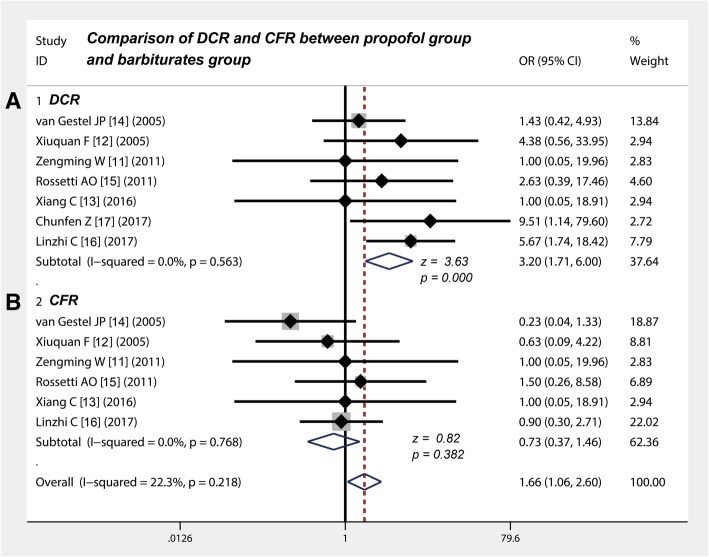
Comparison of DCR and CFR between propofol group and barbiturates group. a DCR of propofol is significantly higher than that of barbiturates in controlling RSE (z = 3.63, P < 0.001). b There is no significant difference in CFR between propofol and barbiturates in the treatment of RSE (z = 0.82, P = 0.382). CI, confidence interval; OR, odds ratio; DCR, disease control rate; CFR, case fatality rate
Fig. 4
Fig. 4
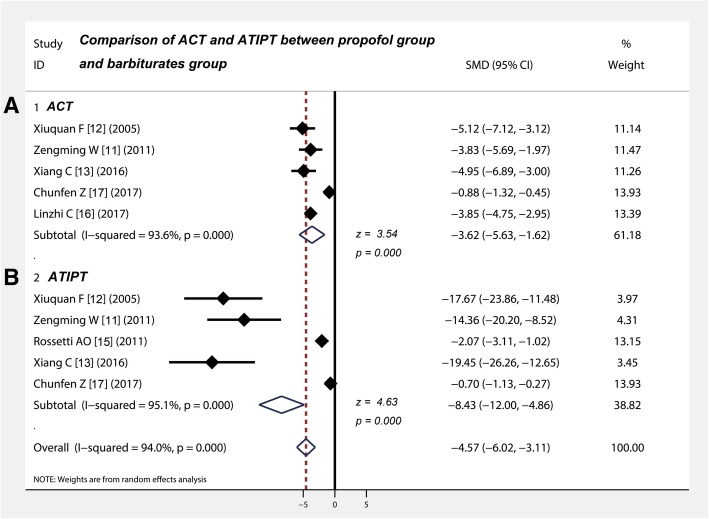
Comparison of ACT and ATIPT between propofol group and barbiturates group. a The ACT of the propofol group was significantly lower than that of the barbiturates group (z = 3.54, P < 0.001). b The ATIPT of the barbiturates group was significantly longer than that of the propofol group (z = 4.63, P < 0.001). CI, confidence interval; SMD, standard mean difference; ACT, average control time; ATIPT, average tracheal intubation placement time
Fig. 5
Fig. 5
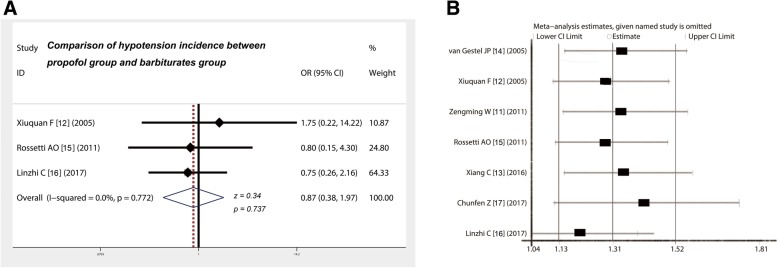
Comparison of hypotension incidence between propofol group and barbiturates group and sensitivity analysis of included studies. a There was no significant difference in the incidence of hypotension between propofol and barbiturates in the treatment of RSE (z = 0.34, P = 0.737). b Exclusion of individual studies did not substantially alter the estimates and affect the final statistical performance. CI, confidence interval; OR, odds ratio
Fig. 6
Fig. 6
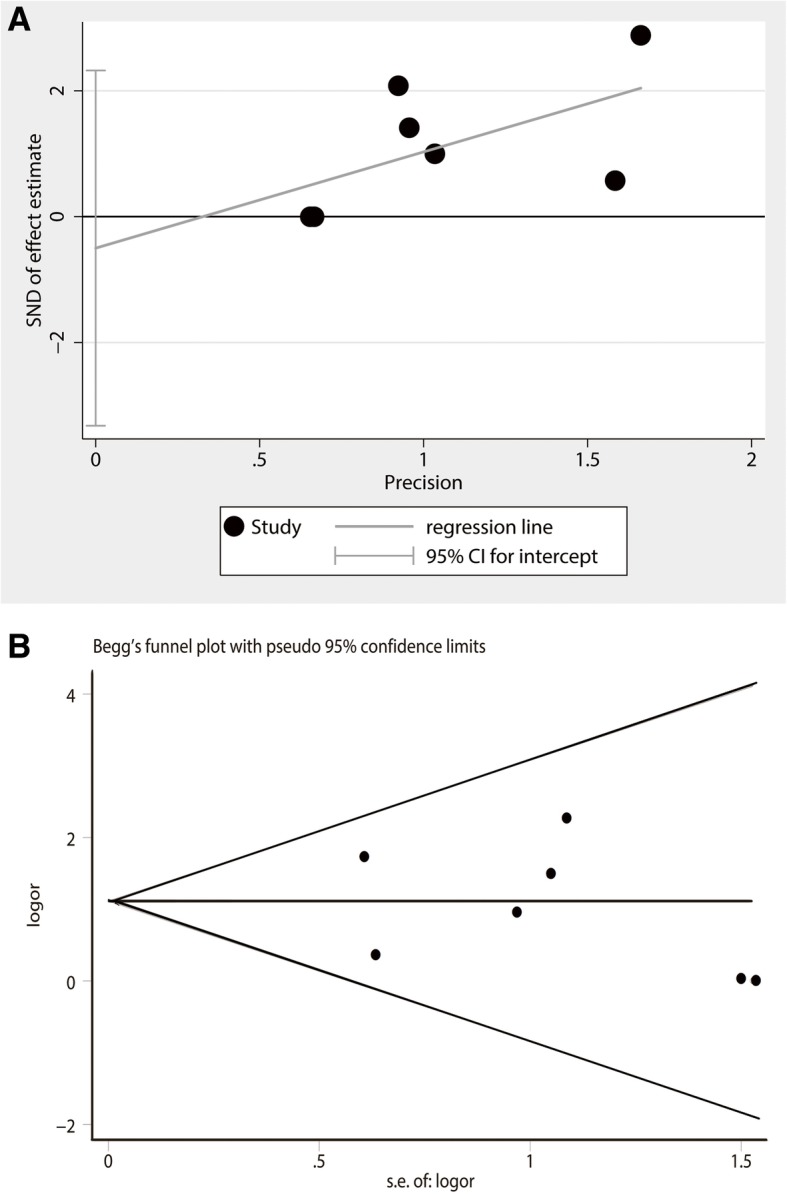
Publication bias analysis on included studies. a The distribution graph derived from Egger test showed that included studies were basically distributed on both sides of the baseline. b The funnel plot derived from begg test indicated that all 7 studies were symmetrically distributed on both sides of the funnel plot. CI, confidence interval

References

    1. Strzelczyk A, Ansorge S, Hapfelmeier J, Bonthapally V, Erder MH, Rosenow F. Costs, length of stay, and mortality of super-refractory status epilepticus: a population-based study from Germany. Epilepsia. 2017;58(9):1533–1541. doi: 10.1111/epi.13837. - DOI - PubMed
    1. Hocker S, Tatum WO, LaRoche S, Freeman WD. Refractory and super-refractory status epilepticus--an update. Curr Neurol Neurosci Rep. 2014;14(6):452. doi: 10.1007/s11910-014-0452-x. - DOI - PubMed
    1. Trinka E, Cock H, Hesdorffer D, Rossetti AO, Scheffer IE, Shinnar S, Shorvon S, Lowenstein DH. A definition and classification of status epilepticus--report of the ILAE task force on classification of status epilepticus. Epilepsia. 2015;56(10):1515–1523. doi: 10.1111/epi.13121. - DOI - PubMed
    1. Shorvon S. Super-refractory status epilepticus: an approach to therapy in this difficult clinical situation. Epilepsia. 2011;52(Suppl 8):53–56. doi: 10.1111/j.1528-1167.2011.03238.x. - DOI - PubMed
    1. Brophy GM, Bell R, Claassen J, Alldredge B, Bleck TP, Glauser T, Laroche SM, Riviello JJ, Jr, Shutter L, Sperling MR, et al. Guidelines for the evaluation and management of status epilepticus. Neurocrit Care. 2012;17(1):3–23. doi: 10.1007/s12028-012-9695-z. - DOI - PubMed

LinkOut - more resources