


Nature-Derived Peptides: A Growing Niche for GPCR Ligand Discovery
- PMID: 30955896
- PMCID: PMC6624132
- DOI: 10.1016/j.tips.2019.03.004
Nature-Derived Peptides: A Growing Niche for GPCR Ligand Discovery
Abstract
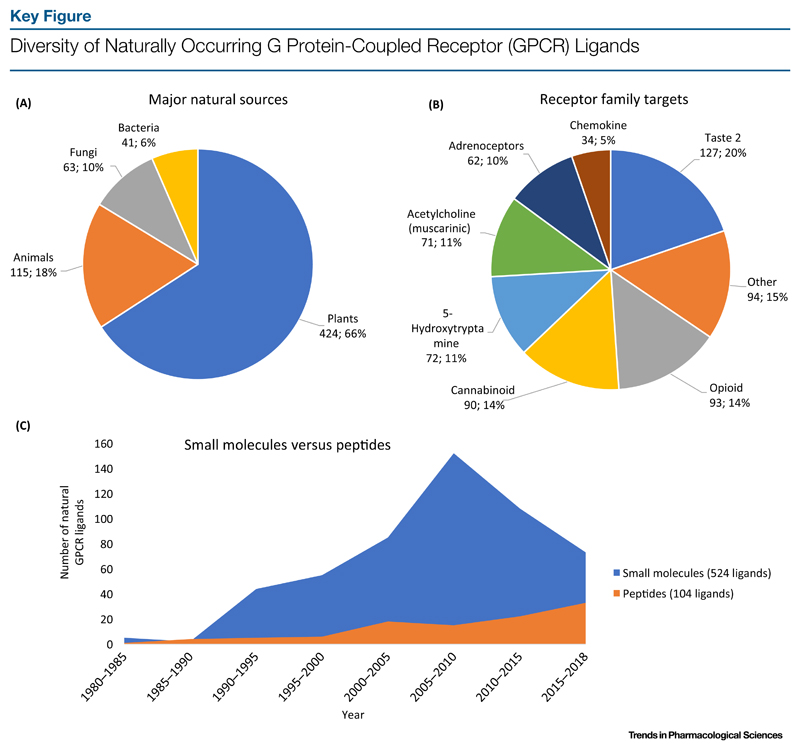
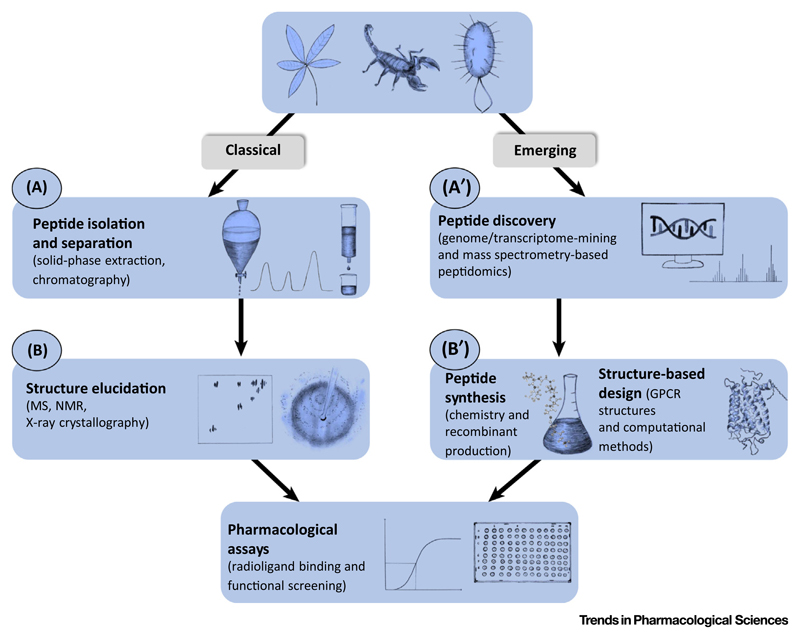
G protein-coupled receptors (GPCRs) represent important drug targets, as they regulate pivotal physiological processes and they have proved to be readily druggable. Natural products have been and continue to be amongst the most valuable sources for drug discovery and development. Here, we surveyed small molecules and (poly-)peptides derived from plants, animals, fungi, and bacteria, which modulate GPCR signaling. Among naturally occurring compounds, peptides from plants, cone-snails, snakes, spiders, scorpions, fungi, and bacteria are of particular interest as lead compounds for the development of GPCR ligands, since they cover a chemical space, which differs from that of synthetic small molecules. Peptides, however, face challenges, some of which can be overcome by studying plant-derived compounds. We argue here that the opportunities outweigh the challenges.
Keywords: animal venom; drug discovery; ligand design; natural product; peptide; plant.
Copyright © 2019 Elsevier Ltd. All rights reserved.
Figures
References
-
- Rodrigues T, et al. Counting on natural products for drug design. Nat Chem. 2016;8:531–541. - PubMed
-
- Newman DJ, Cragg GM. Natural products as sources of new drugs from 1981 to 2014. J Nat Prod. 2016;79:629–661. - PubMed
-
- Pierce KL, et al. Seven-transmembrane receptors. Nat Rev Mol Cell Biol. 2002;3:639–650. - PubMed
Publication types
MeSH terms
Substances
Grants and funding
LinkOut - more resources
Full Text Sources
Other Literature Sources
