Observational Study
. 2019 Feb 18;6(1):e000350.
doi: 10.1136/bmjresp-2018-000350. eCollection 2019.

Real-world use of rescue inhaler sensors, electronic symptom questionnaires and physical activity monitors in COPD

Affiliations
Observational Study

Real-world use of rescue inhaler sensors, electronic symptom questionnaires and physical activity monitors in COPD

Russell Bowler et al. BMJ Open Respir Res. .

Abstract

Background: Chronic obstructive pulmonary disease (COPD) is a heterogeneous disease characterised by airflow obstruction and other morbidities such as respiratory symptoms, reduced physical activity and frequent bronchodilator use. Recent advances in personal digital monitoring devices can permit continuous collection of these data in COPD patients, but the relationships among them are not well understood.

Methods: 184 individuals from a single centre of the COPDGene cohort agreed to participate in this 3-week observational study. Each participant used a smartphone to complete a daily symptom diary (EXAcerbations of Chronic pulmonary disease Tool, EXACT), wore a wrist-worn accelerometer to record continuously physical activity and completed the Clinical Visit PROactive Physical Activity in COPD questionnaire. 58 users of metered dose inhalers for rescue (albuterol) were provided with an inhaler sensor, which time stamped each inhaler actuation.

Results: Rescue inhaler use was strongly correlated with E-RS:COPD score, while step counts were correlated with neither rescue use nor E-RS:COPD score. Frequent, unpatterned inhaler use pattern was associated with worse respiratory symptoms and less physical activity compared with frequent inhaler use with a regular daily pattern. There was a strong week-by-week correlation among measurements, suggesting that 1 week of monitoring is sufficient to characterise stable patients with COPD.

Discussion: The study highlights the interaction and relevance of personal real-time monitoring of respiratory symptoms, physical activity and rescue medication in patients with COPD. Additionally, visual displays of longitudinal data may be helpful for disease management to help drive conversations between patients and caregivers and for risk-based monitoring in clinical trials.

Keywords: COPD; activity monitors; digital health; medication sensors; patient-reported outcomes.


Conflict of interest statement

Competing interests: RB, SJ and AM have no financial or personal relationships with people or organisations that could inappropriately influence this work. NL, BM and RT-S are employees of GSK and hold stock. MA is an employee of GSK.

Figures
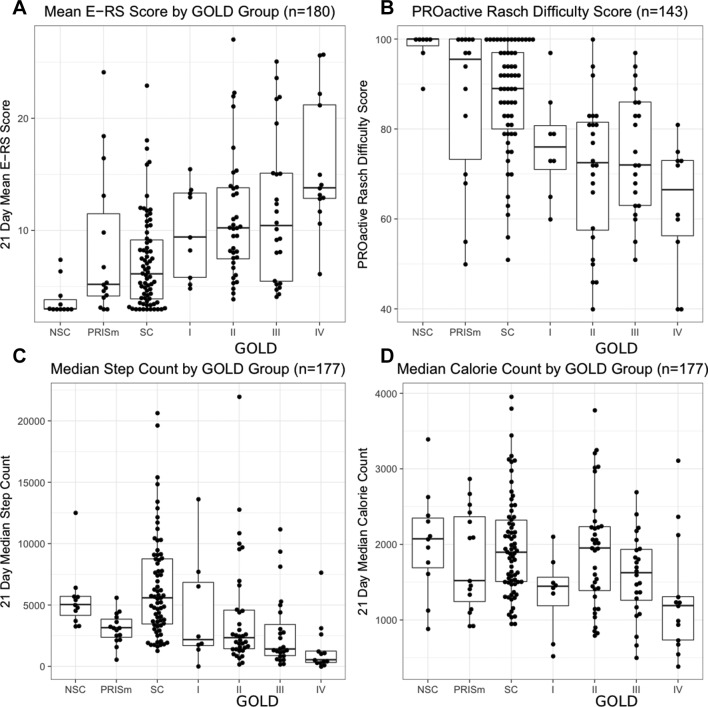
Figure 1
Figure 1
More severe COPD is associated with worse eDiary symptoms and lower measures of activity. Shown are individual participants mean (A) eDiary score and (B) PROactive Rasch Difficulty score; median (C) daily steps and (D) calorie count during the 3-week study period by group. E-RS:COPD, evaluating respiratory symptoms in chronic obstructive pulmonary disease.
Figure 2
Figure 2
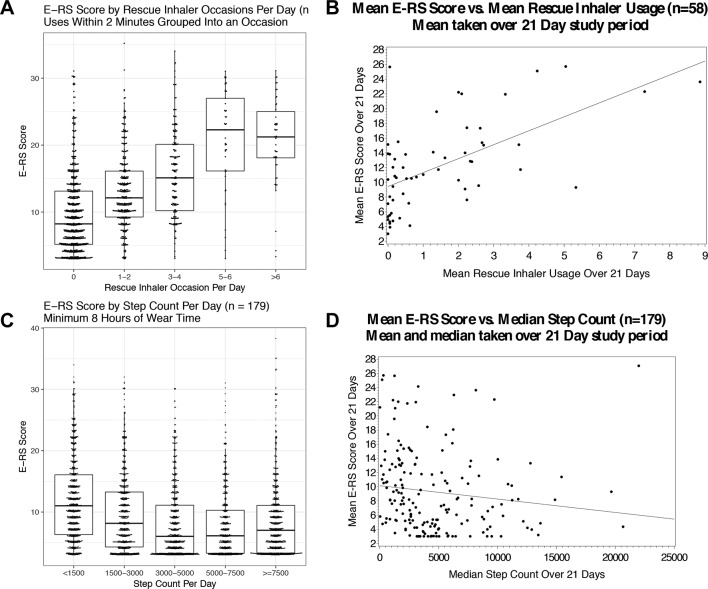
Worse eDiary scores are associated the more rescue inhaler usage and reduced step counts over both an individual day and 3-week summary period. Association of daily respiratory symptoms (E-RS:COPD total score) with (A) daily rescue occasions and (C) daily step counts; association of 3-week mean respiratory symptoms with (B) mean rescue inhaler occasions and (D) median steps per day. E-RS:COPD, evaluating respiratory symptoms in chronic obstructive pulmonary disease.
Figure 3
Figure 3
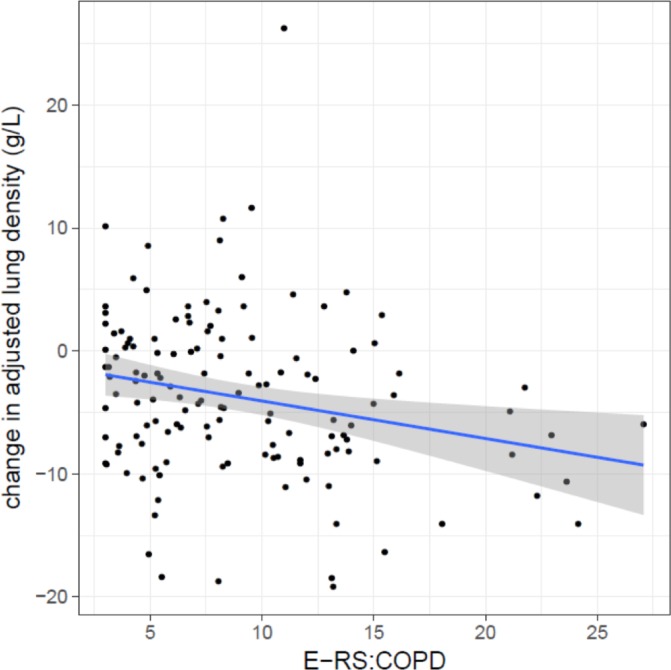
A higher E-RS:COPD score is associated with more emphysema progression. Emphysema progression was measured by change in adjusted lung density over the 5 years prior to the eDairy assessments. E-RS:COPD, evaluating respiratory symptoms in chronic obstructive pulmonary disease.
Figure 4
Figure 4
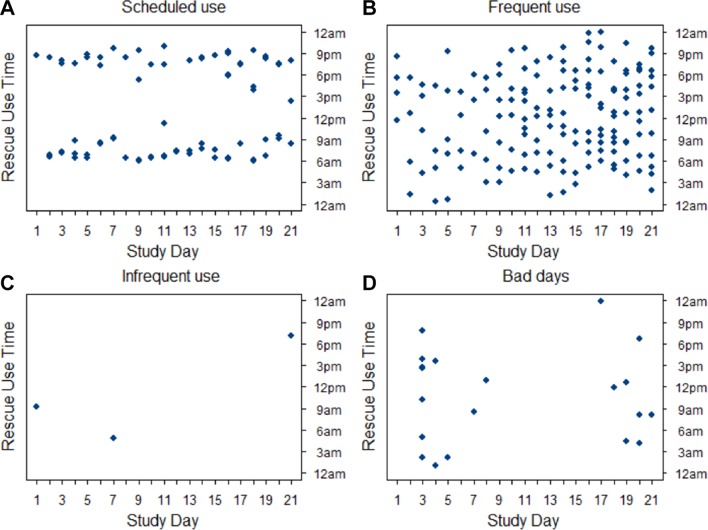
Individual participants demonstrate several different patterns of rescue inhaler use. Typical rescue inhaler use patterns. (A) Scheduled use (at regular times); (B) frequent use (without clear patterned use); (C) infrequent use; (D) bad days (a few days with frequent use).
Figure 5
Figure 5
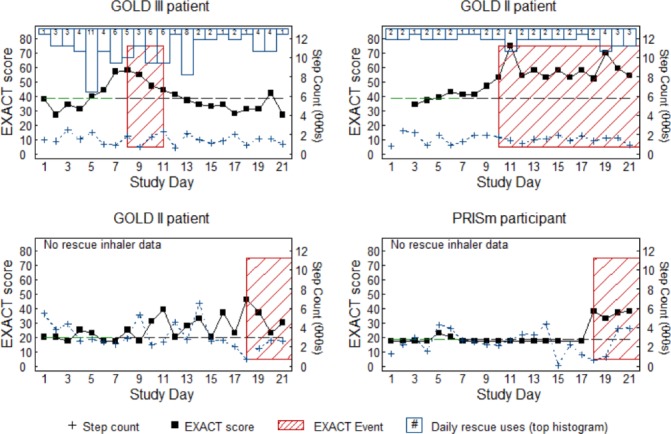
Changes in eDairy scores are only sometimes associated with changes in rescue inhaler use or step counts. Shown are four representative events from nine EXACT defined events (red hashed box). Black squares represent EXACT score with a dashed line representing baseline; blue outlined columns represent frequency of rescue inhaler use for the day; blue crosses represent step counts in thousands of steps per day. EXACT, EXAcerbations of Chronic pulmonary disease Tool.

References

    1. Agusti AG. COPD, a multicomponent disease: implications for management. Respir Med 2005;99:670–82. 10.1016/j.rmed.2004.11.006 - DOI - PubMed
    1. Vestbo J, Agusti A, Wouters EF, et al. Should we view chronic obstructive pulmonary disease differently after eclipse? A clinical perspective from the Study Team. Am J Respir Crit Care Med 2014;189:1022–30. 10.1164/rccm.201311-2006PP - DOI - PubMed
    1. Hurst JR, Vestbo J, Anzueto A, et al. Susceptibility to exacerbation in chronic obstructive pulmonary disease. N Engl J Med Overseas Ed 2010;363:1128–38. 10.1056/NEJMoa0909883 - DOI - PubMed
    1. Vestbo J, Edwards LD, Scanlon PD, et al. Changes in forced expiratory volume in 1 second over time in COPD. N Engl J Med 2011;365:1184–92. 10.1056/NEJMoa1105482 - DOI - PubMed
    1. Coxson HO, Dirksen A, Edwards LD, et al. The presence and progression of emphysema in COPD as determined by CT scanning and biomarker expression: a prospective analysis from the eclipse study. Lancet Respir Med 2013;1:129–36. 10.1016/S2213-2600(13)70006-7 - DOI - PubMed

Publication types

MeSH terms