


The demographics of dog bites in the United States
- PMID: 30957043
- PMCID: PMC6431755
- DOI: 10.1016/j.heliyon.2019.e01360
The demographics of dog bites in the United States
Abstract
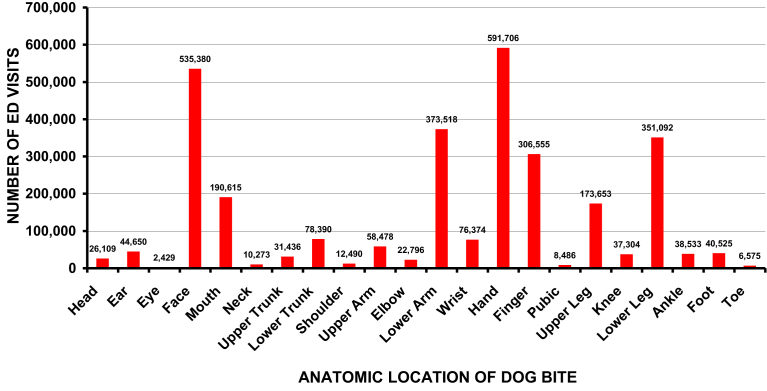
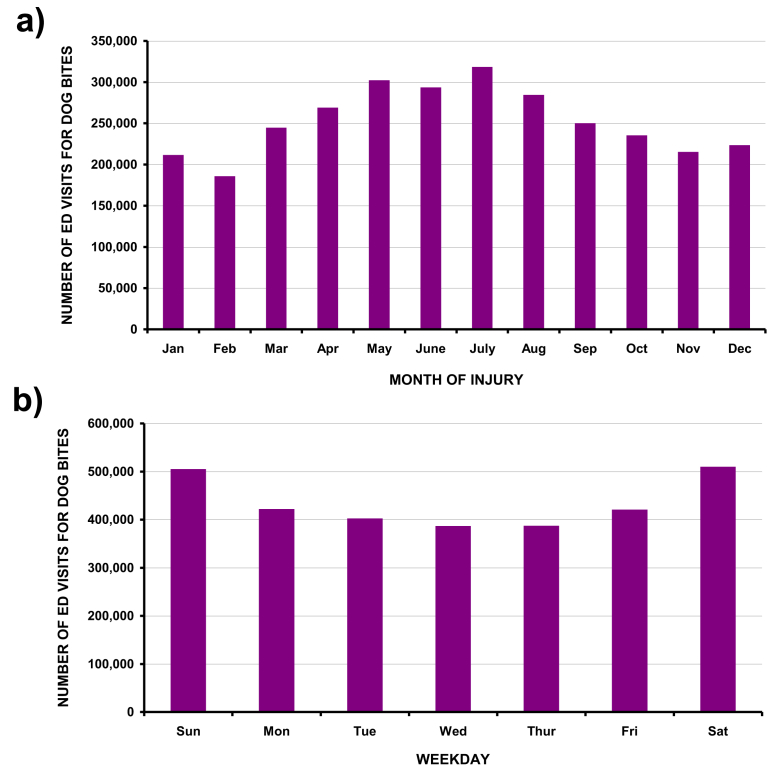
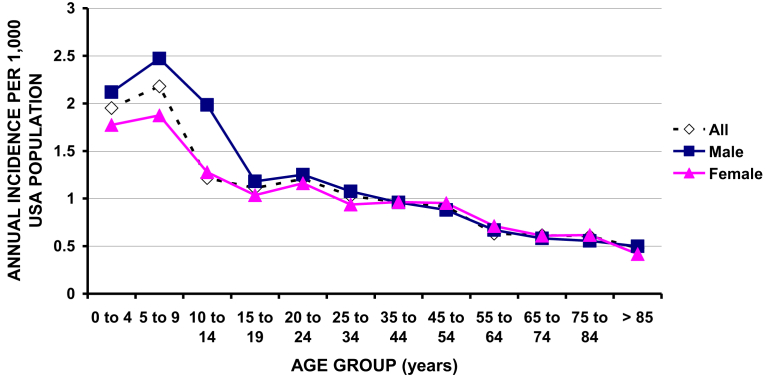
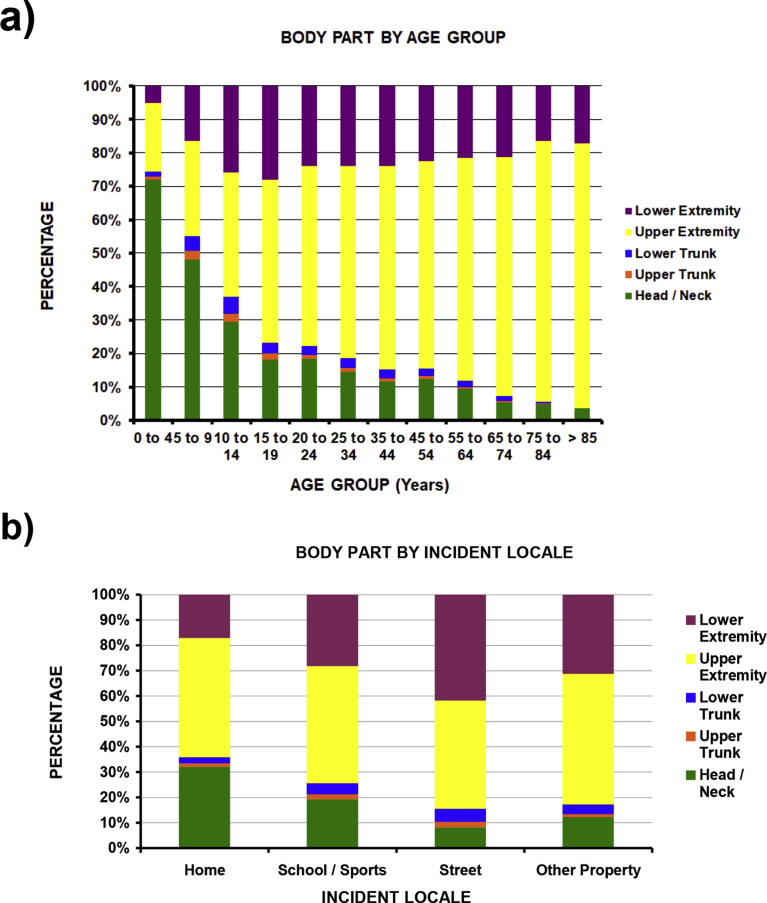
Dog bites are a significant public health issue. There is no comprehensive study of dog bite demographics. It was the purpose of this study to perform such an analysis across the US. The National Electronic Injury Surveillance System All Injury Program data for the years 2005 through 2013 was accessed; dog bite injuries were extracted and analyzed. Statistical analyses were performed with SUDAAN 11.0.01™ software to account for the weighted, stratified nature of the data. Incidence values were calculated using population data from the US Census Bureau. A P < 0.05 was considered significant. There was an average 337,103 ED visits each year for dog bites. The average age was 28.9 years; 52.6% were male and 47.4% female. The bites were located on the upper extremity in 47.3%, head/neck in 26.8%, lower extremity in 21.5%, and trunk in 4.4%. Younger patients had more bites involving the head/neck, while older patients the upper extremity. More occurred in the summer and on weekends and 80.2% occurred at home. Hospital admission occurred in 1.7%. Logistic regression analysis demonstrated that the odds of admission was solely dependent upon the age group. The OR for admission was 11.03 [4.68, 26.01] for those >85 years of age, 4.88 [2.89, 8.24] 75-84 years, and 2.79 [1.77, 4.39] those ≤4 years of age, with the 10-14 year age group the reference group. The average annual incidence was 1.1 per 1,000, and was slightly higher in males (1.18 vs 1.02 per 1,000). The estimated cost was at least 400 million US$ per year. Potential prevention strategies are educational programs directed at both children and parents/caretakers outlining the responsibilities of owning a dog. This information can be disseminated in health care facilities, radio/TV/Internet venues, and dog kennels/shelters.
Keywords: Epidemiology.
Figures
References
-
- Springer J. American Pet Products Association; Greenwich, CT: 2018. The 2017–2018 APPA National Pet Owners Survey.https://americanpetproducts.org/Uploads/MemServices/GPE2017_NPOS_Seminar...
-
- Statista.com . 2018. Estimated Pet Population in the United Kingdom.https://www.statista.com/statistics/308229/estimated-pet-population-in-t...
-
- Vest G.G. The History PlaceTM. Great Speeches Collection. 1855. Tribute to the dog.
-
- Palacio J., León M., García-Belenguer S. Aspectos epidemiológicos de las moreduras caninas (Epidemiological apsects of dog bites) Gac. Sanit. 2005;19:50–58. - PubMed
-
- Cornelissen J.M.R., Hopster H. Dog bites in The Netherlands: a study of victims, injuries, circumstances and aggressors to support evaluation of breed specific legislation. Vet. J. 2010;186:292–298. - PubMed
LinkOut - more resources
Full Text Sources
