Progression of Aphasia Severity in the Chronic Stages of Stroke
- PMID: 30958970
- PMCID: PMC6802862
- DOI: 10.1044/2018_AJSLP-18-0123
Progression of Aphasia Severity in the Chronic Stages of Stroke
Abstract
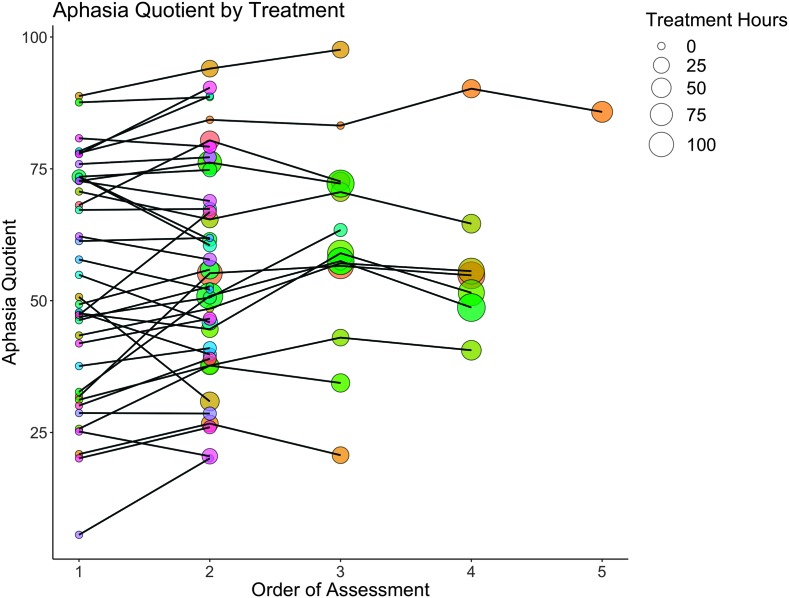
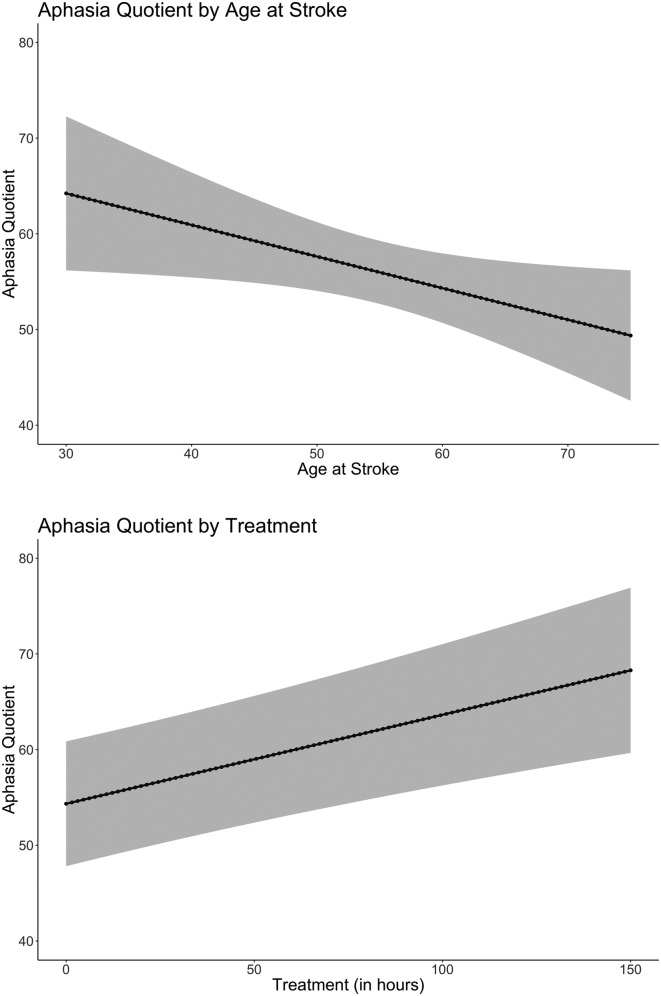
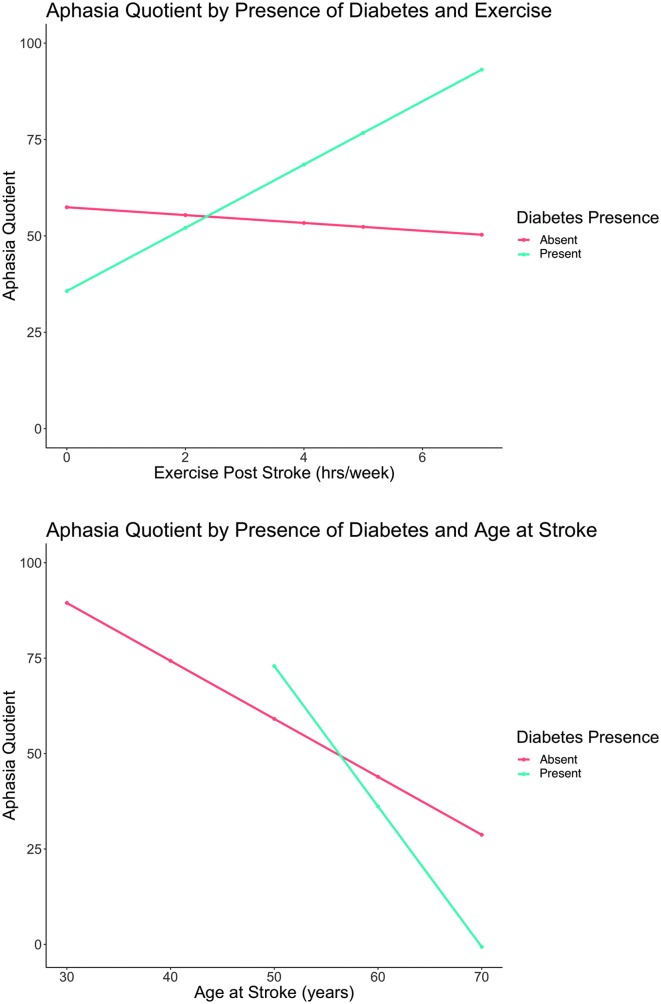
Background and Purpose The severity of aphasic impairment in chronic stroke survivors is typically thought to be stable by 6 months postonset. However, a recent study showed that stroke survivors with aphasia experience language improvement or decline in the chronic phase, years beyond onset. Little is known about why some individuals improve whereas others remain stable or decline. Additionally, no study has tracked changes in aphasia from assessments completed at multiple time points across many years. The current study offers a comprehensive analysis of potential predictive demographic and health information to determine which factors predict dynamic changes in aphasia severity in chronic stroke. Methods Individuals in the chronic stage of a single-event, left-hemisphere ischemic stroke were identified from an archival database and included for study ( N = 39). Participants were included if they had undergone 2 or more standardized language assessments acquired at time points at least 6 months apart, with the 1st assessment at least 6 months postinjury. A linear mixed-effects model was used to determine the impact of treatment and a variety of demographic and health factors on language change. Results Over time, half of the participants improved (51%), whereas approximately a quarter (26%) decreased, and a quarter (23%) remained stable. A greater number of aphasia treatment hours significantly predicted language improvement ( p = .03), whereas older stroke age was associated with long-term decline ( p = .04). Two interactions were found to be significant in predicting improvement in individuals with diabetes: Increased exercise and younger age at stroke were significant in predicting outcomes ( p < .05). Conclusions Factors that significantly influence language recovery in chronic aphasia include stroke age and receiving aphasia treatment. For those with diabetes, increased exercise was shown to improve outcomes. Results from this study offer clinicians greater insight into the influence of patient factors on long-term recovery from stroke aphasia while suggesting a potential adjunct to language therapy: exercise. Supplemental Material https://doi.org/10.23641/asha.7849304.
Figures
References
-
- Aftonomos L. B., Appelbaum J. S., & Steele R. D. (1999). Improving outcomes for persons with aphasia in advanced community-based treatment programs. Stroke, 30(7), 1370–1379. https://doi.org/10.1161/01.STR.30.7.1370 - PubMed
-
- Aftonomos L. B., Steele R. D., & Wertz R. T. (1997). Promoting recovery in chronic aphasia with an interactive technology. Archives of Physical Medicine and Rehabilitation, 78(8), 841–846. https://doi.org/10.1016/S0003-9993(97)90197-0 - PubMed
-
- Allen L., Mehta S., Mcclure J. A., & Teasell R. (2012). Therapeutic interventions for aphasia initiated more than six months post stroke: A review of the evidence. Topics in Stroke Rehabilitation, 19, 523–535. https://doi.org/10.1310/tsr1906-523 - PubMed
-
- Basso A., Capitani E., & Vignolo L. A. (1979). Influence of rehabilitation on language skills in aphasic patients: A controlled study. Archives of Neurology, 36(4), 190–196. https://doi.org/10.1001/archneur.1979.00500400044005 - PubMed
-
- Basso A., & Macis M. (2011). Therapy efficacy in chronic aphasia. Behavioural Neurology, 24(4), 317–325. https://doi.org/10.3233/BEN-2011-0342 - PMC - PubMed
Publication types
MeSH terms
Grants and funding
LinkOut - more resources
Full Text Sources
Medical