


Juglone in Oxidative Stress and Cell Signaling
- PMID: 30959841
- PMCID: PMC6523217
- DOI: 10.3390/antiox8040091
Juglone in Oxidative Stress and Cell Signaling
Abstract
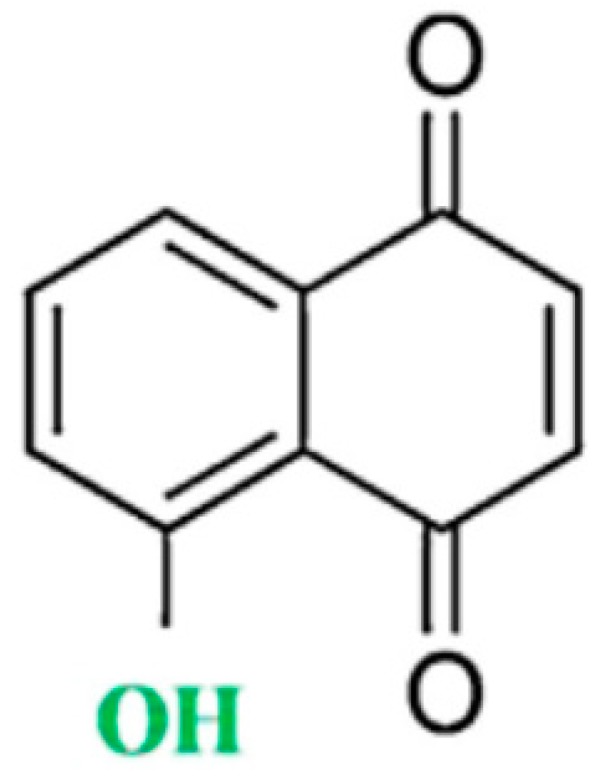
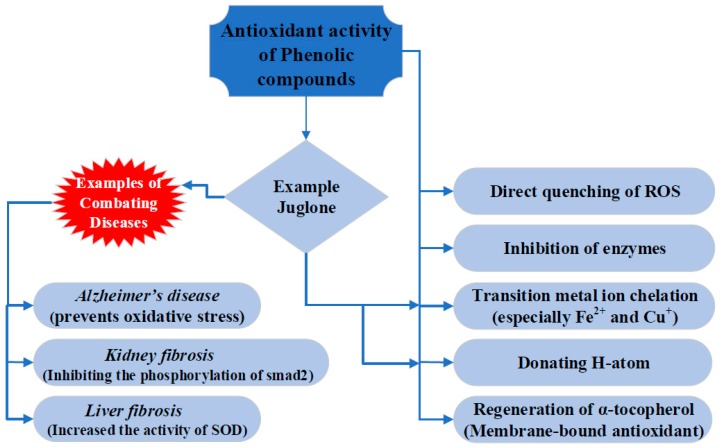
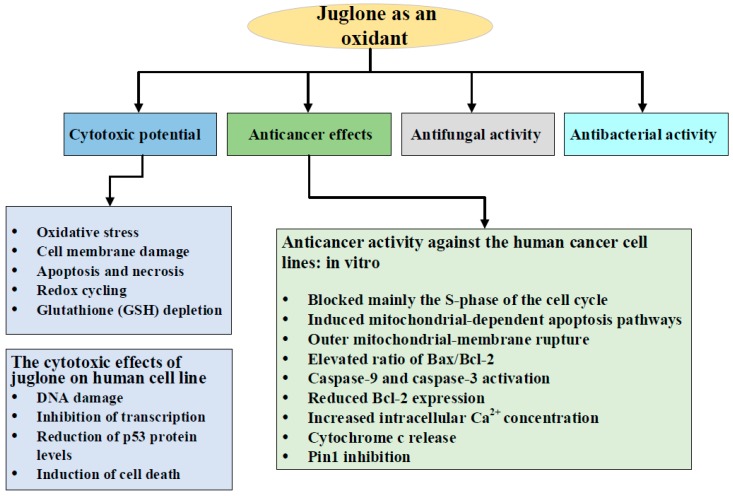
Juglone (5-hydroxyl-1,4-naphthoquinone) is a phenolic compound found in walnuts. Because of the antioxidant capacities of phenolic compounds, juglone may serve to combat oxidative stress, thereby protecting against the development of various diseases and aging processes. However, being a quinone molecule, juglone could also act as a redox cycling agent and produce reactive oxygen species. Such prooxidant properties of juglone may confer health effects, such as by killing cancer cells. Further, recent studies revealed that juglone influences cell signaling. Notably, juglone is an inhibitor of Pin1 (peptidyl-prolyl cis/trans isomerase) that could regulate phosphorylation of Tau, implicating potential effects of juglone in Alzheimer's disease. Juglone also activates mitogen-activated protein kinases that could promote cell survival, thereby protecting against conditions such as cardiac injury. This review describes recent advances in the understanding of the effects and roles of juglone in oxidative stress and cell signaling.
Keywords: Pin1; antioxidants; juglone; naphthoquinone; redox; signal transduction; walnuts.
Conflict of interest statement
The authors declare no conflict of interest.
Figures
References
-
- Carrion J.S., Fuentes N., Gonzalez-Samperiz P., Sanchez Quirante L., Finlayson J.C., Fernandez S., Andrade A. Holocene environmental change in a montane region of southern Europe with a long history of human settlement. Quat. Sci. Rev. 2007;26:1455–1475. doi: 10.1016/j.quascirev.2007.03.013. - DOI
-
- Fathi Azad F., Garjani A., Motevalian Naeini A. Study of hypoglycemic activity of the hydroalcholic extract of juglans regia in normal and diabetic rats. Pharma Sci. 2006;2:13–17.
-
- Aronis K.N., Vamvini M.T., Chamberland J.P., Sweeney L.L., Brennan A.M., Magkos F., Mantzoros C.S. Short-term walnut consumption increases circulating total adiponectin and apolipoprotein A concentrations, but does not affect markers of inflammation or vascular injury in obese humans with the metabolic syndrome: Data from a double-blinded, randomized, placebo-controlled study. Metabolism. 2012;61:577–582. doi: 10.1016/j.metabol.2011.09.008. - DOI - PMC - PubMed
Publication types
Grants and funding
LinkOut - more resources
Full Text Sources
Other Literature Sources
Miscellaneous
