. 2019 Apr 6;19(7):1650.
doi: 10.3390/s19071650.

Flexible 3D-Printed EEG Electrodes

Affiliations

Flexible 3D-Printed EEG Electrodes

Andrei Velcescu et al. Sensors (Basel). .

Abstract

For electroencephalography (EEG) in haired regions of the head, finger-based electrodes have been proposed in order to part the hair and make a direct contact with the scalp. Previous work has demonstrated 3D-printed fingered electrodes to allow personalisation and different configurations of electrodes to be used for different people or for different parts of the head. This paper presents flexible 3D-printed EEG electrodes for the first time. A flexible 3D printing element is now used, with three different base mechanical structures giving differently-shaped electrodes. To obtain improved sensing performance, the silver coatings used previously have been replaced with a silver/silver-chloride coating. This results in reduced electrode contact impedance and reduced contact noise. Detailed electro-mechanical testing is presented to demonstrate the performance of the operation of the new electrodes, particularly with regards to changes in conductivity under compression, together with on-person tests to demonstrate the recording of EEG signals.

Keywords: 3D printing; EEG; electrode.


Conflict of interest statement

The authors declare no conflict of interest.

Figures
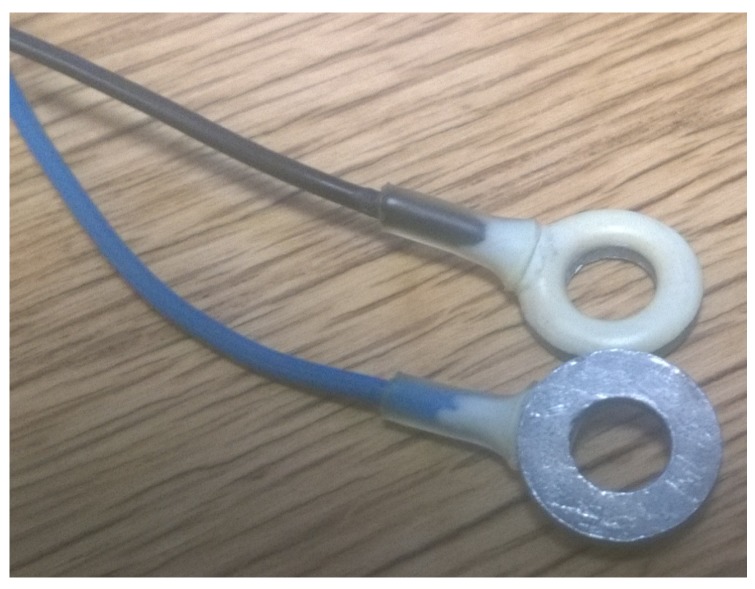
Figure 1
Figure 1
A conventional 1-cm disc EEG electrode made of sintered silver/silver-chloride.
Figure 2
Figure 2
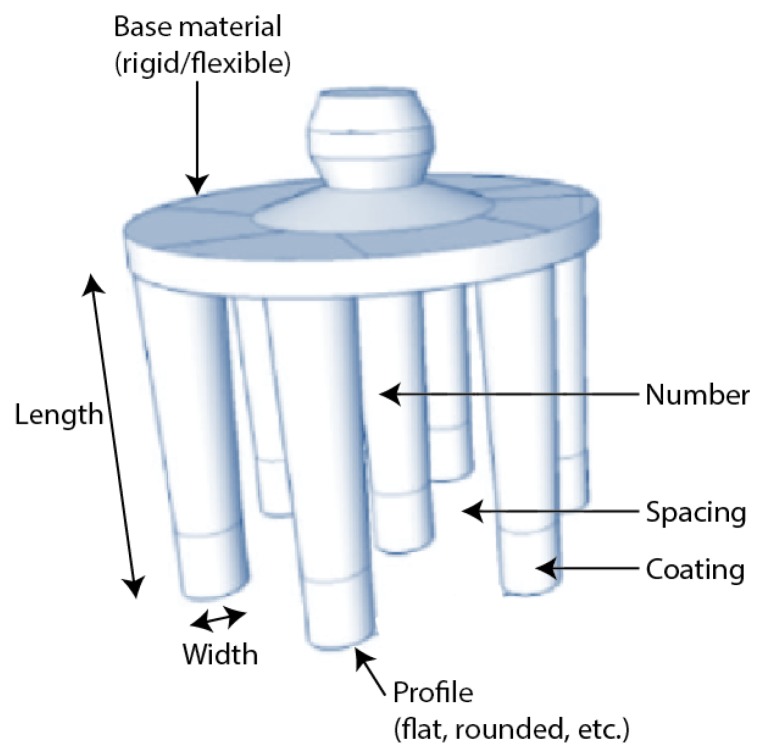
Personalisation parameters in fingered EEG electrodes for making a better connection to the scalp.
Figure 3
Figure 3
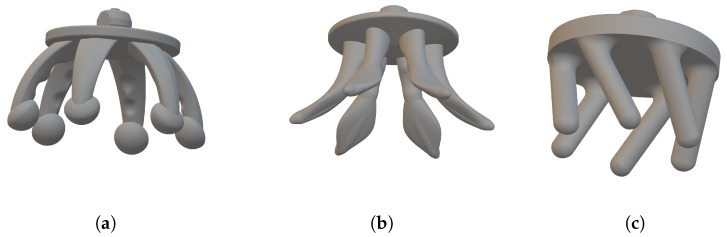
3D-printed electrode shapes investigated. All have a 1.5-mm snap connector on the upper side and are shown here with six fingers present. (a) Spider electrode. (b) Anti-spider electrode. (c) Spiny electrode.
Figure 4
Figure 4
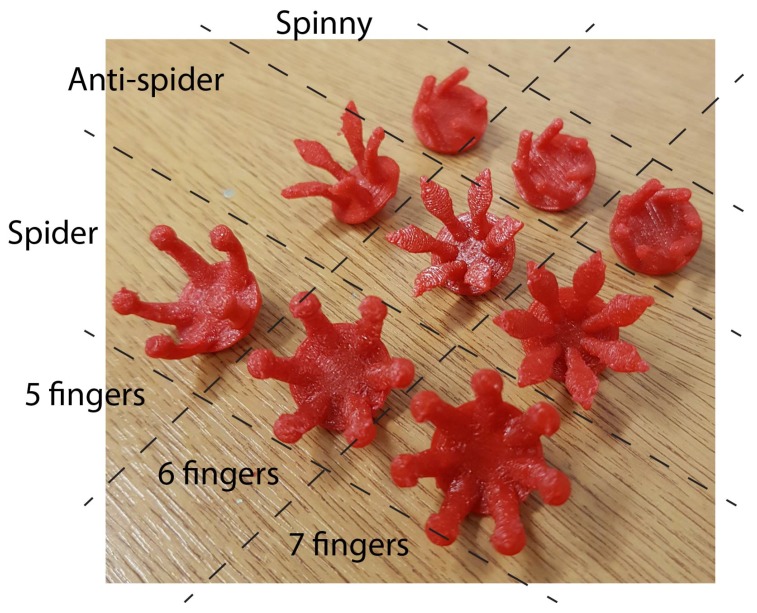
Nine different electrode configurations investigated here after 3D printing.
Figure 5
Figure 5
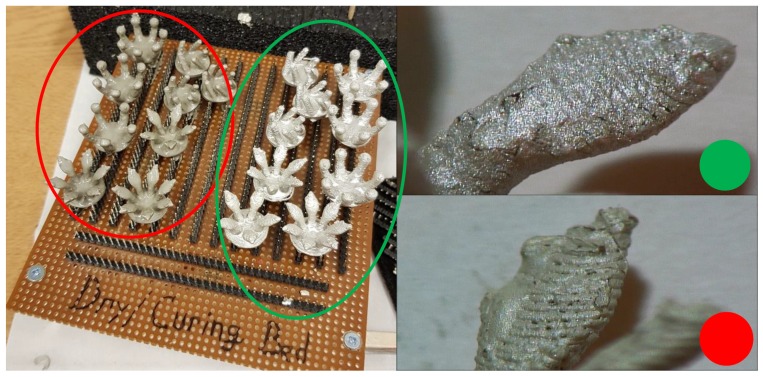
Coated electrodes, with a ×40 zoom. Green: Ag/AgCl used for the results in Section 3. Red: silicone Ag/AgCl, which gave a poor adhesion to the 3D-printed base.
Figure 6
Figure 6
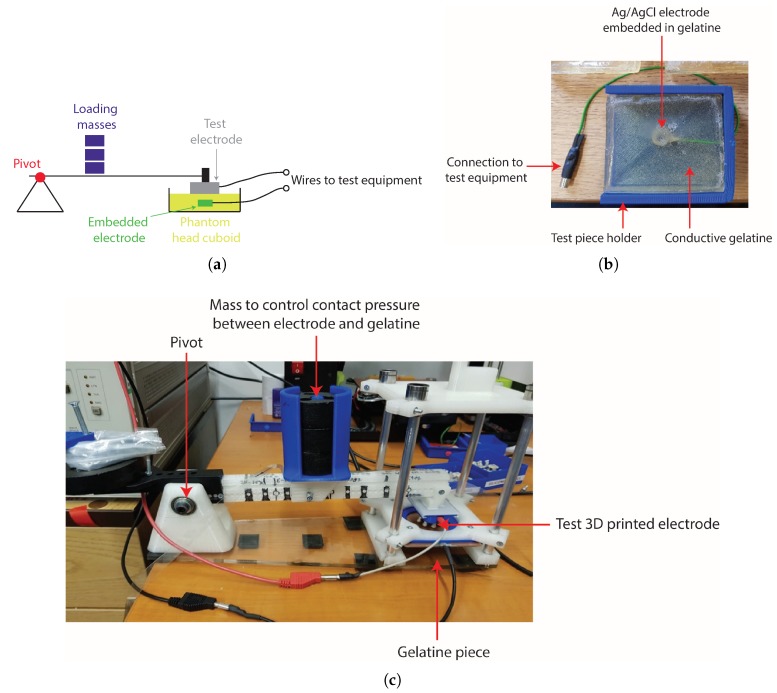
Test setup used. (a) Pivot structure used to control the force/pressure of the contact between the electrode and the gelatine test piece. (b) Conductive gelatine used as a phantom head, here set in the shape of a cuboid with an embedded reference electrode. (c) Photograph of the arrangement.
Figure 7
Figure 7
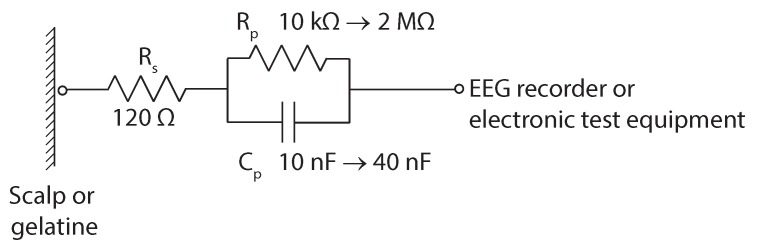
Wet silver/silver-chloride electrode model from [15]. Rs is a series resistor modelling the bulk electrode impedance and the series component of the contact impedance, while Rp and Cp model the rest of the contact impedance.
Figure 8
Figure 8
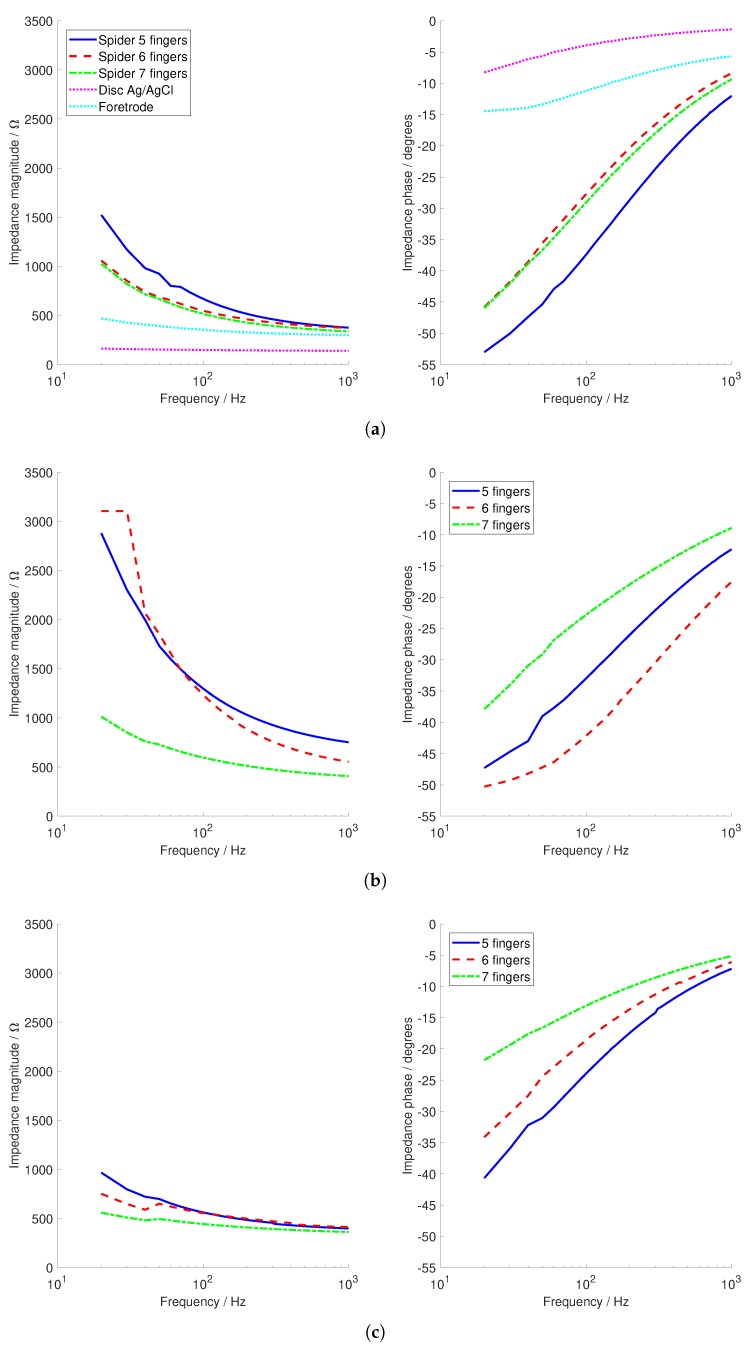
Contact impedance (magnitude and phase) for the different electrode configurations. (a) Spider electrode and the Ag/AgCl disc and Foretrode comparison electrodes. (b) Anti-spider electrode. (c) Spiny electrode.
Figure 9
Figure 9
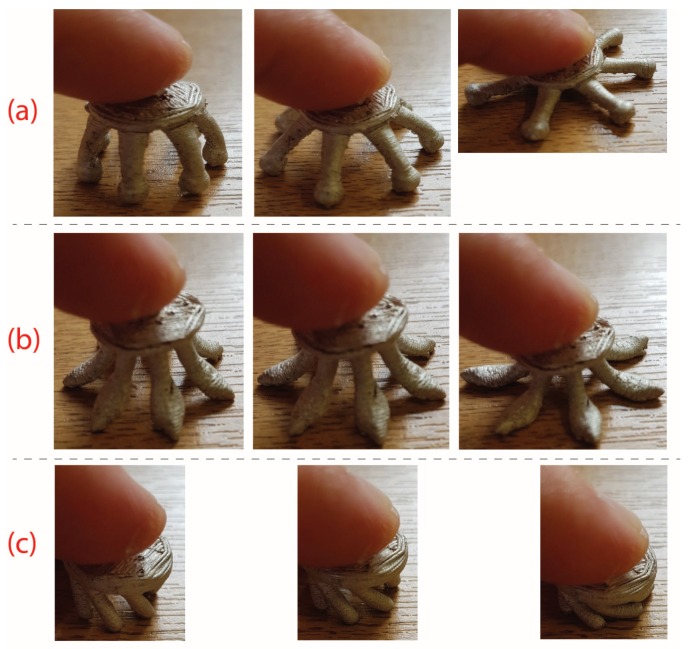
Physical deformations of the different electrodes when pressed against a fixed surface show the different shapes in which the fingers spread. (a) Spider electrode. (b) Anti-spider electrode. (c) Spiny electrode.
Figure 10
Figure 10
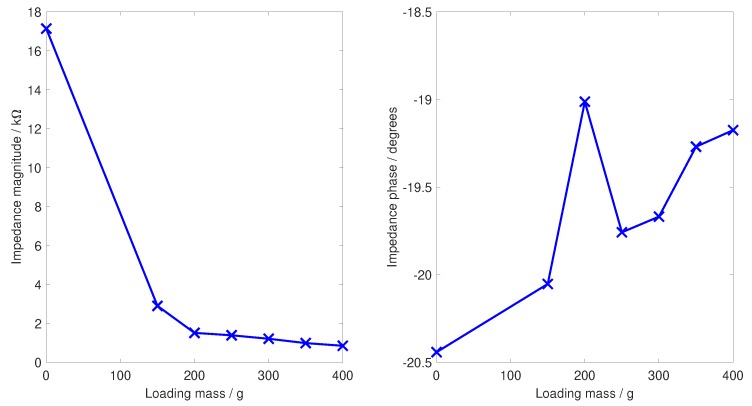
Contact impedance for the spider seven-finger electrode, measured at 35 Hz to match on-person contact impedance readings as the contact loading is varied across the comfortable range.
Figure 11
Figure 11
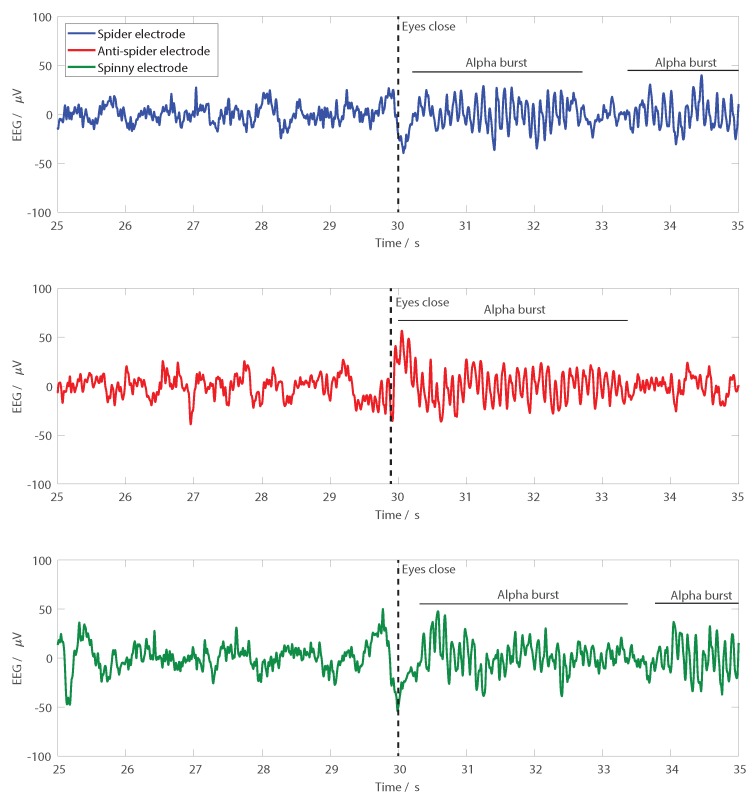
Example EEG recordings from Oz with the three different electrode types. Participants were asked to close their eyes at the 30-s mark, and clear bursts of alpha activity are seen following the eyes closing with all of the electrode types.

References

    1. Casson A.J., Abdulaal M., Dulabh M., Kohli S., Krachunov S., Trimble E.V. Electroencephalogram. In: Tamura T., Chen W., editors. Seamless Healthcare Monitoring. Springer; Cham, Switzerland: 2018. pp. 45–81.
    1. Im C., Seo J.M. A review of electrodes for the electrical brain signal recording. Biomed. Eng. Lett. 2016;6:104–112. doi: 10.1007/s13534-016-0235-1. - DOI
    1. Tallgren P., Vanhatalo S., Kaila K., Voipio J. Evaluation of commercially available electrodes and gels for recording of slow EEG potentials. Clin. Neurophysiol. 2005;116:799–806. doi: 10.1016/j.clinph.2004.10.001. - DOI - PubMed
    1. Lopez-Gordo M.A., Sanchez-Morillo D., Valle F.P. Dry EEG Electrodes. Sensors. 2014;14:12847–12870. doi: 10.3390/s140712847. - DOI - PMC - PubMed
    1. Salvo P., Raedt R., Carrette E., Schaubroeck D., Vanfleteren J., Cardon L. A 3D printed dry electrode for ECG/EEG recording. Sens. Actuator A Phys. 2012;174:96–102. doi: 10.1016/j.sna.2011.12.017. - DOI

LinkOut - more resources