Review
. 2018 Jul 27;10(8):830.
doi: 10.3390/polym10080830.

Stimuli-Responsive Polypeptides for Biomedical Applications

Affiliations
Review

Stimuli-Responsive Polypeptides for Biomedical Applications

DaeYong Lee et al. Polymers (Basel). .

Abstract

Stimuli-responsive polypeptides have gained attention because desirable bioactive properties can be easily imparted to them while keeping their biocompatibility and biodegradability intact. In this review, we summarize the most recent advances in various stimuli-responsive polypeptides (pH, reduction, oxidation, glucose, adenosine triphosphate (ATP), and enzyme) over the past five years. Various synthetic strategies exploited for advanced polypeptide-based materials are introduced, and their applicability in biomedical fields is discussed. The recent polypeptides imparted with new stimuli-responsiveness and their novel chemical and physical properties are explained in this review.

Keywords: drug and gene delivery systems; polypeptides-based materials; stimuli-responsiveness.


Conflict of interest statement

The authors declare no conflict of interest.

Figures
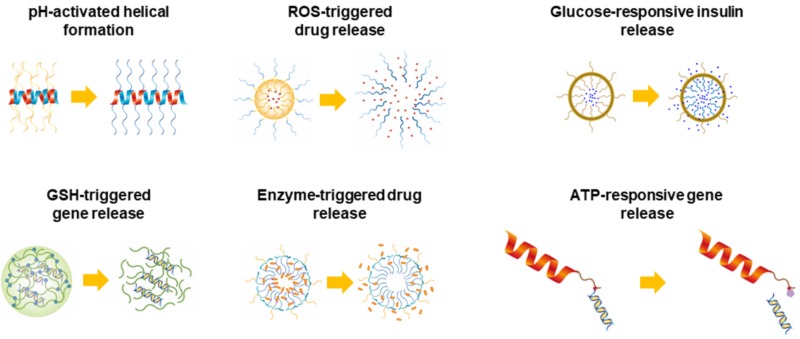
Figure 1
Figure 1
Schematic illustration of representative stimuli-responsive polypeptides used in biomedical fields.
Figure 2
Figure 2
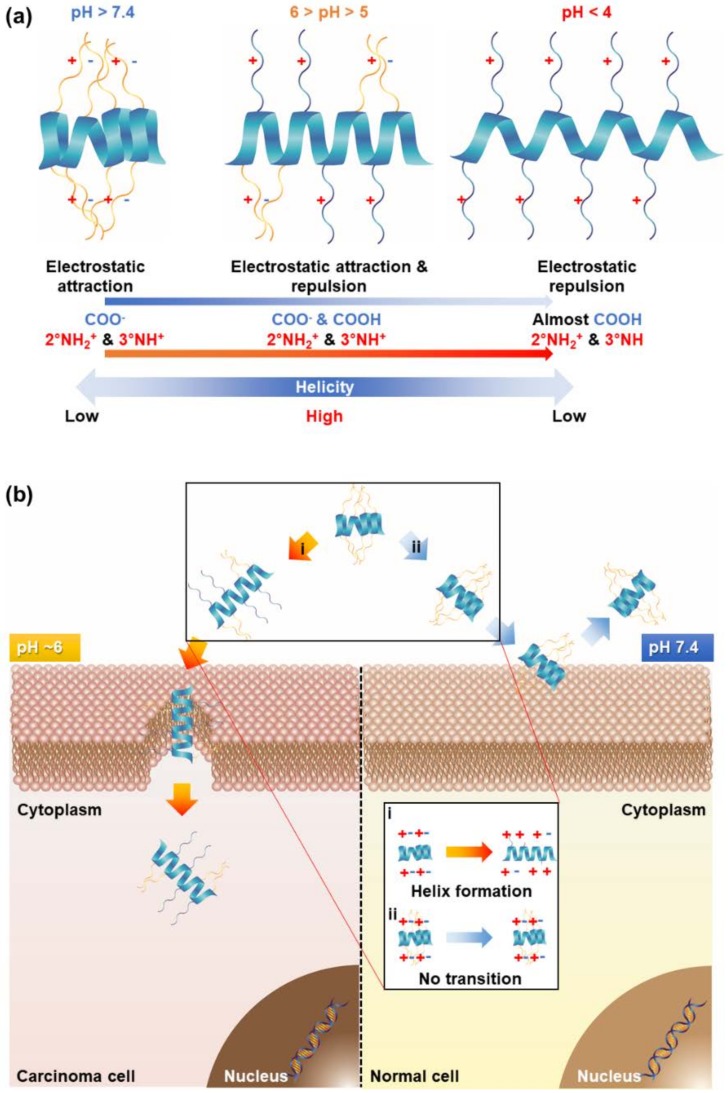
Design of pH-controllable cell-penetrating polypeptides (PCCPs), and proposed mechanism of pH-controllable helicity and selective cellular penetration. (a) Proposed mechanism of PCCP possessing a pH-activated cell-penetrating property exclusively at the tumor extracellular matrix. 2° and 3° indicate “secondary” and “tertiary”, respectively. (b) Schematic illustration of the PCCP undergoing pH-dependent conformational transition induced by the charge balances of two opposite ions. Reprinted permission from [11]. Copyright 2017, Elsevier.
Figure 3
Figure 3
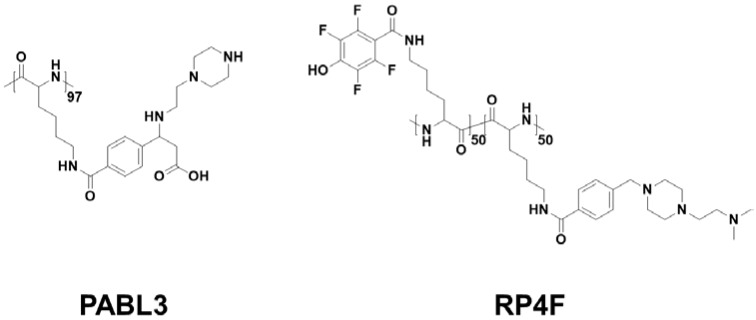
Representative pH-responsive polypeptides undergoing the conformational transition.
Figure 4
Figure 4
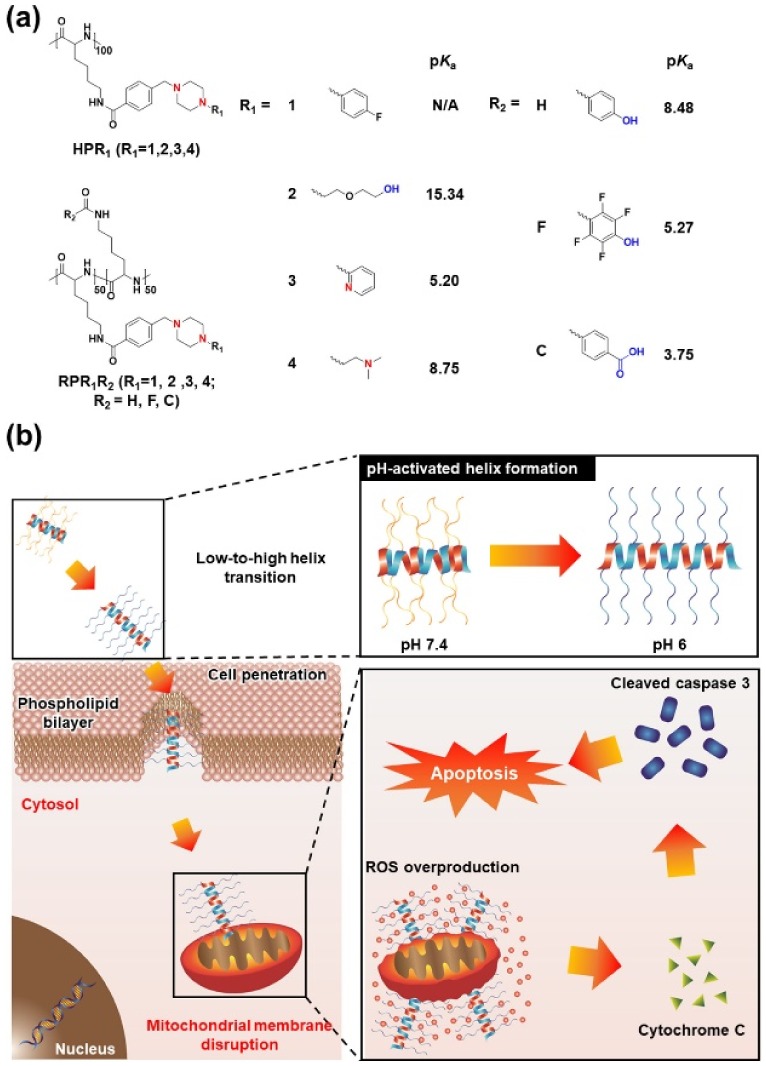
Schematic illustration of several conformational transitions and the selective pro-apoptotic mechanism. (a) Chemical structures and pKa values of the homo cationic helical polypeptides and random cationic helical copolypeptides. (b) pH-activated mitochondria-destabilizing helical polypeptides selectively translocates across carcinoma plasma membranes and then, aggravates the disruption of mitochondria membranes thereby inducing pro-apoptosis. All the pKa values were estimated by Marvin and JChem calculator plugins. Reprinted permission from [12]. Copyright 2017, Elsevier.
Figure 5
Figure 5
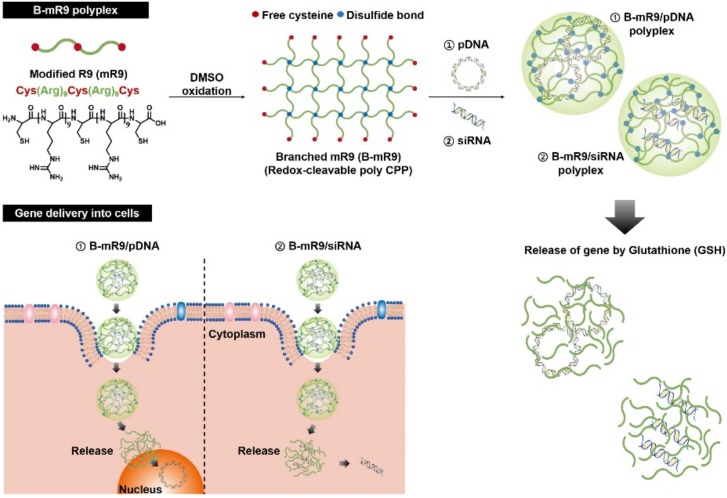
Schematic illustration of the synthesis of the branched-modified R9 (B-mR9) cell-penetrating peptide (CPP) and construction of pDNA and siRNA polyplexes. Positively charged B-mR9 is constructed with negatively charged genes through electrostatic interactions. B-mR9 polyplexes is delivered into cells by means of the permeability of the CPP. The branched structures of B-mR9 can then be cleaved by the reductive conditions of the intracellular matrix releasing the pDNA or siRNA into the nucleus or cytoplasm, respectively. Reprinted with permission from [30]. Copyright 2017, Elsevier.
Figure 6
Figure 6
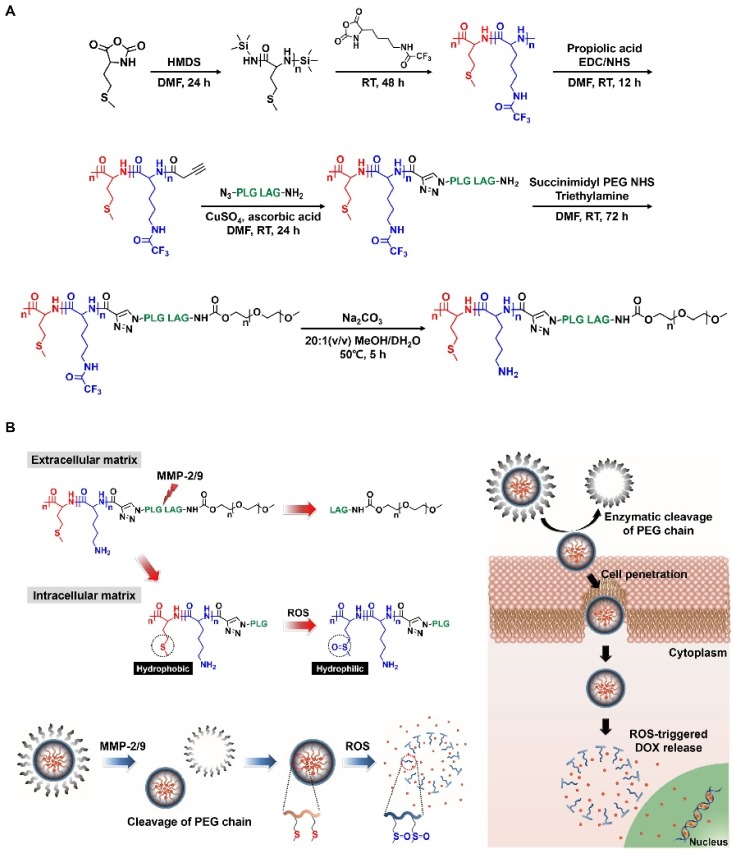
Synthesis procedure and schematic illustration. (A) Synthesis of poly(l-methionine-block-l-lysine)-PLGLAG-PEG (MLMP). (B) Schematic illustration of the anticancer drug delivery procedure. The MMP-sensitive linker of MLMP can be cleaved in the extracellular matrix of cancer cells. After enzymatic cleavage of the PEG chains, poly-l-lysine chains are revealed and can penetrate cells because of its CPP property. The hydrophobic thioether groups of the poly-l-methionine chains are then converted to hydrophilic sulfoxide groups by the intracellular matrix rich in ROS. Through the conversions of the polypeptide chain, the micelle structures of the MLMP (DOX) are destroyed, and then, the encapsulated DOX is released into the cells. Reprinted with permission from [39]. Copyright 2017, Elsevier.
Figure 7
Figure 7
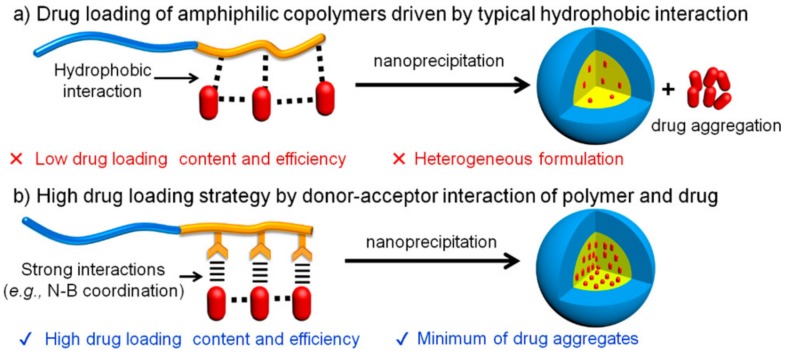
(a) Unwanted formation of drug aggregates during drug-loading via hydrophobic interactions. (b) Quantitative and high drug-loading enabled via specific drug–polymer coordination interactions. Reprinted with permission from [46]. Copyright 2018, American Chemical Society.
Figure 8
Figure 8
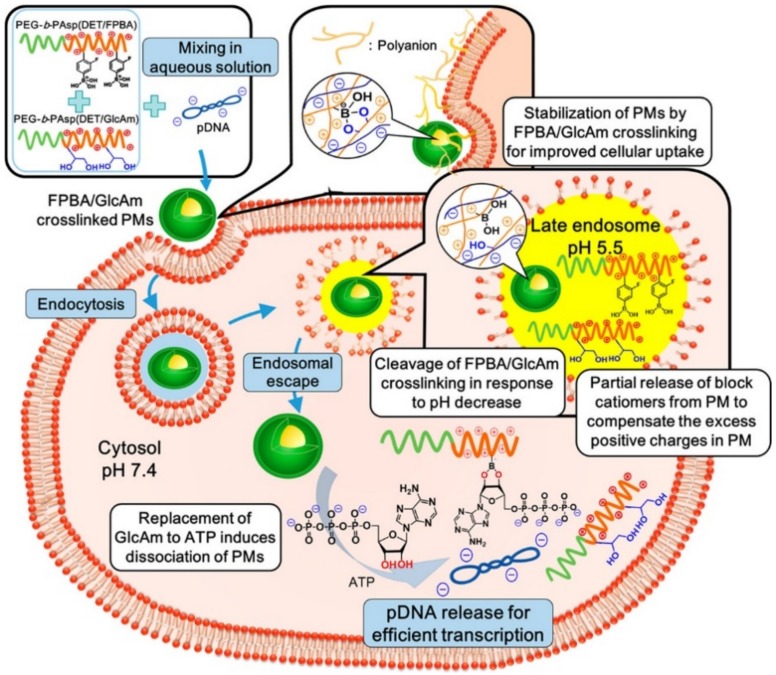
Schematic Illustration of Intracellular Trafficking of FPBA/GlcAm-Cross-Linked Polyplex Micelles (PM), Leading to Smooth Gene Expression, via the Cumulative Processes of Cellular Entry, Endosomal Escape, and ATP-Responsive pDNA Release. Reprinted with permission from [53]. Copyright 2017, American Chemical Society.
Figure 9
Figure 9
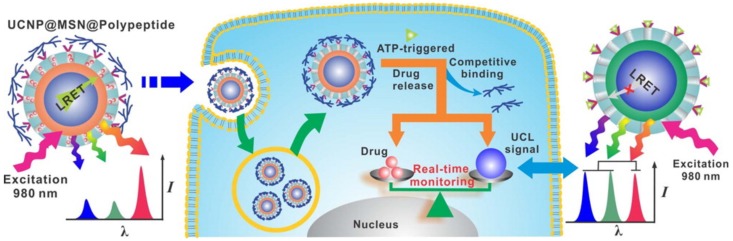
Schematic representation of the real-time monitoring of ATP-responsive drug release. When drugs are released in the cytosol, the fluorescence intensity is much higher. Reprinted permission from [54]. Copyright 2015, American Chemical Society.

References

    1. Hoffman A.S. Stimuli-responsive polymers: Biomedical applications and challenges for clinical translation. Adv. Drug Deliv. Rev. 2013;65:10–16. doi: 10.1016/j.addr.2012.11.004. - DOI - PubMed
    1. Mura S., Nicolas J., Couvreur P. Stimuli-responsive nanocarriers for drug delivery. Nat. Mater. 2013;12:991–1003. doi: 10.1038/nmat3776. - DOI - PubMed
    1. Shen Y., Fu X.H., Fu W.X., Li Z.B. Biodegradable stimuli-responsive polypeptide materials prepared by ring opening polymerization. Chem. Soc. Rev. 2015;44:612–622. doi: 10.1039/C4CS00271G. - DOI - PubMed
    1. Lowik D.W.P.M., Leunissen E.H.P., van den Heuvel M., Hansen M.B., van Hest J.C.M. Stimulus responsive peptide based materials. Chem. Soc. Rev. 2010;39:3394–3412. doi: 10.1039/b914342b. - DOI - PubMed
    1. Lu H., Wang J., Song Z.Y., Yin L.C., Zhang Y.F., Tang H.Y., Tu C.L., Lin Y., Cheng J.J. Recent advances in amino acid N-carboxyanhydrides and synthetic polypeptides: Chemistry, self-assembly and biological applications. Chem. Commun. 2014;50:139–155. doi: 10.1039/C3CC46317F. - DOI - PubMed

LinkOut - more resources