


Exogenous lipoid pneumonia in children: A systematic review
- PMID: 30962152
- PMCID: PMC7106224
- DOI: 10.1016/j.prrv.2019.01.001
Exogenous lipoid pneumonia in children: A systematic review
Abstract
Objectives: To describe the clinical-radiological-pathological characteristics and treatment outcomes of children with suspected exogenous lipoid pneumonia (ELP).
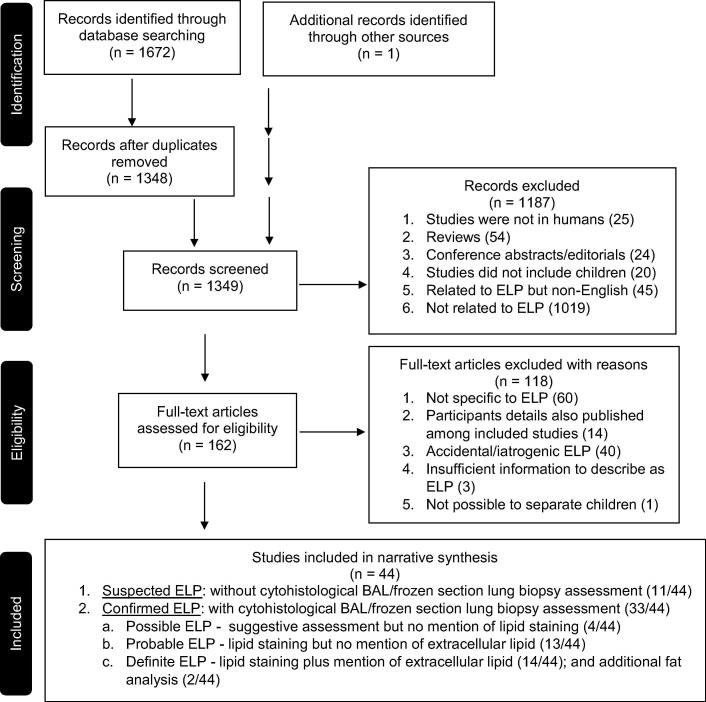
Design: Systematic review. We searched electronic databases and reference lists published between 1967 and 2018, restricted to non-accidental cases.
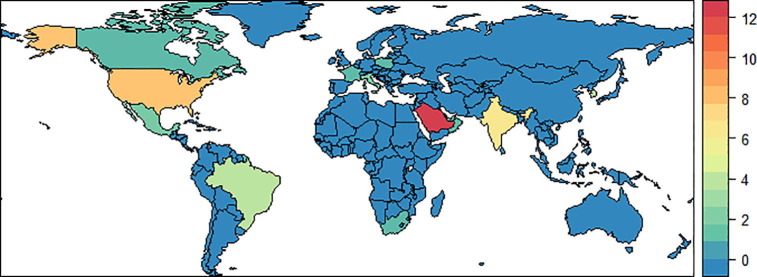
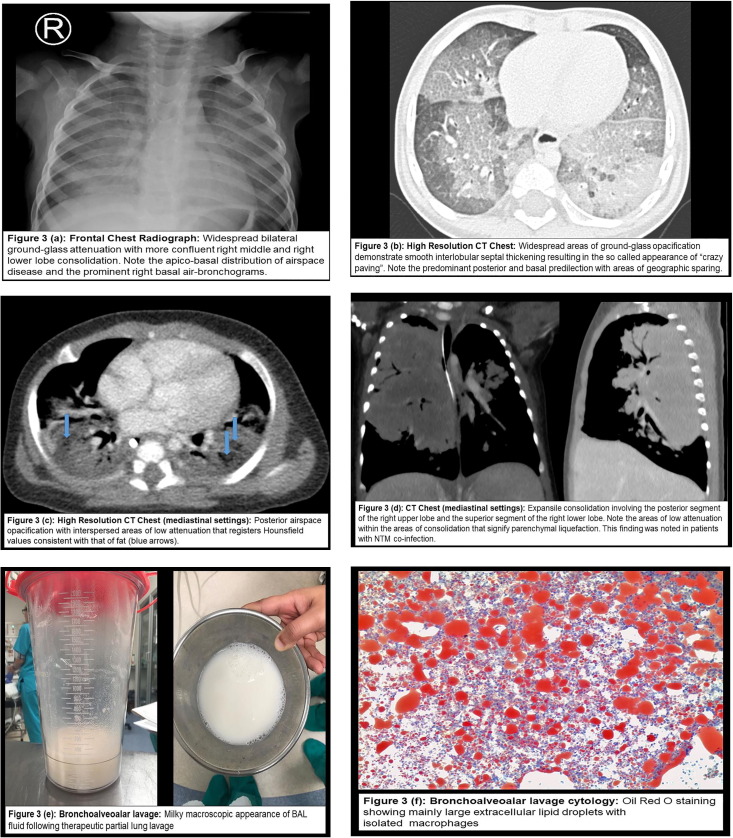
Results: Forty-four studies including 489 participants aged 1 day to 17 years from 13 countries were included. Cultural, medical, and behavioural rationale for oil-use was described. The clinical-radiological presentation varied widely. Diagnostic certainty was deemed highest if ELP was confirmed on bronchoalveolar lavage/frozen section lung biopsy with documented extracellular lipid on cytological staining and/or fat analysis. Non-tuberculous mycobacteria infection was identified in six studies: Mycobacterium fortuitum/chelonei, Mycobacterium smegmatis and Mycobacterium abscessus. Treatment comprised supportive therapy, corticosteroids, stopping oil, therapeutic lung-lavage and surgical resection. Outcomes were reported inconsistently.
Conclusion: Paediatric ELP resulting from cultural and medical practices continues to be described globally. Preventive interventions, standardized reporting, and treatment efficacy studies for cases not averted, are lacking. Protocol registration: PROSPERO CRD42017068313.
Keywords: Children’s interstitial lung disease (chILD); Global Health; Oil.
Copyright © 2019 Elsevier Ltd. All rights reserved.
Figures
References
-
- Hadda V., Khilnani G.C. Lipoid pneumonia: an overview. Expert Rev Respir Med. 2010;4(6):799–807. - PubMed
-
- Betancourt S.L., Martinez-Jimenez S., Rossi S.E., Truong M.T., Carrillo J., Erasmus J.J. Lipoid pneumonia: spectrum of clinical and radiologic manifestations. AJR Am J Roentgenol. 2010;194(1):103–109. - PubMed
-
- Pinkerton H. Oils and fats: their entrance into and fate in the lungs of infants and children: a clinical and pathologic report. Am J Dis Child. 1927;33(2):259–285.
-
- Ikeda K. Oil aspiration pneumonia (lipoid pneumonia): clinical, pathologic and experimental consideration. Am J Dis Child. 1935;49(4):985–1006.
Publication types
MeSH terms
Substances
LinkOut - more resources
Full Text Sources
