


Resveratrol attenuates inflammation environment-induced nucleus pulposus cell senescence in vitro
- PMID: 30962260
- PMCID: PMC6509054
- DOI: 10.1042/BSR20190126
Resveratrol attenuates inflammation environment-induced nucleus pulposus cell senescence in vitro
Retraction in
-
Retraction: Resveratrol attenuates inflammation environment-induced nucleus pulposus cell senescence in vitro.Biosci Rep. 2024 Aug 28;44(8):BSR-2019-0126_RET. doi: 10.1042/BSR-2019-0126_RET. Biosci Rep. 2024. PMID: 39171818 Free PMC article. No abstract available.
Abstract
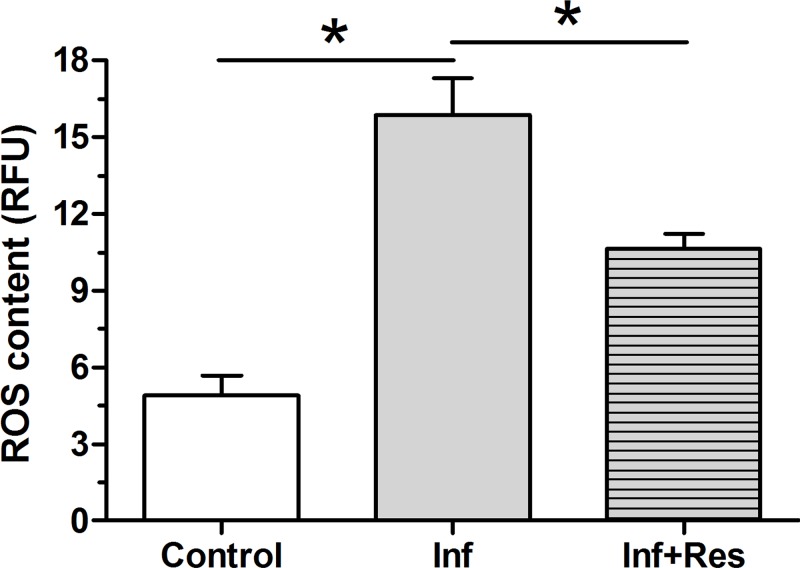
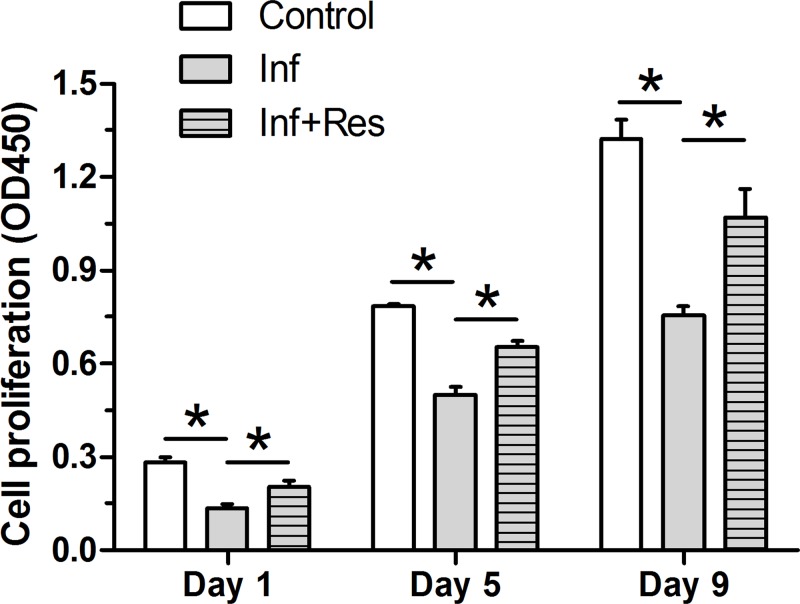
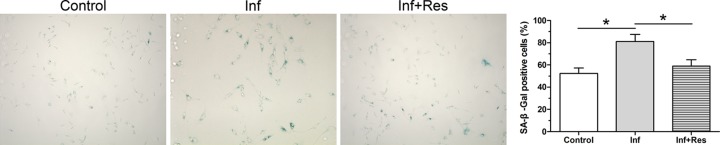
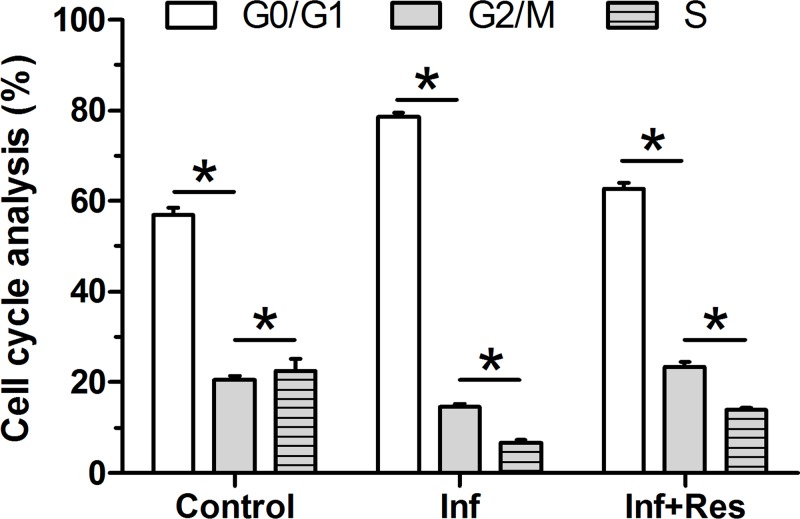
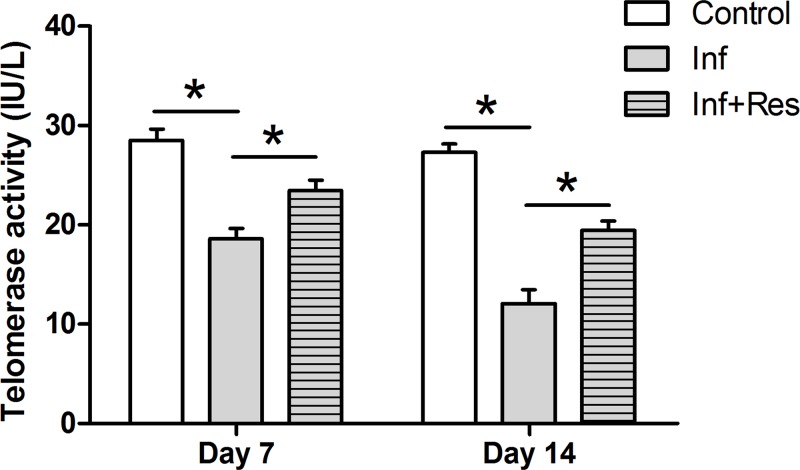
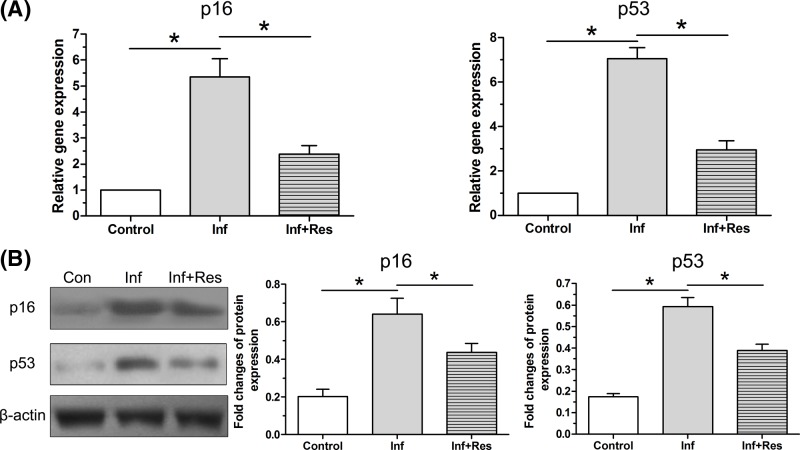
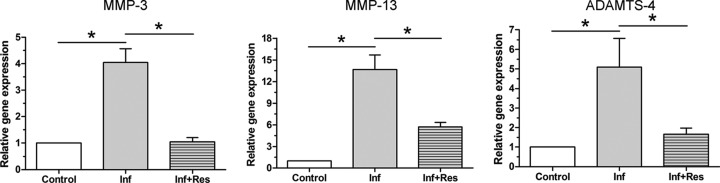
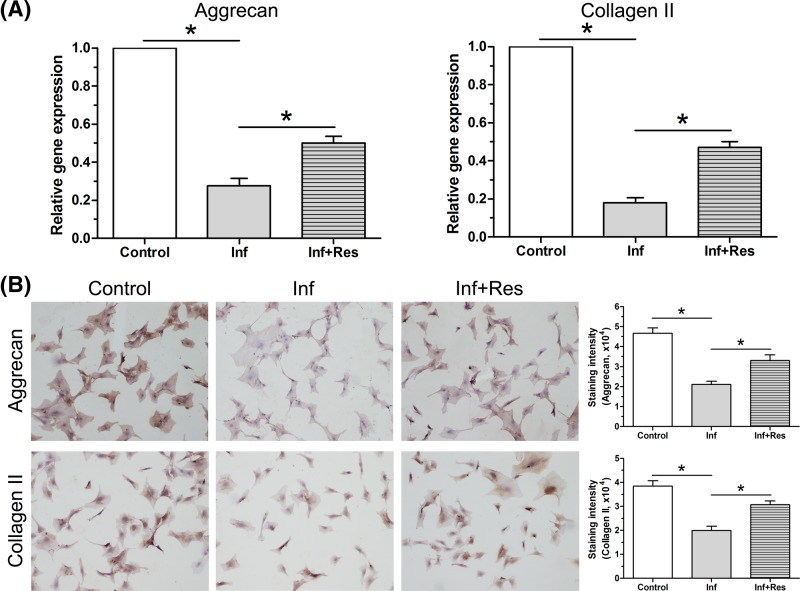
Intervertebral disc degeneration is a disease identified as an inflammation response-participated pathological process. As a classical cellular feature, disc cell senescence is reported to be closely related with disc cell senescence. Resveratrol has a protective role against inflammation in some cells. However, its biological effects on disc cells remain largely unclear. The present study was aimed to study the effects of resveratrol on disc nucleus pulposus (NP) cell senescence in an inflammation environment. Isolated NP cells were cultured in cultured medium with (control group) or without (inflammation group) inflammatory cytokine TNF-α and IL-1β for 14 days. Resveratrol was added along with the NP cells treated with inflammatory cytokines to investigate its effects. NP cell senescence was analyzed by senescence-associated β-Galactosidase (SA-β-Gal) staining, cell proliferation, G0/1 cell cycle arrest, telomerase activity, gene/protein expression of senescence markers (p16 and p53) and NP matrix biosynthesis. In addition, the intracellular reactive oxygen species (ROS) was also analyzed. Compared with the control group, inflammation group significantly increased SA-β-Gal activity and ROS content, decreased cell proliferation and telomerase activity, promoted G0/1 cell cycle arrest, up-regulated gene/protein expression of senescence markers (p16 and p53) and matrix catabolism enzymes (MMP-3, MMP-13 and ADAMTS-4), and down-regulated gene/protein expression of NP matrix macromolecules (aggrecan and collagen II). However, resveratrol partly reversed the effects of inflammatory cytokine on these cell senescence-associated parameters. Together, resveratrol was effective to suppress cell senescence in an inflammatory environment. The present study shows new knowledge on how to retard inflammation response-initiated disc degeneration.
Keywords: cell senescence; intervertebral disc degeneration; nucleus pulposus; resveratrol.
© 2019 The Author(s).
Conflict of interest statement
The authors declare that there are no competing interests associated with the manuscript.
Figures
References
-
- GBD 2016 Disease and Injury Incidence and Prevalence Collaborators, (2017) Global, regional, and national incidence, prevalence, and years lived with disability for 328 diseases and injuries for 195 countries, 1990-2016: a systematic analysis for the Global Burden of Disease Study 2016. Lancet 390, 1211–1259 10.1016/S0140-6736(17)32154-2 - DOI - PMC - PubMed
Publication types
MeSH terms
Substances
LinkOut - more resources
Full Text Sources
Medical
Research Materials
Miscellaneous
