


The medical perspective of cupping therapy: Effects and mechanisms of action
- PMID: 30963043
- PMCID: PMC6435947
- DOI: 10.1016/j.jtcme.2018.03.003
The medical perspective of cupping therapy: Effects and mechanisms of action
Abstract
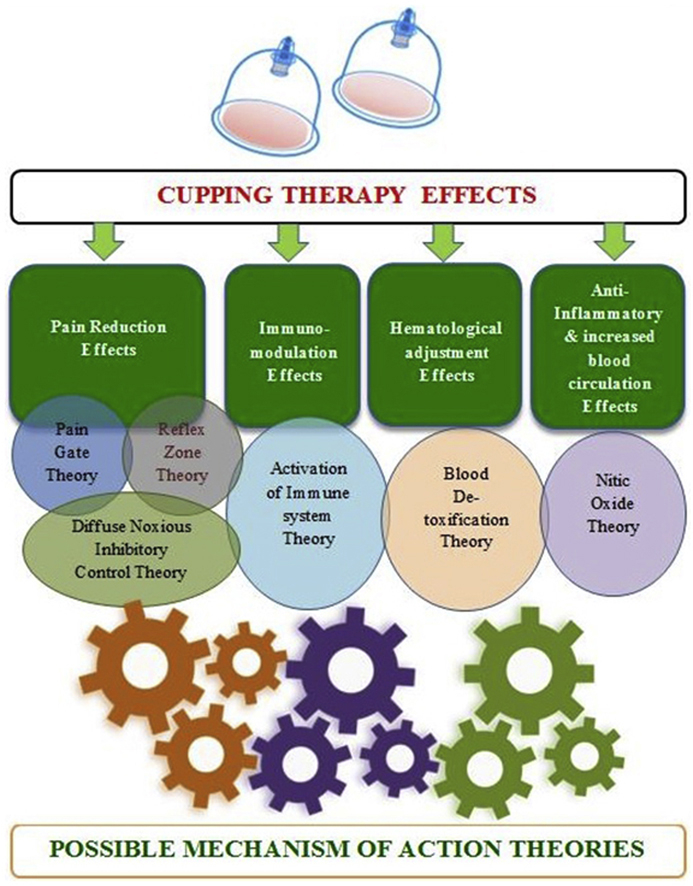
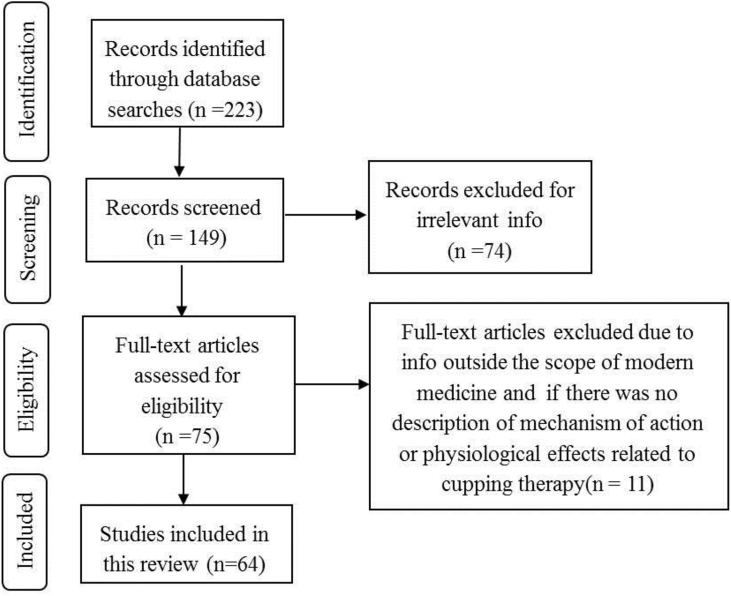
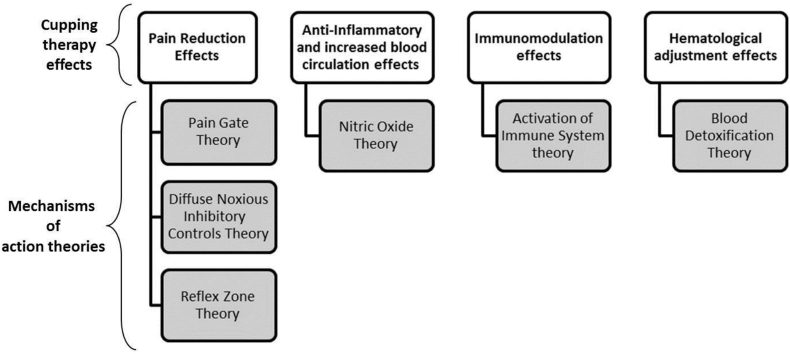
Cupping Therapy (CT) is an ancient method and currently used in the treatment of a broad range of medical conditions. Nonetheless the mechanism of action of (CT) is not fully understood. This review aimed to identify possible mechanisms of action of (CT) from modern medicine perspective and offer possible explanations of its effects. English literature in PubMed, Cochrane Library and Google Scholar was searched using key words. Only 223 articles identified, 149 records screened, and 74 articles excluded for irrelevancy. Only 75 full-text articles were assessed for eligibility, included studies in this review were 64. Six theories have been suggested to explain the effects produced by cupping therapy. Pain reduction and changes in biomechanical properties of the skin could be explained by "Pain-Gate Theory", "Diffuse Noxious Inhibitory Controls" and "Reflex zone theory". Muscle relaxation, changes in local tissue structures and increase in blood circulation might be explained by "Nitric Oxide theory". Immunological effects and hormonal adjustments might be attributed to "Activation of immune system theory". Releasing of toxins and removal of wastes and heavy metals might be explained by "Blood Detoxification Theory". These theories may overlap or work interchangeably to produce various therapeutic effects in specific ailments and diseases. Apparently, no single theory exists to explain the whole effects of cupping. Further researches are needed to support or refute the aforesaid theories, and also develop innovative conceptualizations of (CT) in future.
Keywords: Cupping; Effects; Hijama; Mechanisms of action.
Figures
References
-
- Ullah K., Younis A., Wali M. An investigation into the effect of cupping therapy as a treatment for anterior knee pain and its potential role in health promotion. Internet J Alternative Med. 2006;4:1.
-
- Al-Bedah A.M., Aboushanab T.S., Alqaed M.S. Classification of Cupping Therapy: a tool for modernization and standardization. J. Compl. Alternative Med. Res. 2016;1 1:1-0.
-
- Ghods R., Sayfouri N., Ayati M.H. Anatomical features of the interscapular area where wet cupping therapy is done and its possible relation to acupuncture meridians. J Acupunct Meridian Stud. 2016;9:290–296. 6. - PubMed
-
- Rozenfeld Evgeni, Kalichman Leonid. New is the well-forgotten old: the use of dry cupping in musculoskeletal medicine. J Bodyw Mov Ther. 2016;20(1):173–178. - PubMed
Publication types
LinkOut - more resources
Full Text Sources
Medical