


Clinical study of effectiveness and safety of CELcomplex® containing Cucurbita Pepo Seed extract and Flax and Casuarina on stress urinary incontinence in women
- PMID: 30963048
- PMCID: PMC6435946
- DOI: 10.1016/j.jtcme.2017.10.005
Clinical study of effectiveness and safety of CELcomplex® containing Cucurbita Pepo Seed extract and Flax and Casuarina on stress urinary incontinence in women
Abstract
Aim: The safety and effectiveness of a preparation containing a mix of Cucurbita Pepo Seed extract, Equisetum arvense and Linum usitatissimum - Flax A (CELcomplex®) on stress urinary incontinence (SUI) was evaluated in female patients recruited from 20 urological and gynaecological outpatient clinics in Slovakia.
Methods: A total of 86 women aged from 32 to 88 with SUI (grade 1 = 44, grade 2 = 42) were enrolled in the study and followed-up for six weeks (point 1) and twelve weeks (point 2). The primary outcome of the study was evaluated by changes in day-time and nocturnal urinary frequency (bathroom visits) and urinary incontinence episodes (leaks). Also, adverse events were quantified as well as the self-perceived effectiveness of the treatment. Research Ethics Board approval was obtained for this study.
Results: After 12 weeks of treatment there was a 30% (grade 1 SUI, p < 0.01), and 35% (grade 2 SUI, p < 0.01) improvement in urinary incontinence episodes, a 40% (grade 1 SUI, p < 0.01) and 26% (grade 2 SUI, p < 0.01) improvement in day-time urination frequency and 64% (grade 1 SUI, p < 0.01) and 54% (grade 2 SUI, p < 0.01) improvement in nocturnal urinary frequency. Reported side effects were: headache (3.5%), flatulence (4.1%) and gastrointestinal discomfort (3%). A total of 89.4 % of women in the study reported no side effects from this therapy and 97% acknowledged improvement of symptoms.
Conclusion: This clinical study demonstrated that a 12 week treatment with a mix of Cucurbita Pepo Seed extract, Equisetum arvense and Linum usitatissimum - Flax A (CELcomplex®) is highly effective on stress urinary incontinence (SUI) with minimum adverse events. Further studies may be needed in order to determine the effectiveness and efficacy of this phytotherapy in other populations.
Keywords: Pumpkin seed; Stress urinary incontinence – SUI; Women.
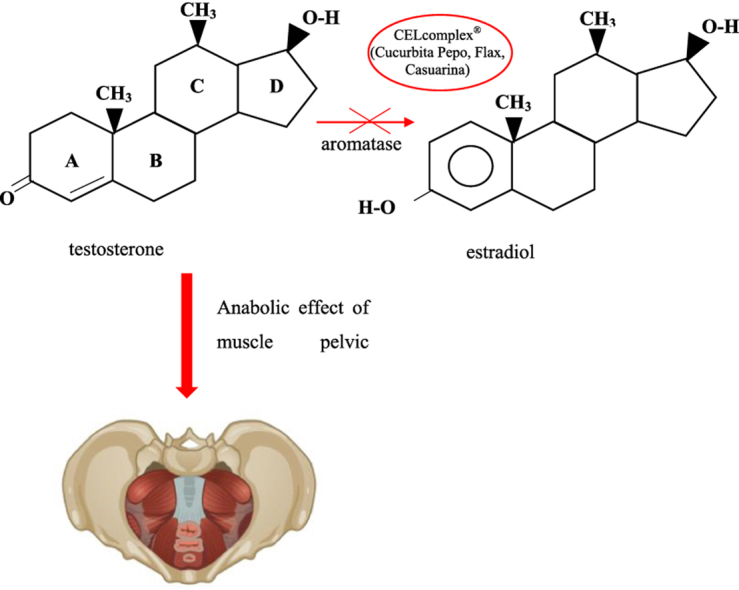
References
-
- Akjhisa Toshihiro. Sterols of the cucurbitaceae. Phytochemistry. 1987;6:1693–1700.
-
- Bump R.C., McClish D.M. Cigarette smoking and pure genuine stress incontinence of urine: a comparison of risk factors and determinants between smokers and nonsmokers. Am J Obstet Gynecol. 1994;2:579–582. - PubMed
-
- Bump, Richard C. Long-term efficacy of duloxetine in women with stress urinary incontinence. BJU Int. 2008;2:214–218. - PubMed
-
- Burgio Larsen Kathran, Robinson Courtland J., Engel Bernarn T. The role of biofeedback in Kegel exercise training for stress urinary incontinence. Am J Obstet Gynecol. 1986;1:58–64. - PubMed
-
- Chiarelli Pauline., Brown Wendy., McElduff Patrick. Leaking urine: prevalence and associated factors in Australian women. Neurourol Urodyn. 1999;18:567–577. - PubMed
LinkOut - more resources
Full Text Sources