


Acute Effects of Electronic Cigarette Inhalation on the Vasculature and the Conducting Airways
- PMID: 30963443
- PMCID: PMC6746878
- DOI: 10.1007/s12012-019-09516-x
Acute Effects of Electronic Cigarette Inhalation on the Vasculature and the Conducting Airways
Abstract
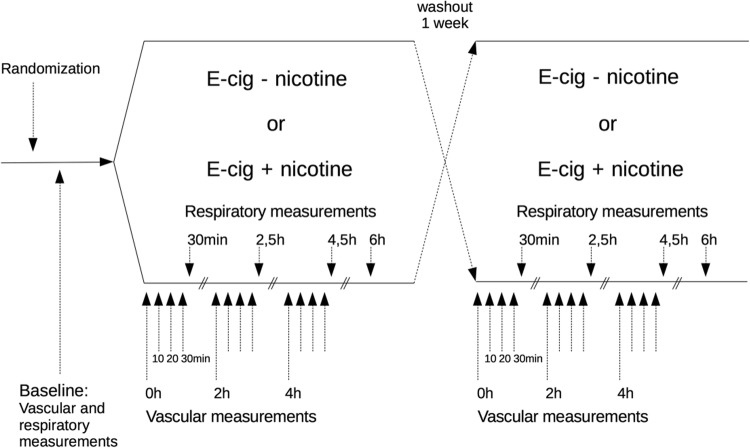
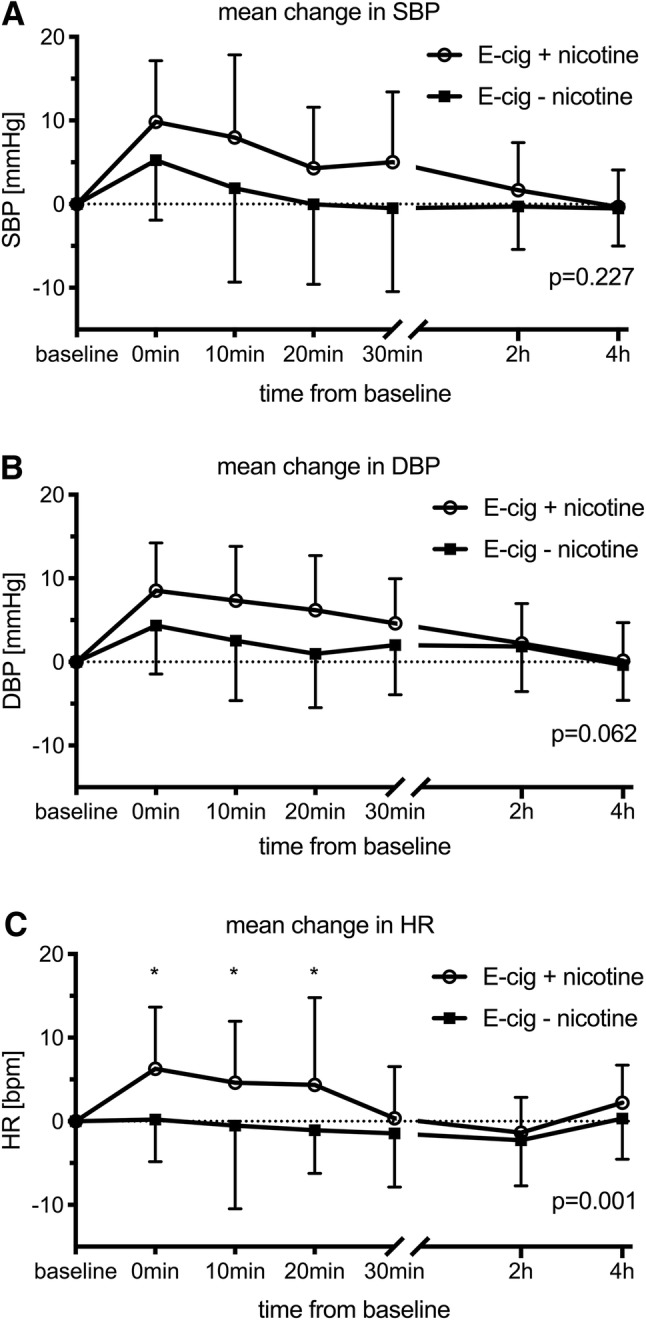
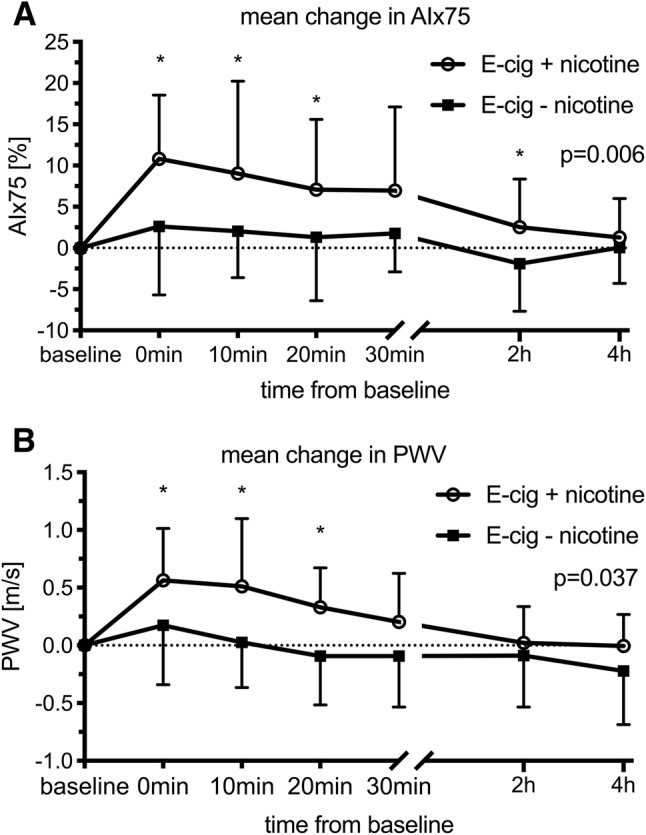
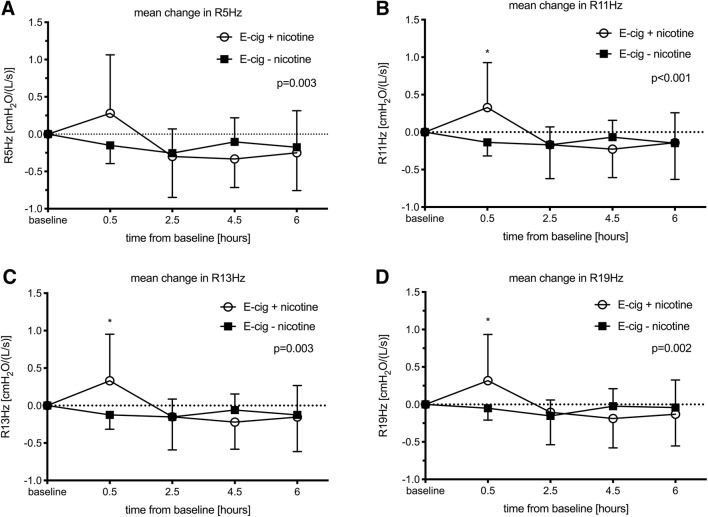
The use of electronic cigarettes has increased exponentially since its introduction onto the global market in 2006. However, short- and long-term health effects remain largely unknown due to the novelty of this product. The present study examines the acute effects of e-cigarette aerosol inhalation, with and without nicotine, on vascular and pulmonary function in healthy volunteers. Seventeen healthy subjects inhaled electronic cigarette aerosol with and without nicotine on two separate occasions in a double-blinded crossover fashion. Blood pressure, heart rate, and arterial stiffness measured by pulse wave velocity and pulse wave analysis were assessed at baseline, and then at 0 h, 2 h, and 4 h following exposure. Dynamic spirometry and impulse oscillometry were measured following vascular assessments at these time points, as well as at 6 h following exposure. e-Cigarette aerosol with nicotine caused a significant increase in heart rate and arterial stiffness. Furthermore, e-cigarette aerosol-containing nicotine caused a sudden increase in flow resistance as measured by impulse oscillometry, indicating obstruction of the conducting airways. Both aerosols caused an increase in blood pressure. The present study indicates that inhaled e-cigarette aerosol with nicotine has an acute impact on vascular and pulmonary function. Thus, chronic usage may lead to long-term adverse health effects. Further investigation is warranted.
Keywords: Arterial stiffness; Augmentation index; ENDS; Electronic cigarettes; IOS; Pulse wave velocity; e-Cig.
Conflict of interest statement
The authors declare that they have no competing interests.
Figures
References
-
- Lim SS, Vos T, Flaxman AD, Danaei G, Shibuya K, Adair-Rohani H, et al. A comparative risk assessment of burden of disease and injury attributable to 67 risk factors and risk factor clusters in 21 regions, 1990–2010: A systematic analysis for the Global Burden of Disease Study 2010. Lancet. 2012;380(9859):2224–2260. doi: 10.1016/S0140-6736(12)61766-8. - DOI - PMC - PubMed
-
- WHO. (2015). WHO global report on trends in prevalence of tobacco smoking. Retrieved December 5, 2017, from http://www.who.int/tobacco/publications/surveillance/reportontrendstobac....
Publication types
MeSH terms
Substances
LinkOut - more resources
Full Text Sources
Medical
Molecular Biology Databases
