


Clinical application of ceramide in cancer treatment
- PMID: 30963461
- PMCID: PMC7315770
- DOI: 10.1007/s12282-019-00953-8
Clinical application of ceramide in cancer treatment
Abstract
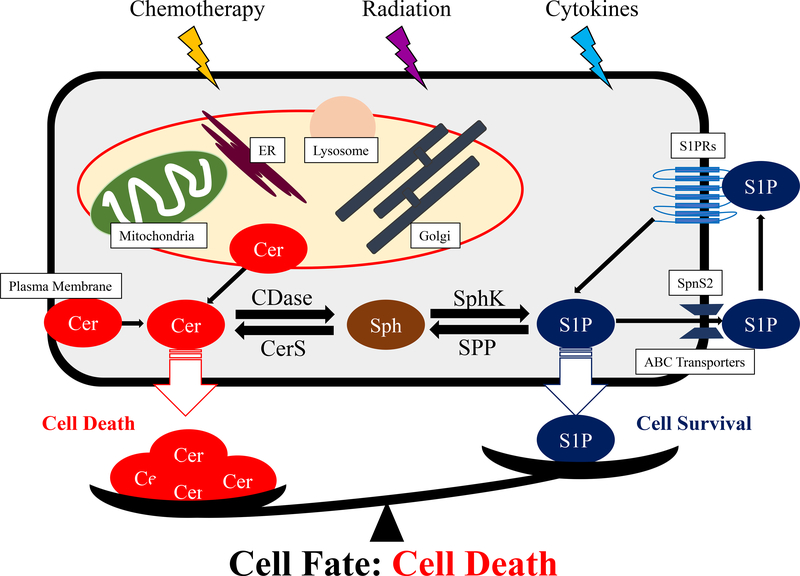
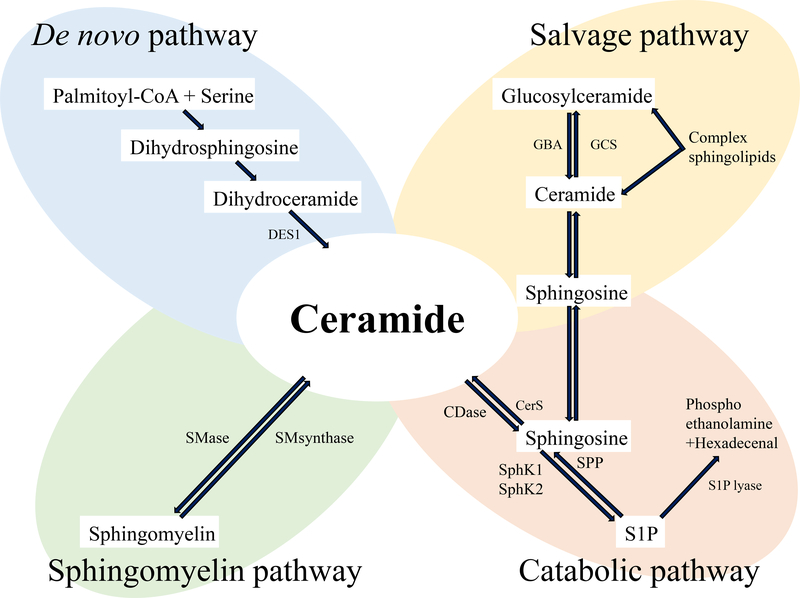
Development of innovative strategies for cancer treatment is a pressing public health issue. Despite recent advances, the mechanisms of cancer progression and the resistance to cancer treatment have not been fully elucidated. Sphingolipids, including ceramide and sphingoshin-1-phosphate, are bioactive mediators that regulate cancer cell death and survival through the dynamic balance of what has been termed the 'sphingolipid rheostat'. Specifically, ceramide, which acts as the central hub of sphingolipid metabolism, is generated via three major pathways by many stressors, including anti-cancer treatments, environmental stresses, and cytokines. We have previously shown in breast cancer patients that elevated ceramide correlated with less aggressive cancer phenotypes, leading to a prognostic impact. Recent studies showed that ceramide have the possibility of becoming the reinforcing agent of cancer treatment as well as other roles such as nanoparticles and diagnostic biomarker. We review ceramide as one of the key molecules to investigate in overcoming resistance to current drug therapies and in becoming one of the newest cancer treatments.
Keywords: Apoptosis; Cancer; Ceramide; Drug resistance; Sphingosine-1-phosphate.
Conflict of interest statement
Conflict of Interest Statement
The authors have no conflicts of interest to disclose.
Figures
References
-
- Siegel RL, Miller KD, Jemal A. Cancer statistics, 2018. CA Cancer J Clin. 2018; 68: 7–30. - PubMed
-
- Hartwell LH, Kastan MB. Cell cycle control and cancer. Science. 1994; 266: 1821–8. - PubMed
-
- Bonni A, Brunet A, West AE, Datta SR, Takasu MA, Greenberg ME. Cell survival promoted by the Ras-MAPK signaling pathway by transcription-dependent and -independent mechanisms. Science. 1999; 286: 1358–62. - PubMed
-
- Khanna KK, Jackson SP. DNA double-strand breaks: signaling, repair and the cancer connection. Nat Genet. 2001; 27: 247–54. - PubMed
Publication types
MeSH terms
Substances
Grants and funding
LinkOut - more resources
Full Text Sources
Medical
