Altered reward-related effective connectivity in obsessive-compulsive disorder: an fMRI study
- PMID: 30964615
- PMCID: PMC6821506
- DOI: 10.1503/jpn.180195
Altered reward-related effective connectivity in obsessive-compulsive disorder: an fMRI study
Abstract
Background: Obsessive–compulsive disorder (OCD) is characterized by anxiety-provoking, obsessive thoughts. Patients usually react to these thoughts with repetitive behaviours that reduce anxiety and are perceived as rewarding. Hence, reward plays a major role in the psychopathology of OCD. Previous studies showed altered activation in frontostriatal networks, among others, in association with the processing of reward in patients with OCD. Potential alterations in connectivity within these networks have, however, barely been explored.
Methods: We investigated a sample of patients with OCD and healthy controls using functional MRI and a reward learning task presented in an event-related design. Dynamic causal modelling (DCM) was used to estimate effective connectivity.
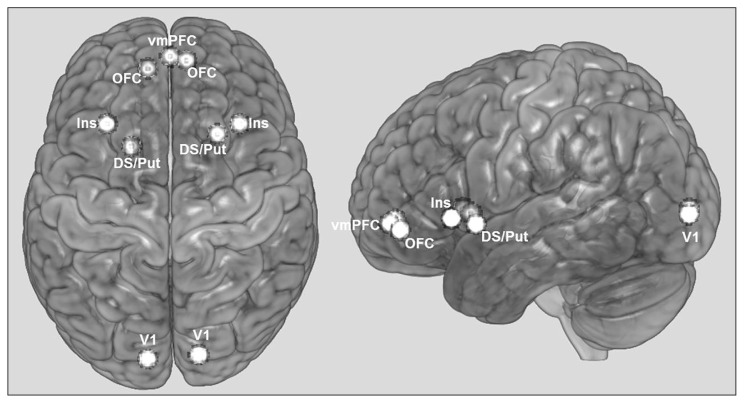
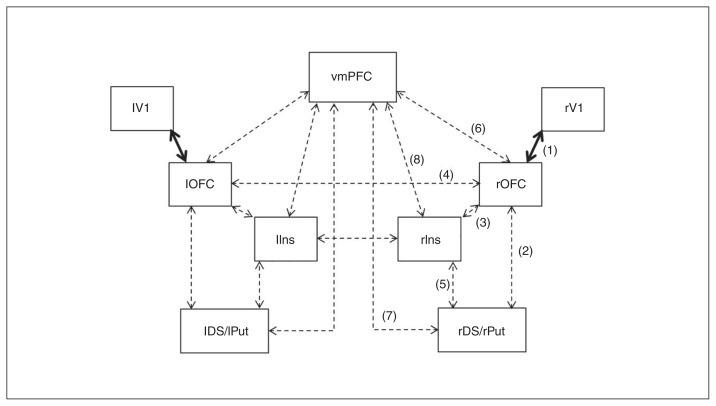
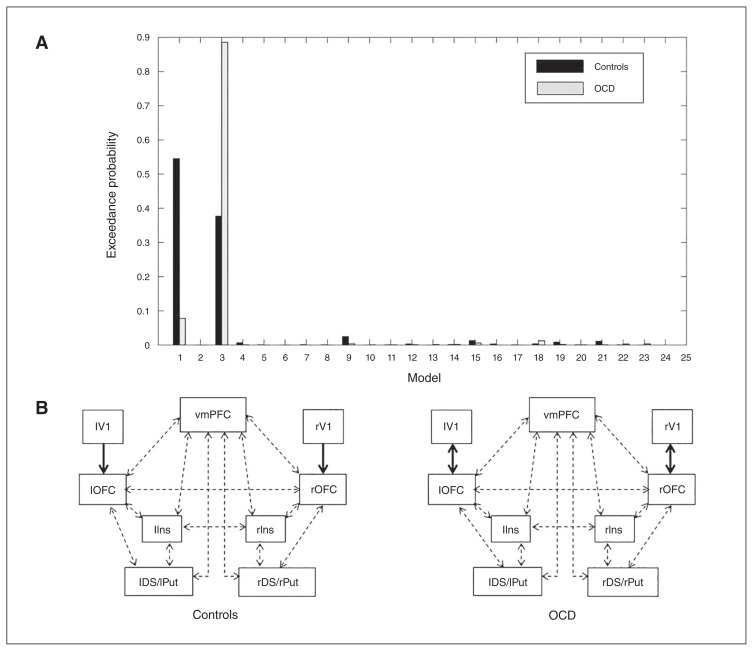
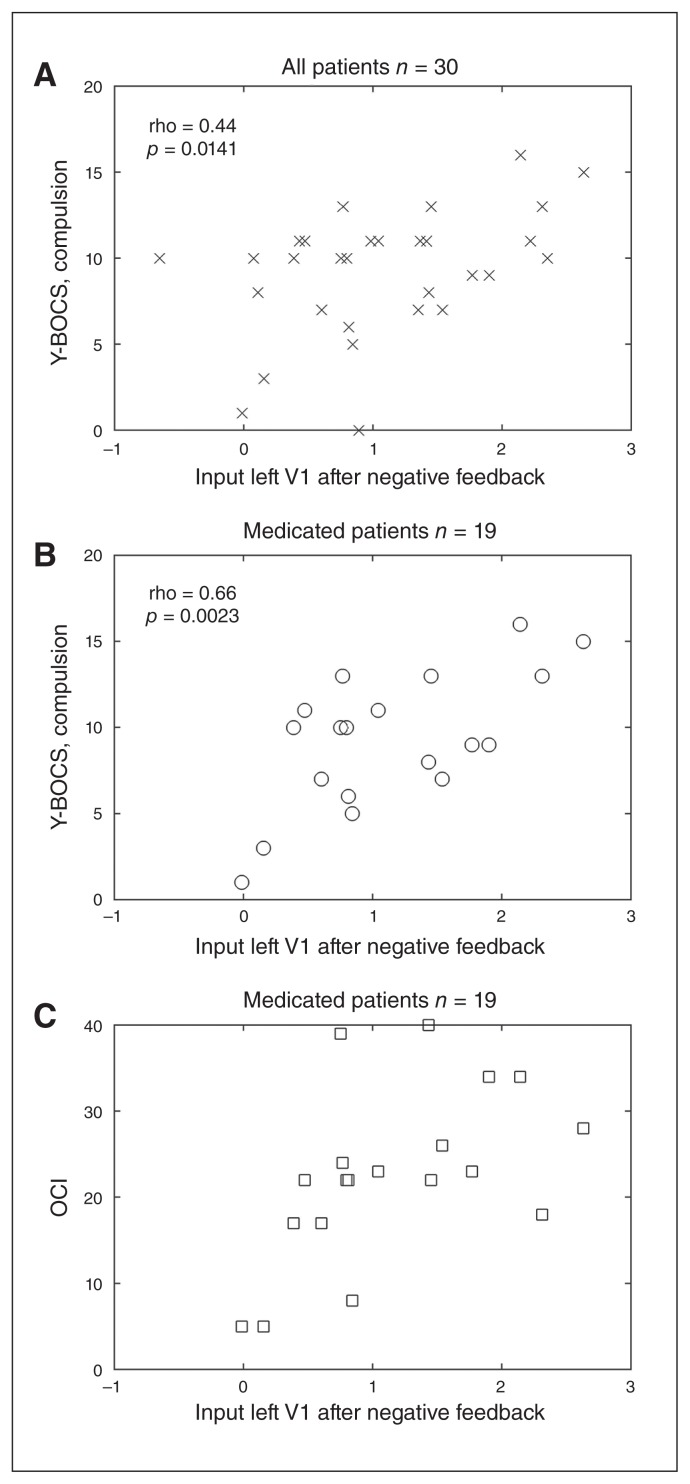
Results: Our sample included 37 patients with OCD and 39 healthy controls. Analyses of task-related changes in connectivity showed a significantly altered effective connectivity between the ventromedial prefrontal cortex (vmPFC) and the orbitofrontal cortex (OFC), among others, both in terms of endogenous connectivity as well as modulatory effects under positive feedback. Clinical measures of compulsion correlated with the effect of feedback input on visual sensory areas.
Limitations: The reported alterations should be interpreted within the context of the task and the a priori–defined network considered in the analysis.
Conclusion: This disrupted connectivity in parts of the default mode network and the frontostriatal network may indicate increased rumination and self-related processing impairing the responsiveness toward external rewards. This, in turn, may underlie the general urge for reinforcement accompanying compulsive behaviours.
© 2019 Joule Inc. or its licensors
Conflict of interest statement
None declared.
Figures

References
-
- Sescousse G, Caldú X, Segura B, et al. Processing of primary and secondary rewards: a quantitative meta-analysis and review of human functional neuroimaging studies. Neurosci Biobehav Rev. 2013;37:681–96. - PubMed
-
- Denys D, Mantione M, Figee M, et al. Deep brain stimulation of the nucleus accumbens for treatment-refractory obsessive-compulsive disorder. Arch Gen Psychiatry. 2010;67:1061–8. - PubMed
-
- Huff W, Lenartz D, Schormann M, et al. Unilateral deep brain stimulation of the nucleus accumbens in patients with treatment-resistant obsessive-compulsive disorder: outcomes after one year. Clin Neurol Neurosurg. 2010;112:137–43. - PubMed
Publication types
MeSH terms
LinkOut - more resources
Full Text Sources
Medical