Estimating the current burden of Chagas disease in Mexico: A systematic review and meta-analysis of epidemiological surveys from 2006 to 2017
- PMID: 30964871
- PMCID: PMC6474657
- DOI: 10.1371/journal.pntd.0006859
Estimating the current burden of Chagas disease in Mexico: A systematic review and meta-analysis of epidemiological surveys from 2006 to 2017
Abstract
Background: In Mexico, estimates of Chagas disease prevalence and burden vary widely. Updating surveillance data is therefore an important priority to ensure that Chagas disease does not remain a barrier to the development of Mexico's most vulnerable populations.
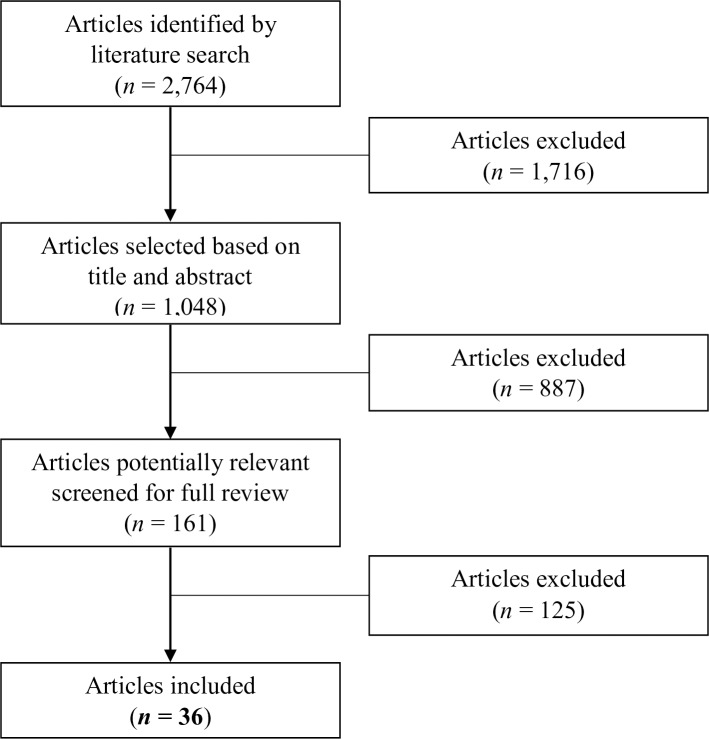
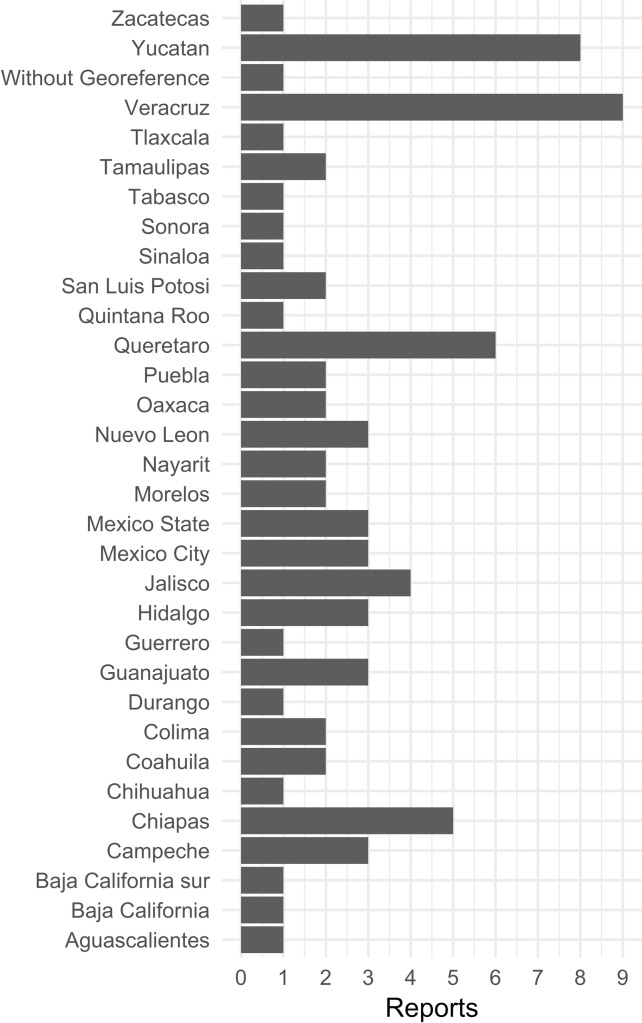
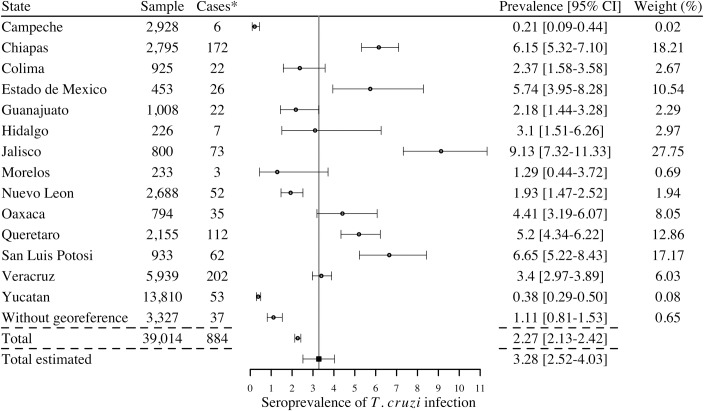
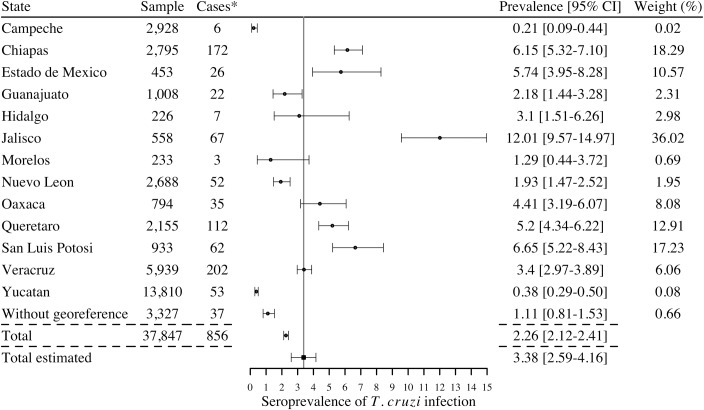
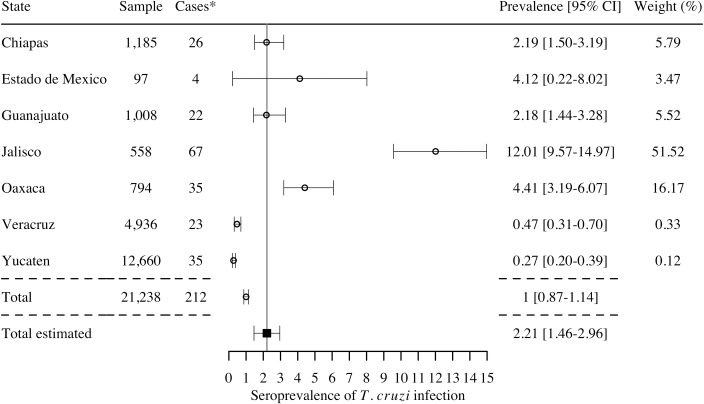
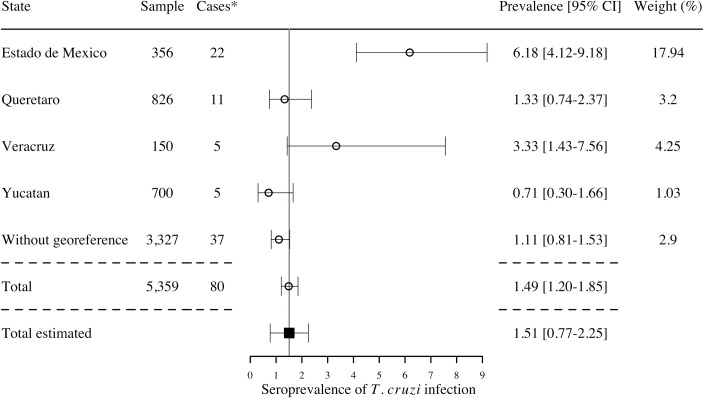
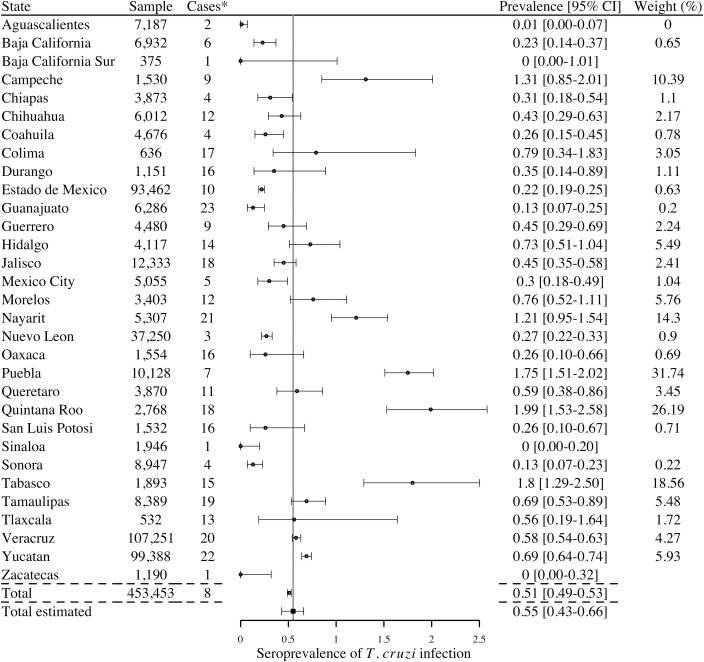
Methodology/principal findings: The aim of this systematic review and meta-analysis was to analyze the literature on epidemiological surveys to estimate Chagas disease prevalence and burden in Mexico, during the period 2006 to 2017. A total of 2,764 articles were screened and 36 were retained for the final analysis. Epidemiological surveys have been performed in most of Mexico, but with variable study scale and geographic coverage. Based on studies reporting confirmed cases (i.e. using at least 2 serological tests), and taking into account the differences in sample sizes, the national estimated seroprevalence of Trypanosoma cruzi infection was 3.38% [95%CI 2.59-4.16], suggesting that there are 4.06 million cases in Mexico. Studies focused on pregnant women, which may transmit the parasite to their newborn during pregnancy, reported an estimated seroprevalence of 2.21% [95%CI 1.46-2.96], suggesting that there are 50,675 births from T. cruzi infected pregnant women per year, and 3,193 cases of congenitally infected newborns per year. Children under 18 years had an estimated seropositivity rate of 1.51% [95%CI 0.77-2.25], which indicate ongoing transmission. Cases of T. cruzi infection in blood donors have also been reported in most states, with a national estimated seroprevalence of 0.55% [95%CI 0.43-0.66].
Conclusions/significance: Our analysis suggests a disease burden for T. cruzi infection higher than previously recognized, highlighting the urgency of establishing Chagas disease surveillance and control as a key national public health priority in Mexico, to ensure that it does not remain a major barrier to the economic and social development of the country's most vulnerable populations.
Conflict of interest statement
I have read the journal's policy and the authors of this manuscript have the following competing interests: ED serves as Deputy Editor for PLOS NTDs.
Figures
References
-
- WHO. Chagas disease (American trypanosomiasis), Fact sheet N°340. Available at http://www.who.int/mediacentre/factsheets/fs340/en/. 2017.
Publication types
MeSH terms
LinkOut - more resources
Full Text Sources
Medical