Review
. 2017 Sep 5;9(9):414.
doi: 10.3390/polym9090414.

Functional Aromatic Polyamides

Affiliations
Review

Functional Aromatic Polyamides

José A Reglero Ruiz et al. Polymers (Basel). .

Abstract

We describe herein the state of the art following the last 8 years of research into aromatic polyamides, wholly aromatic polyamides or aramids. These polymers belong to the family of high performance materials because of their exceptional thermal and mechanical behavior. Commercially, they have been transformed into fibers mainly for production of advanced composites, paper, and cut and fire protective garments. Huge research efforts have been carried out to take advantage of the mentioned characteristics in advanced fields related to transport applications, optically active materials, electroactive materials, smart materials, or materials with even better mechanical and thermal behavior.

Keywords: advanced materials; aramids; aromatic polyamides; functional polymers; high-performance polymers.


Conflict of interest statement

The authors declare no conflict of interest.

Figures
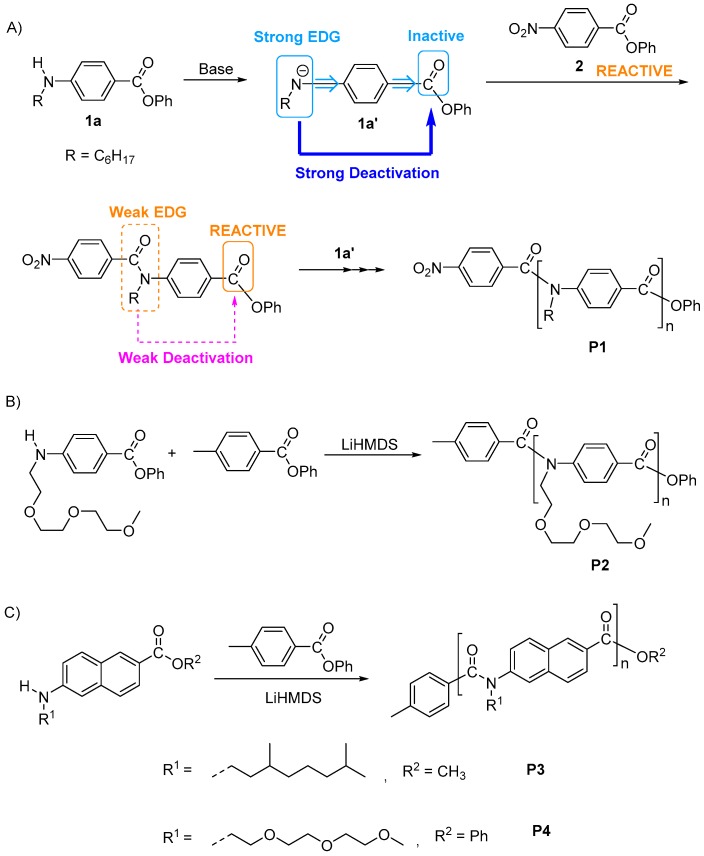
Scheme 1
Scheme 1
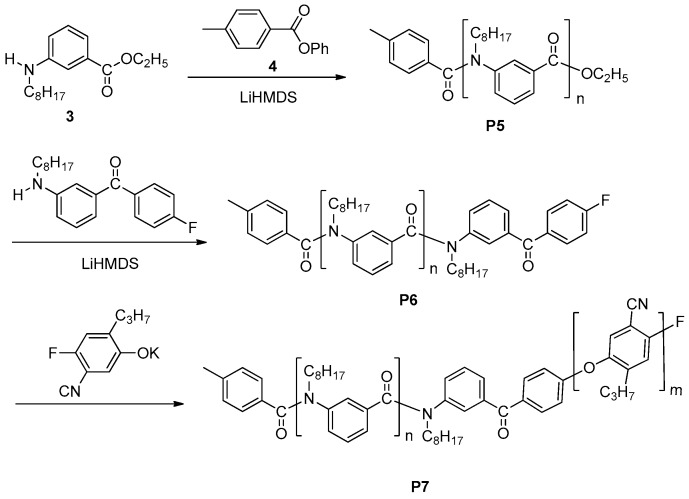
Aromatic polyamides with controlled polydispersity and mass obtained by chain-growth polycondensation. (A) polycondensation of phenyl 4-(octylamino)benzoate and the initiator phenyl 4-nitrobenzoate; (B) polycondensation of a monomer that bears a TEG sidechain; (C) polycondensation o 2,6-positions substituted naphthalenes.
Scheme 2
Scheme 2
Block polymers obtained by chain-growth polycondensation.
Scheme 3
Scheme 3
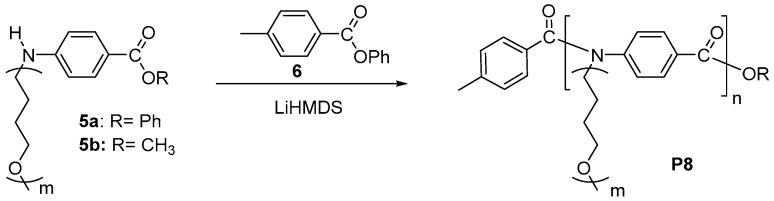
Well-defined aramid grafted with poly(tetrahydrofuran).
Scheme 4
Scheme 4
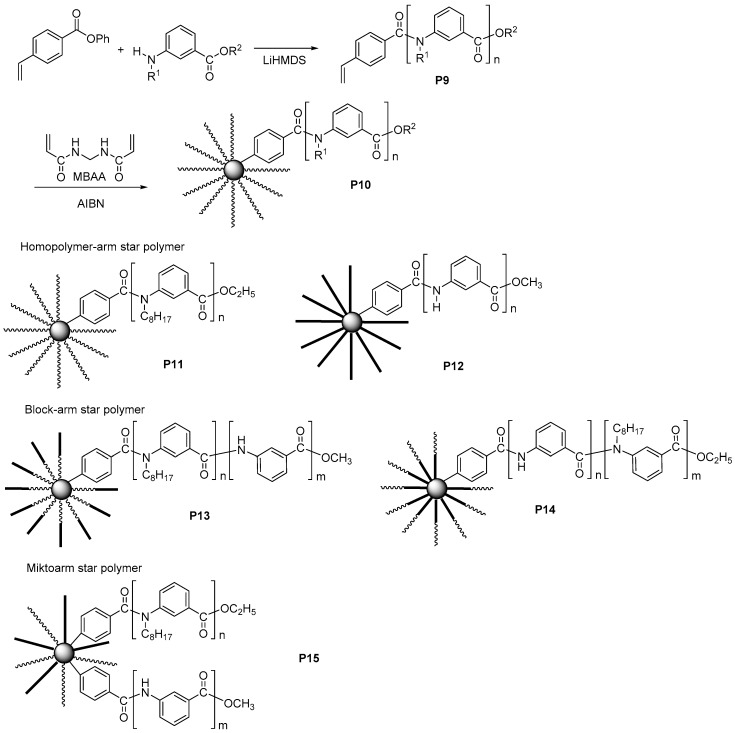
Star polymers prepared by chain-growth polycondensation/radical copolymerization.
Scheme 5
Scheme 5
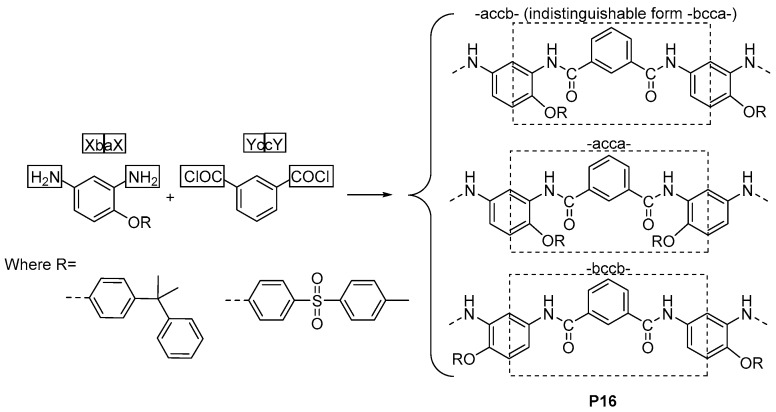
Aramid sub-structures obtained using an asymmetric AB monomer.
Scheme 6
Scheme 6
Hyperbranched aramids.
Scheme 7
Scheme 7
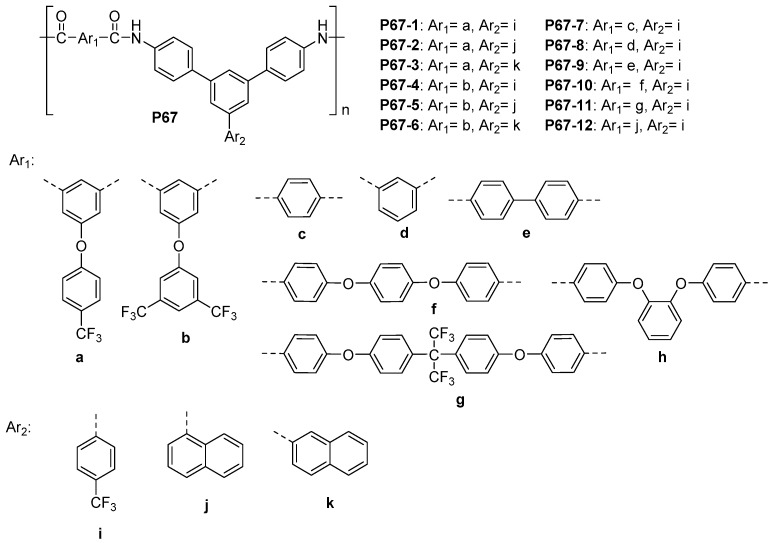
Fluorinated aramids.
Scheme 8
Scheme 8
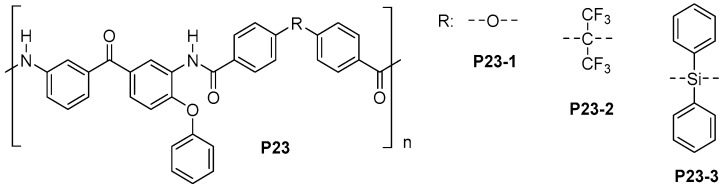
Aramids with substituted benzophenone in the main chain.
Scheme 9
Scheme 9
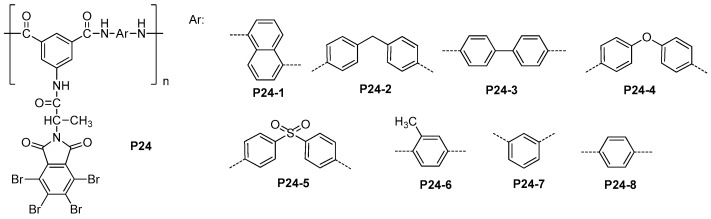
Aromatic polyamides with pendant tetrabromophthalimide in the side chain.
Scheme 10
Scheme 10
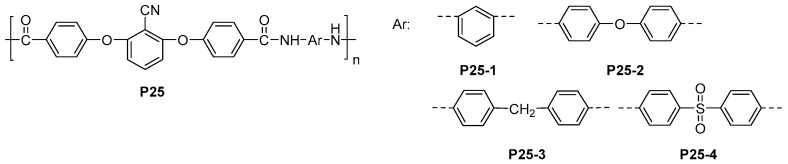
Aramids with cyano groups.
Scheme 11
Scheme 11
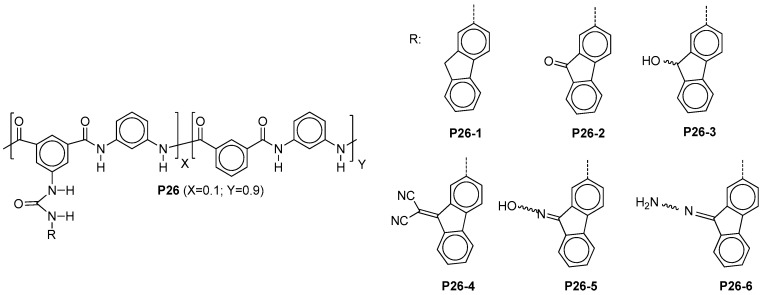
Aramids with pendant fluorene-derivative motifs.
Scheme 12
Scheme 12
Aromatic polyamides for gas separation.
Scheme 13
Scheme 13
Polyamides with bulky pendant group for gas separation.
Scheme 14
Scheme 14
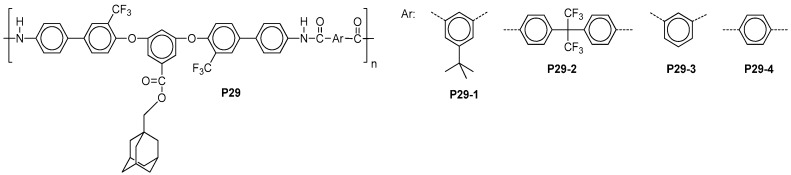
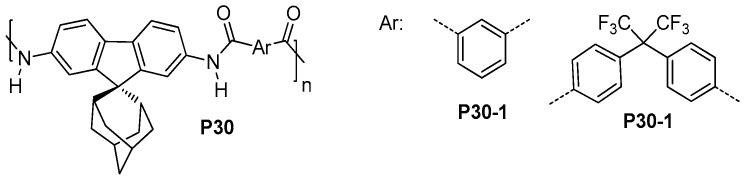
Aramids with pendant bulky adamantyl-moieties.
Scheme 15
Scheme 15
Aramids with rigid spiro-moieties in the main chain.
Scheme 16
Scheme 16
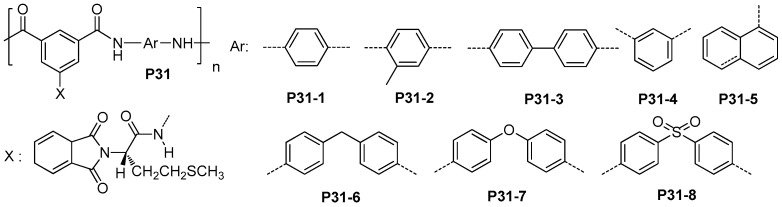
Aramids with pendant optically active groups.
Scheme 17
Scheme 17
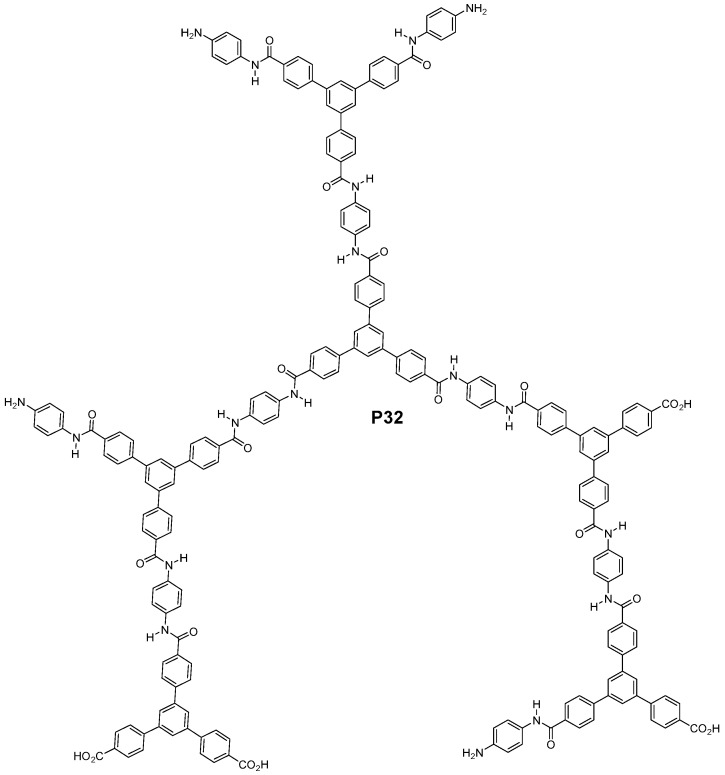
Fluorescent hyperbranched aramids.
Scheme 18
Scheme 18
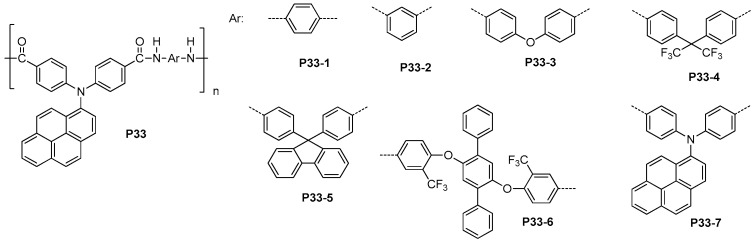
Fluorescent and electrochromic aramids with pyrenyl motifs.
Scheme 19
Scheme 19
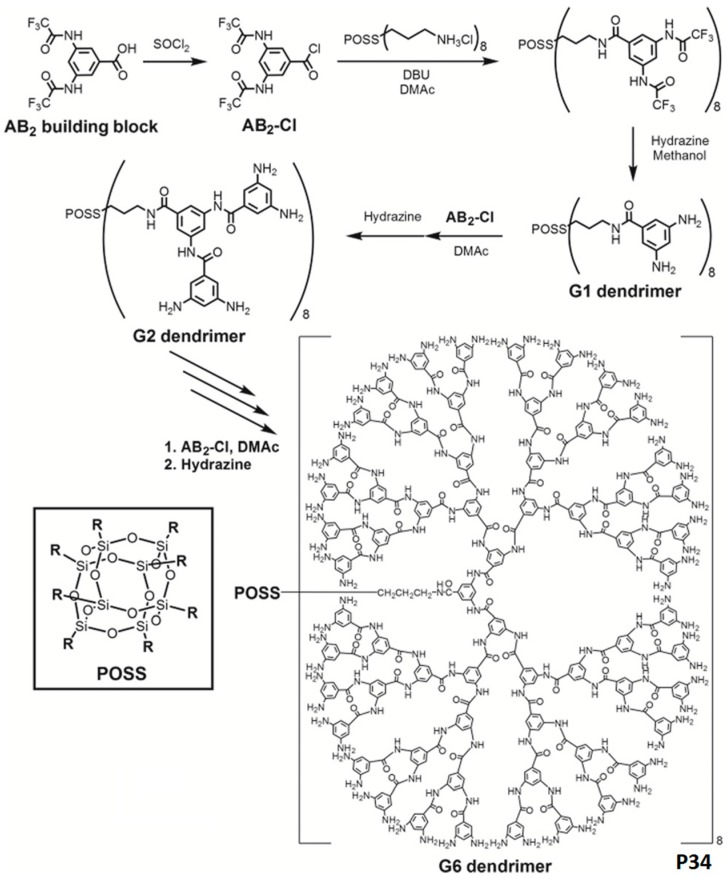
Fluorescent aromatic dendrimers (Reproduced from ref. [35] with permission from The Royal Society of Chemistry).
Scheme 20
Scheme 20
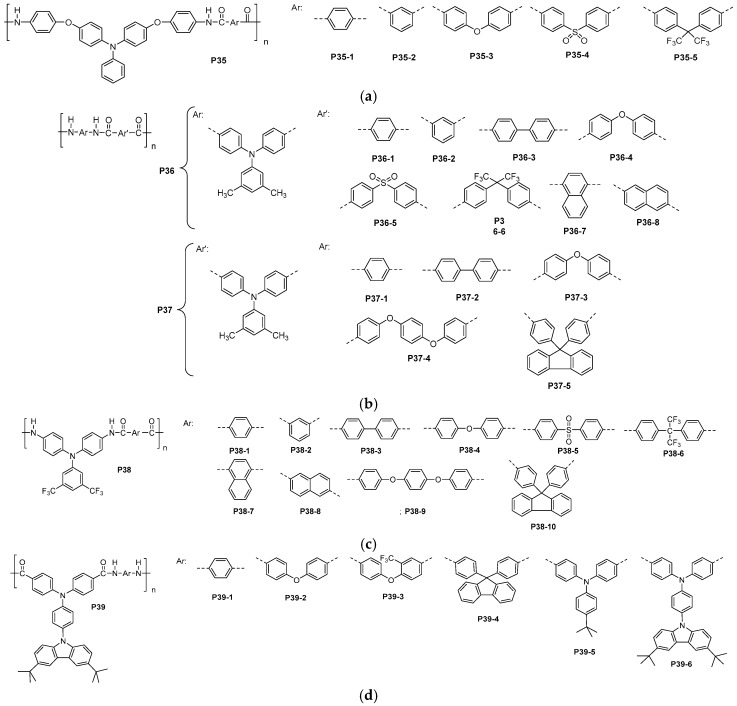
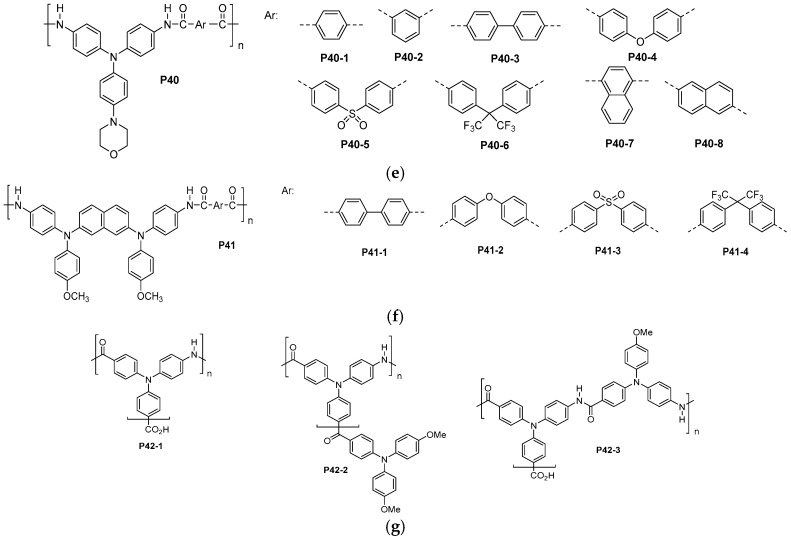
Electroactive aramids with the following electroactive moieties: (a) triphenylamine; (b) 3,5-dimethyltriphenylamine; (c) 3,5-bistrifluoromethyltriphenylamine; (d) triphenylamine with pendant carbazole; (e) morpholinyl-substituted triphenylamine; (f) 2,7-bis(diphenylamino)naphthalene; (g) triphenylamine(hyperbranched aramids).
Scheme 20
Scheme 20
Electroactive aramids with the following electroactive moieties: (a) triphenylamine; (b) 3,5-dimethyltriphenylamine; (c) 3,5-bistrifluoromethyltriphenylamine; (d) triphenylamine with pendant carbazole; (e) morpholinyl-substituted triphenylamine; (f) 2,7-bis(diphenylamino)naphthalene; (g) triphenylamine(hyperbranched aramids).
Scheme 21
Scheme 21
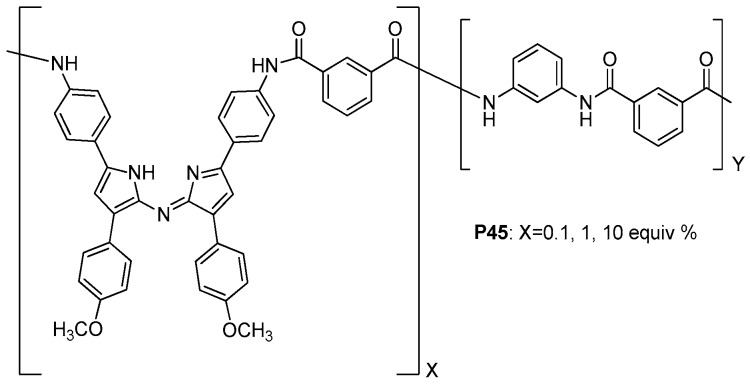
Aramids with having both pyridine and azomethine units.
Scheme 22
Scheme 22
Hybrid ferromagnetic aromatic polyamides.
Scheme 23
Scheme 23
Blue inherently colored aromatic copolyamides.
Scheme 24
Scheme 24
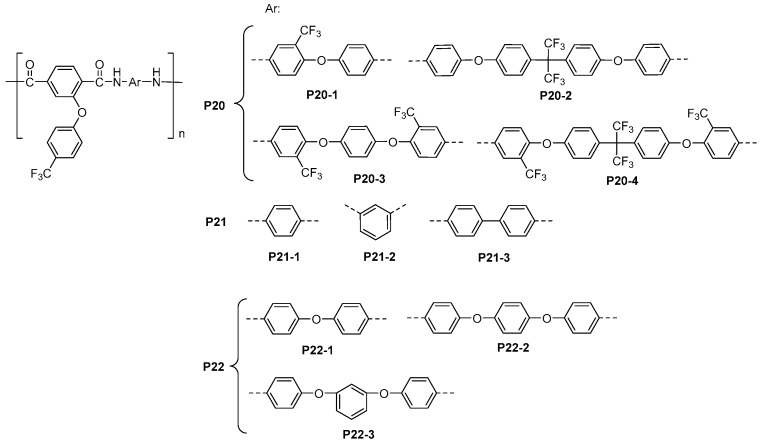
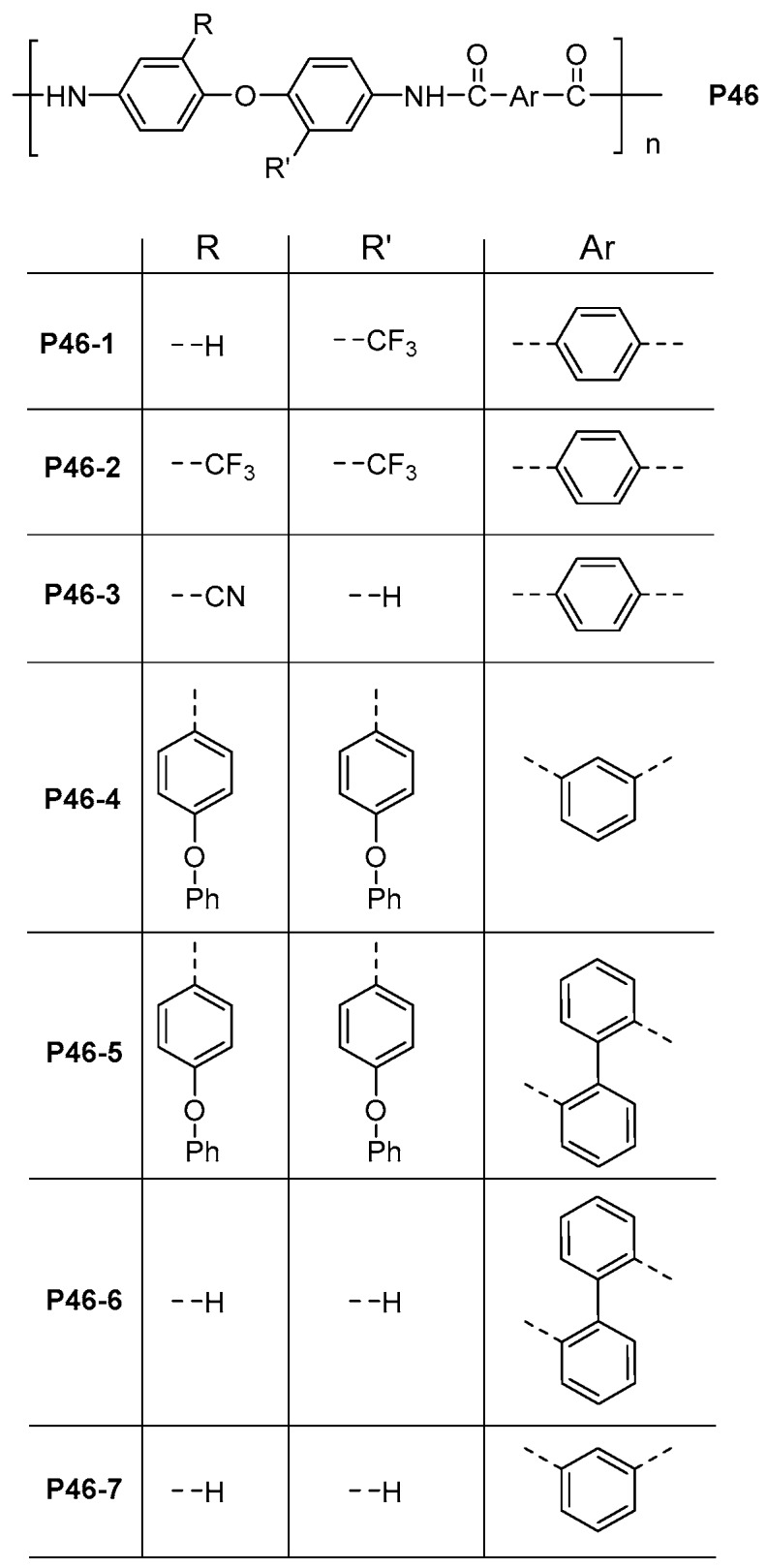
Aramids with enhanced solubility having trifluoromethyl or cyano groups in the main chain.
Scheme 25
Scheme 25
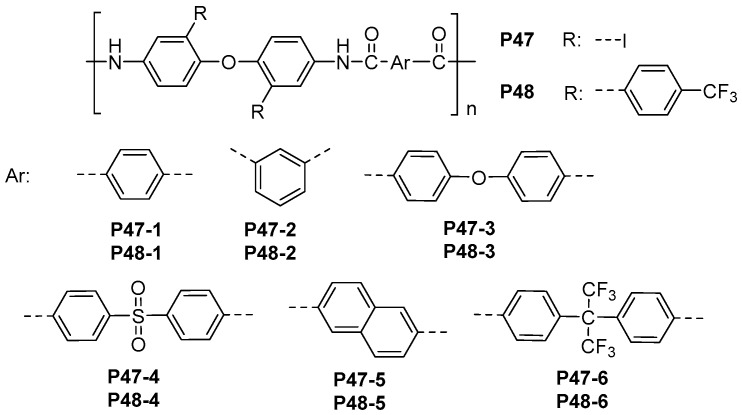
Aramids with enhance solubility containing bulky iodide and p-trifluoromethylphenyl groups.
Scheme 26
Scheme 26
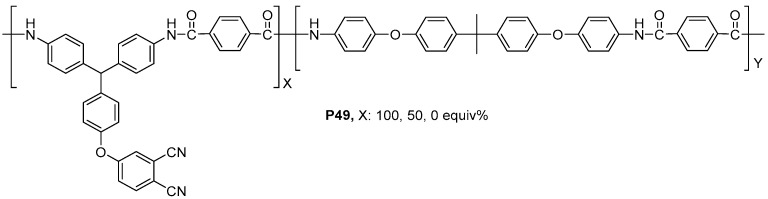
Aramids with enhanced solubility having pendant dicyanophenoxy moieties.
Scheme 27
Scheme 27
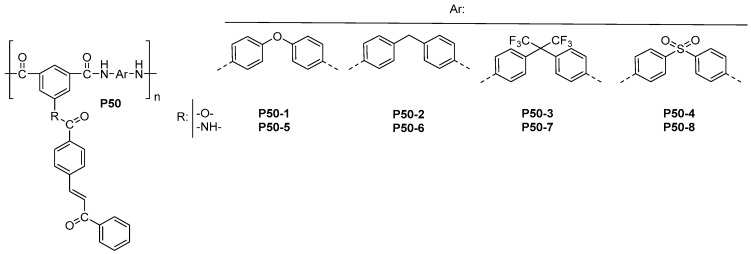
Aramids with improved solubility with pendant chalcone groups.
Scheme 28
Scheme 28
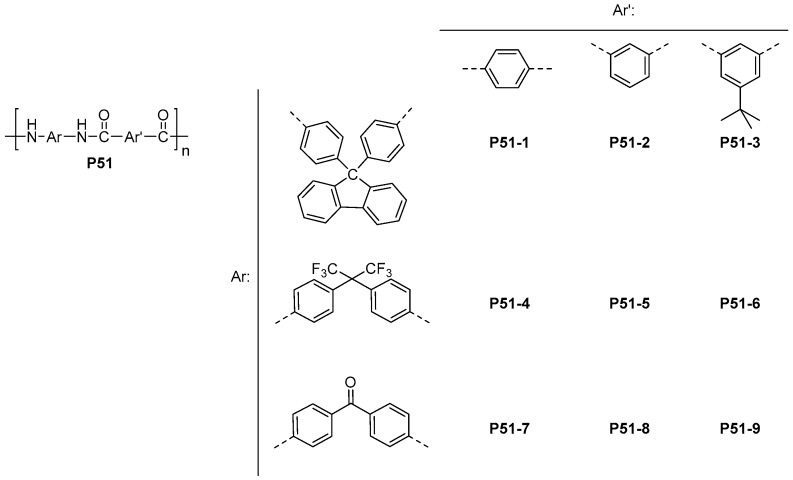
Aramids with bulky lateral groups.
Scheme 29
Scheme 29
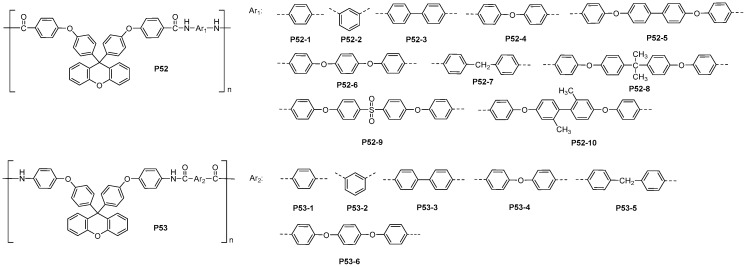
Cardo aramids.
Scheme 30
Scheme 30
Aromatic polyamides with nitrile groups.
Scheme 31
Scheme 31
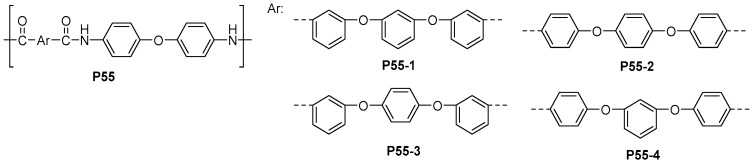
Aramids with multiple flexible ether linkages.
Scheme 32
Scheme 32
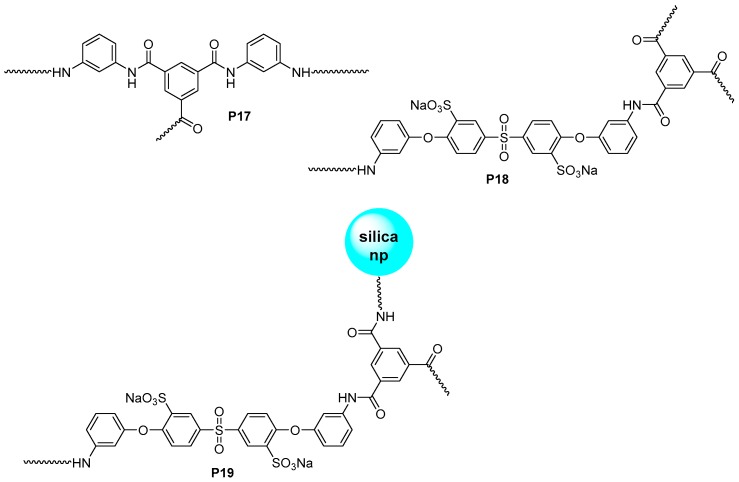
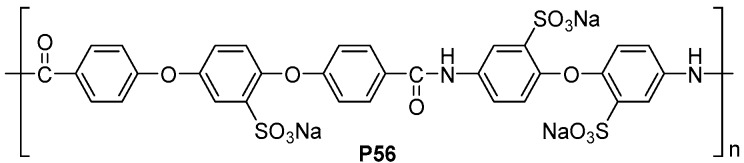
Aromatic sulfonated polyamides.
Scheme 33
Scheme 33
Aromatic polyamides prepared from an aromatic diamine monomer containing preformed aromatic–aliphatic amide and ether linkages.
Scheme 34
Scheme 34
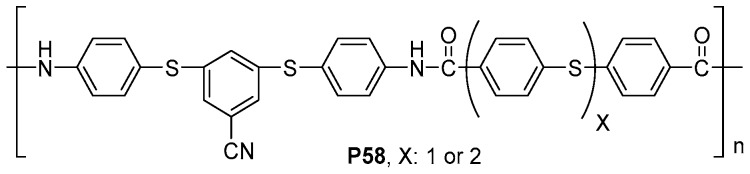
Aramids with thioether is flexible linkages.
Scheme 35
Scheme 35
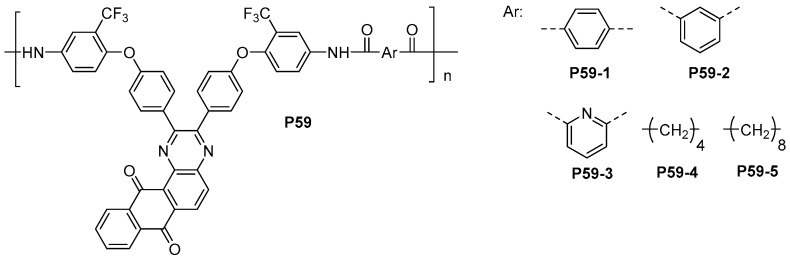
Aramids with anthraquinone-quinoxaline motifs.
Scheme 36
Scheme 36
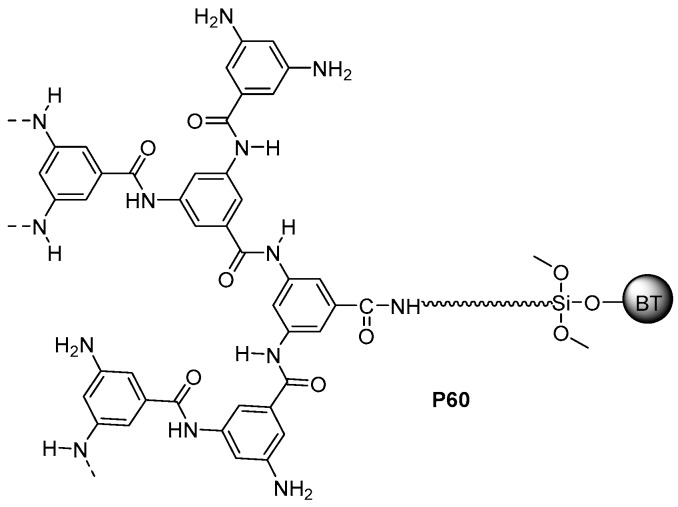
Polyamide grafted barium titanate hybrid nanofiller.
Scheme 37
Scheme 37
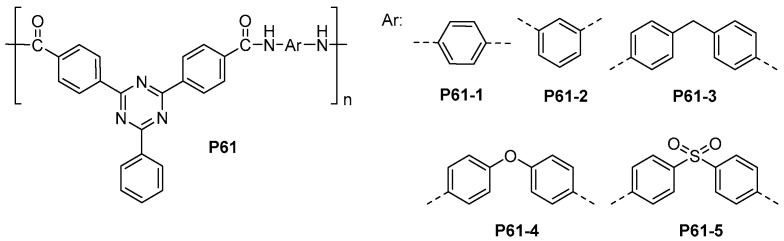
Aramids with 1,3,5-triazine moieties in the main chain.
Scheme 38
Scheme 38
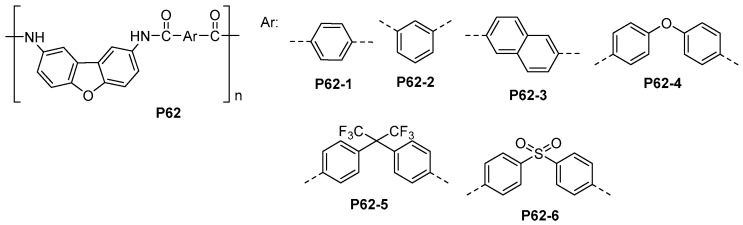
Aramids with dibenzofuran sub-structure in the main chain.
Scheme 39
Scheme 39
Fluorinated aramids with miscellaneous structures.
Scheme 40
Scheme 40
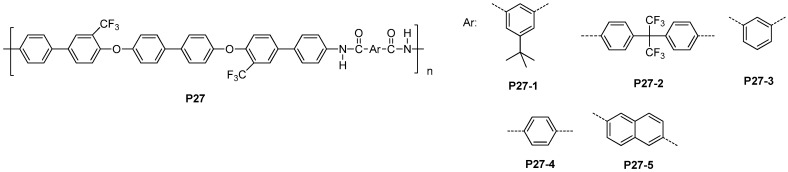
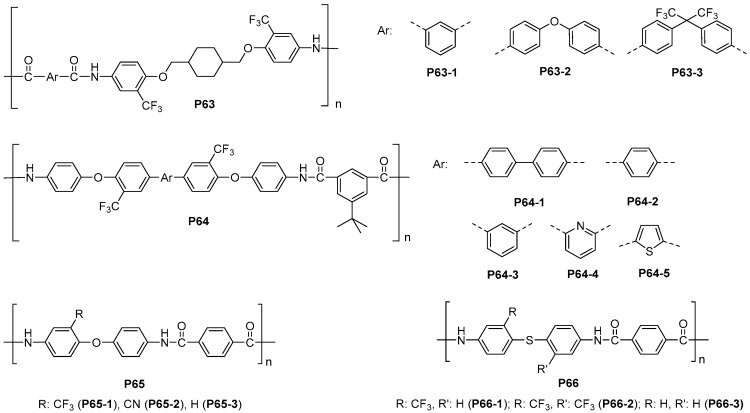
Aromatic polyamideswith trifluoromethyl moieties.
Scheme 41
Scheme 41
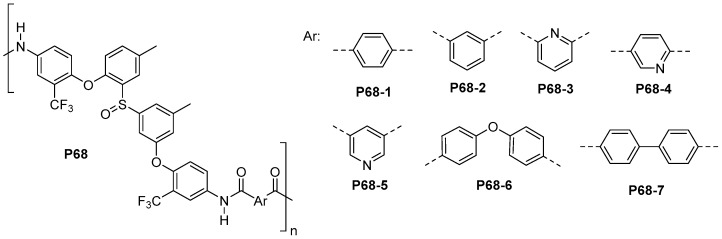
Fluorinated polyamides based on noncoplanar sulfoxide containing aromatic bis(ether amine).
Scheme 42
Scheme 42
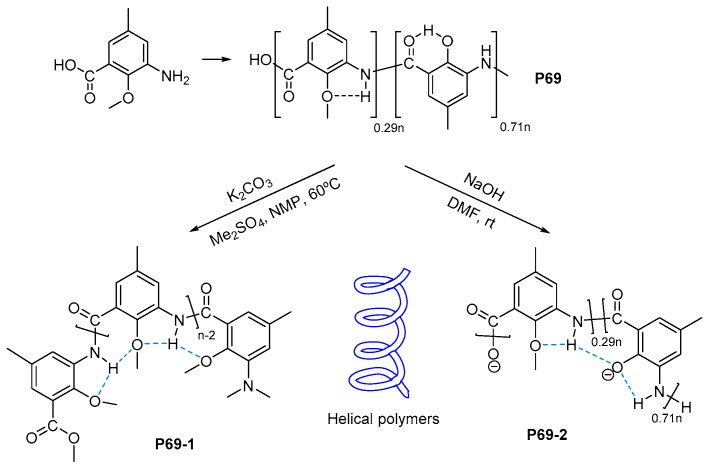
Polyamides with intramolecular hydrogen-bonding motifs that can fold into helical conformation.
Scheme 43
Scheme 43
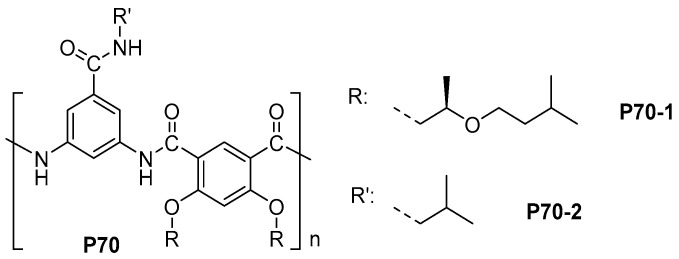
Aramids with hollow helical conformation.
Scheme 44
Scheme 44
Thermally rearrangeable aromatic polyamides.
Scheme 45
Scheme 45
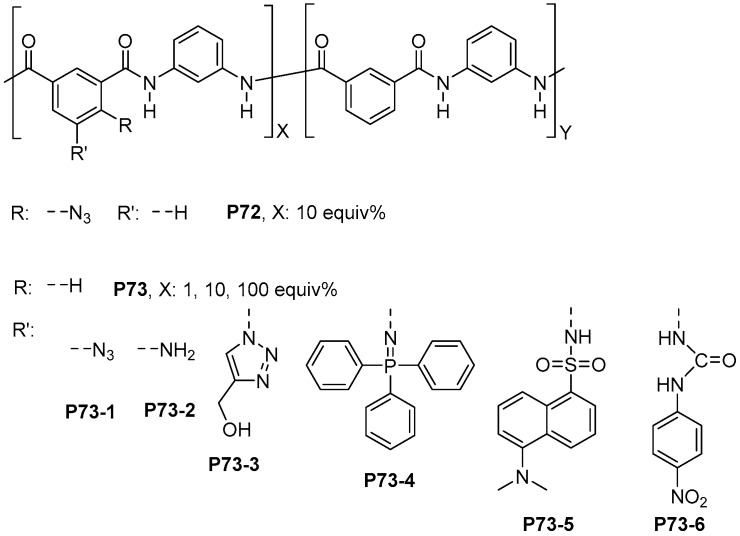
Aramids with reactive azide groups and other functional groups.
Scheme 46
Scheme 46
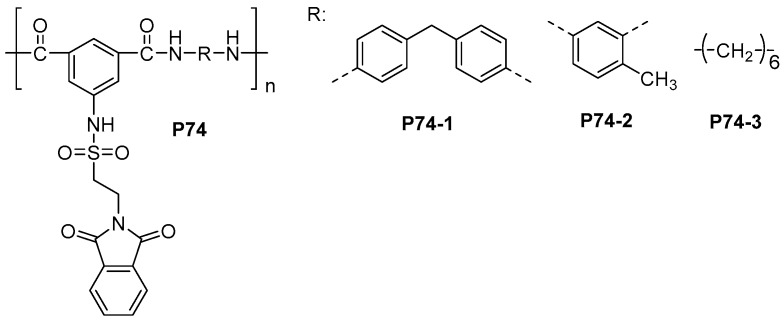
Polyamides containing phthalimidoethanesulfonamide pedant sub-structures.
Scheme 47
Scheme 47
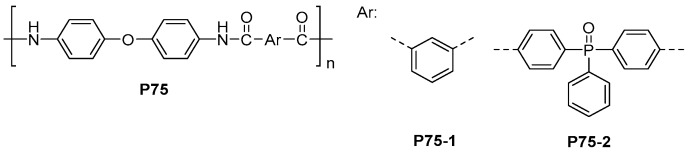
Aromatic polyamides with phenylphosphine oxide group.
Scheme 48
Scheme 48
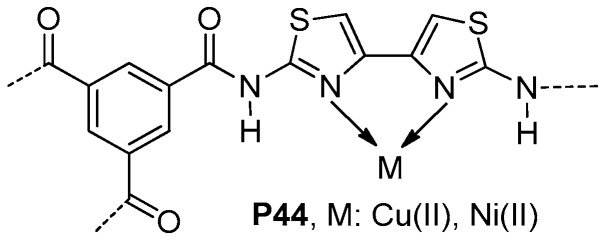
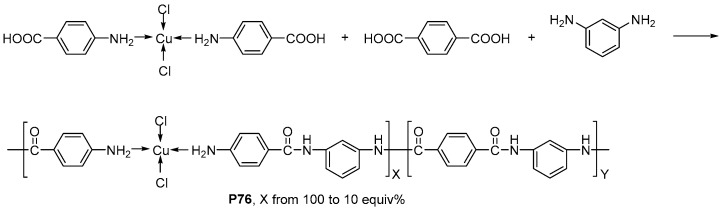
Polyamides with coordination metal complex units.

References

    1. Rules and Regulations under the Textile Fiber Products Identification Act in Title 16. Commercial Practices, Subchapter A, Chapter I, Part 303.7, Electronic Code of Federal Regulations (e-CFR) [(accessed on 29 May 2017)]; Available online: https://www.ecfr.gov/cgi-bin/text-idx?SID=d686e726b95f4e97353f2ee3103c76....
    1. García J.M., García F.C., Serna F., de la Peña J.L. High-performance aromatic polyamides. Prog. Polym. Sci. 2010;35:623–686. doi: 10.1016/j.progpolymsci.2009.09.002. - DOI
    1. Marchildon K. Polyamides—Still strong after seventy years. Macromol. React. Eng. 2011;5:22–54. doi: 10.1002/mren.201000017. - DOI
    1. Yamazaki N., Higasi F., Kawataba J. Studies on reactions of the N-phosphonium salts of pyridines. XI. Preparation of polypeptides and polyamides by means of triaryl phosphites in pyridine. J. Polym. Sci. Polym. Chem. 1974;12:2149–2154. doi: 10.1002/pol.1974.170120935. - DOI
    1. Trigo-López M., Estevez P., San-José N., Gomez-Valdemoro A., García F.C., Serna F., de la Peña J.L., Garcia J.M. Recent Patents on Aromatic Polyamides. Recent Pat. Mater. Sci. 2009;2:190–208. doi: 10.2174/1874464810902030190. - DOI

LinkOut - more resources