Gut Microbiota and Phytoestrogen-Associated Infertility in Southern White Rhinoceros
- PMID: 30967461
- PMCID: PMC6456749
- DOI: 10.1128/mBio.00311-19
Gut Microbiota and Phytoestrogen-Associated Infertility in Southern White Rhinoceros
Abstract
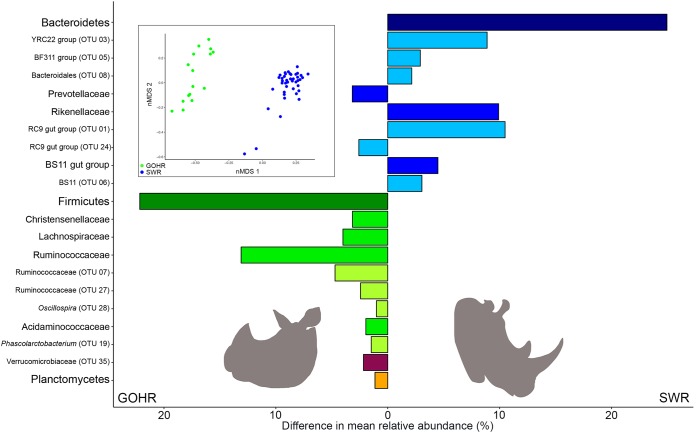
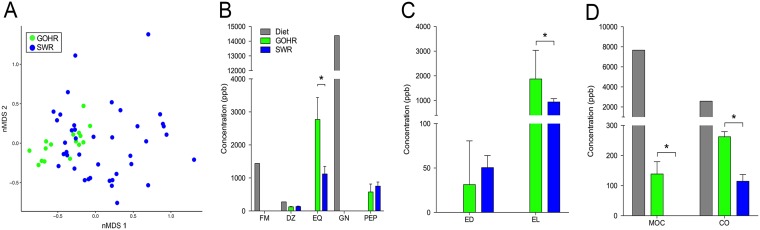
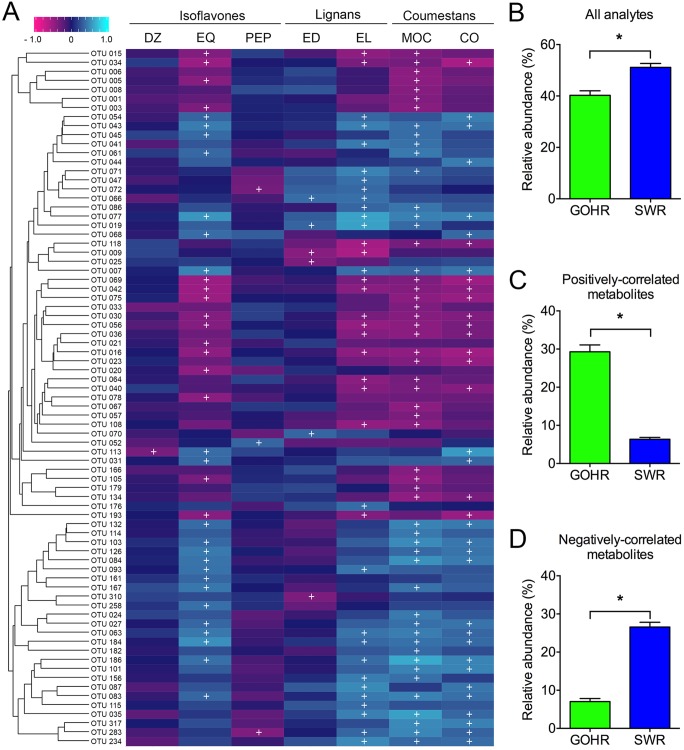
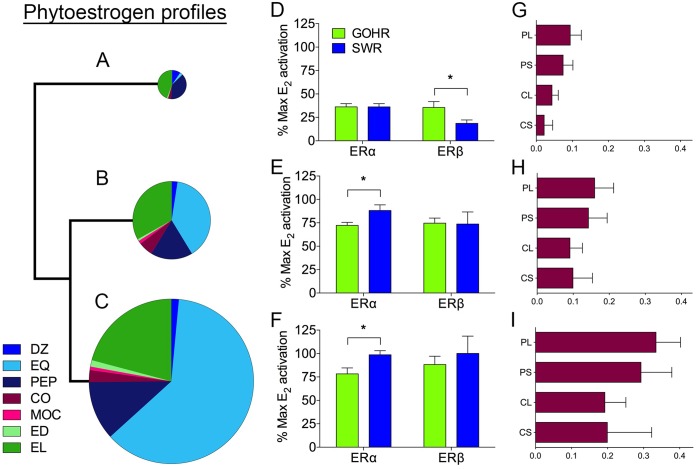
With recent poaching of southern white rhinoceros (SWR [Ceratotherium simum simum]) reaching record levels, the need for a robust assurance population is urgent. However, the global captive SWR population is not currently self-sustaining due to the reproductive failure of captive-born females. Dietary phytoestrogens have been proposed to play a role in this phenomenon, and recent work has demonstrated a negative relationship between diet estrogenicity and fertility of captive-born female SWR. To further examine this relationship, we compared gut microbial communities, fecal phytoestrogens, and fertility of SWR to those of another rhinoceros species-the greater one-horned rhinoceros (GOHR [Rhinoceros unicornis]), which consumes a similar diet but exhibits high levels of fertility in captivity. Using 16S rRNA amplicon sequencing and mass spectrometry, we identified a species-specific fecal microbiota and three dominant fecal phytoestrogen profiles. These profiles exhibited various levels of estrogenicity when tested in an in vitro estrogen receptor activation assay for both rhinoceros species, with profiles dominated by the microbial metabolite equol stimulating the highest levels of receptor activation. Finally, we found that SWR fertility varies significantly not only with respect to phytoestrogen profile, but also with respect to the abundance of several bacterial taxa and microbially derived phytoestrogen metabolites. Taken together, these data suggest that in addition to species differences in estrogen receptor sensitivity to phytoestrogens, reproductive outcomes may be driven by the gut microbiota's transformation of dietary phytoestrogens in captive SWR females.IMPORTANCE Southern white rhinoceros (SWR) poaching has reached record levels, and captive infertility has rendered SWR assurance populations no longer self-sustaining. Previous work has identified dietary phytoestrogens as a likely cause of this problem. Here, we investigate the role of gut microbiota in this phenomenon by comparing two rhinoceros species to provide the first characterizations of gut microbiomes for any rhinoceros species. To our knowledge, our approach, combining parallel sequencing, mass spectrometry, and estrogen receptor activation assays, provides insight into the relationship between microbially mediated phytoestrogen metabolism and fertility that is novel for any vertebrate species. With this information, we plan to direct future work aimed at developing strategies to improve captive reproduction in the hope of alleviating their threat of extinction.
Keywords: endocrine disruption; fertility; gut microbiomes; phytoestrogens; rhinoceros.
Copyright © 2019 Williams et al.
Figures
References
-
- Emslie R. 2012. The IUCN Red List of Threatened Species. Version 2014.2 https://www.iucnredlist.org.
-
- South African Department of Environmental Affairs. 2019. Minister of Environmental Affairs highlights progress on the implementation of the integrated strategic management of rhinoceros. https://www.environment.gov.za/progressonimplementationofintegratedstrat....
-
- Swaisgood R, Dickman DM, White AM. 2006. A captive population in crisis: testing hypotheses for reproductive failure in captive-born southern white rhinoceros females. Biol Conserv 129:468–476. doi: 10.1016/j.biocon.2005.11.015. - DOI
-
- Owen-Smith RN. 1988. Cambridge Studies in Ecology. Megaherbivores: the influence of very large body size on ecology. Cambridge Press, Cambridge, United Kingdom.
Publication types
MeSH terms
Substances
LinkOut - more resources
Full Text Sources
Medical