. 2019 Jul:167:25-34.
doi: 10.1016/j.antiviral.2019.04.004. Epub 2019 Apr 7.

Efficacy of a ML336 derivative against Venezuelan and eastern equine encephalitis viruses

Affiliations

Efficacy of a ML336 derivative against Venezuelan and eastern equine encephalitis viruses

Colleen B Jonsson et al. Antiviral Res. 2019 Jul.

Abstract

Currently, there are no licensed human vaccines or antivirals for treatment of or prevention from infection with encephalitic alphaviruses. Because epidemics are sporadic and unpredictable, and endemic disease is common but rarely diagnosed, it is difficult to identify all populations requiring vaccination; thus, an effective post-exposure treatment method is needed to interrupt ongoing outbreaks. To address this public health need, we have continued development of ML336 to deliver a molecule with prophylactic and therapeutic potential that could be relevant for use in natural epidemics or deliberate release scenario for Venezuelan equine encephalitis virus (VEEV). We report findings from in vitro assessments of four analogs of ML336, and in vivo screening of three of these new derivatives, BDGR-4, BDGR-69 and BDGR-70. The optimal dosing for maximal protection was observed at 12.5 mg/kg/day, twice daily for 8 days. BDGR-4 was tested further for prophylactic and therapeutic efficacy in mice challenged with VEEV Trinidad Donkey (TrD). Mice challenged with VEEV TrD showed 100% and 90% protection from lethal disease when treated at 24 and 48 h post-infection, respectively. We also measured 90% protection for BDGR-4 in mice challenged with Eastern equine encephalitis virus. In additional assessments of BDGR-4 in mice alone, we observed no appreciable toxicity as evaluated by clinical chemistry indicators up to a dose of 25 mg/kg/day over 4 days. In these same mice, we observed no induction of interferon. Lastly, the resistance of VEEV to BDGR-4 was evaluated by next-generation sequencing which revealed specific mutations in nsP4, the viral polymerase.

Keywords: Antiviral efficacy; Drug resistance; Eastern equine encephalitis virus; ML336; New World alphaviruses; Venezuelan equine encephalitis virus.


Figures

Figure 1.
Figure 1.
Structures of ML336 and related analogs, BDGR-4, BDGR-5, BDGR-69 and BDGR-70.
Figure 2.
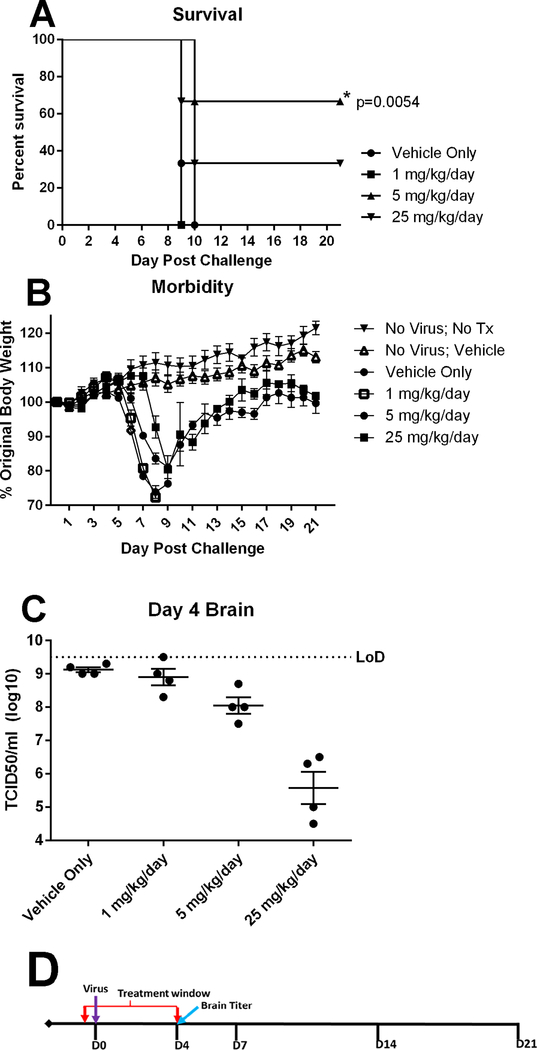
Figure 2.. Prophylactic efficacy of BDGR-4 administered for 5 days in C3H/HeN mice challenged with intranasal VEEV TC-83.
Groups of six C3H/HeN mice per treatment, vehicle, BDGR-4 at 1, 5 or 25 mg/kg/day, were assessed for (A) survival and (B) morbidity over 21 days following an i.n. challenge with VEEV TC-83. (C) Brains (n = 4) were taken for VEEV TC-83 titer by TCID50 on day 4. (D) Treatments were administered i.p. in a volume of 0.1 ml in 25%PEG400/10%RH40/65%water starting at 2 hours prior to virus infection (D0) and were given BID for 5 days (D0-D4).
Figure 3.
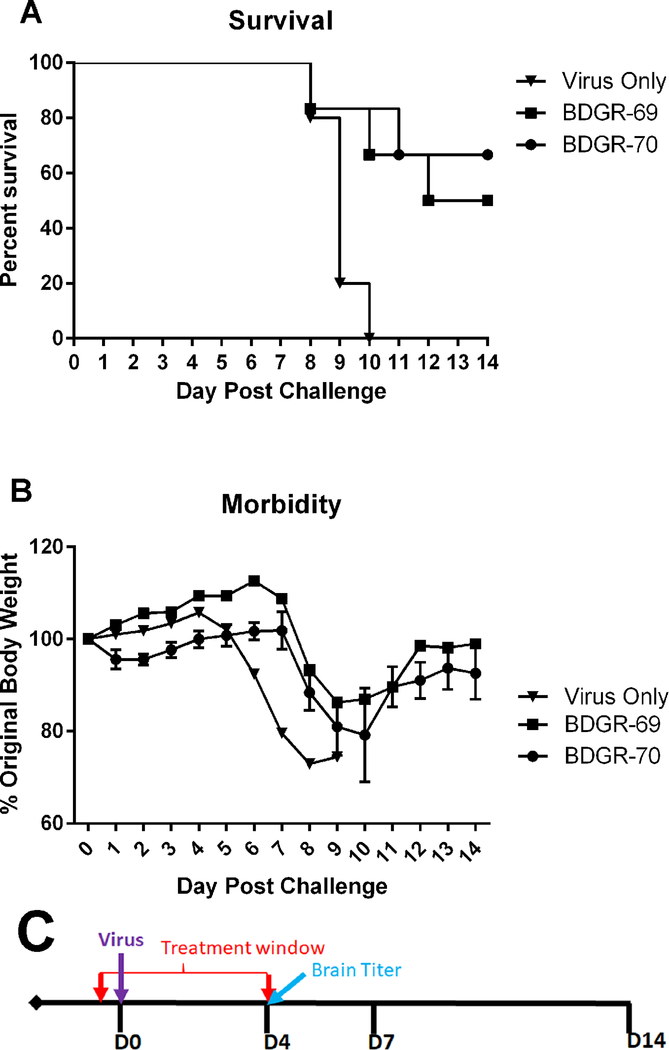
Figure 3.. Prophylactic efficacy of BDGR-69 and -70 tested in C3H/HeN mice and challenged intranasally with VEEV TC-83.
Groups of six C3H/HeN mice per treatment, vehicle, BDGR-69 or BDGR-70 at 50 mg/kg/day, were assessed for (A) survival and (B) morbidity over 14 days following a s.c. challenge with VEEV TC-83. (C) Treatments were administered i.p. in a volume of 0.1 ml in 21.4% PEG400/8.6% RH40/70% water starting at 2 hours prior to virus infection (D0) and were given BID for 5 days (D0-D4).
Figure 4.
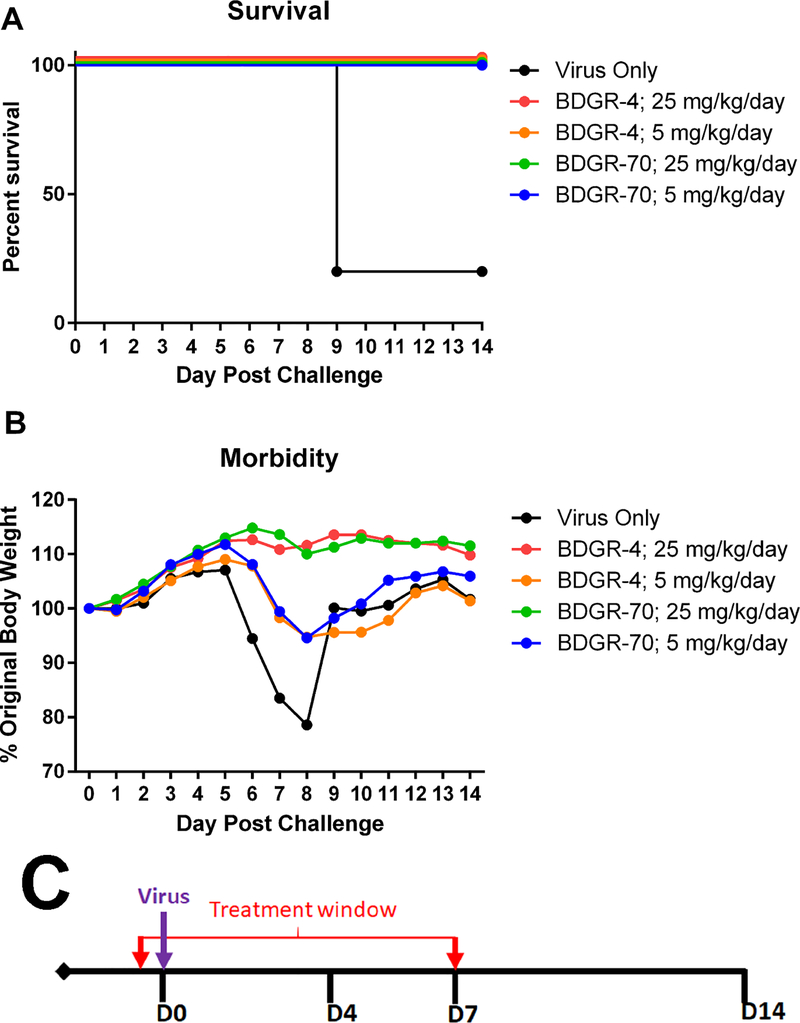
Figure 4.. Prophylactic efficacy of BDGR-4 and -70 tested in C3H/HeN mice and challenged intranasally with VEEV TC-83.
Groups of six C3H/HeN mice per treatment, vehicle, BDGR-4 or BDGR-70 at 25 mg/kg/day, were assessed for (A) survival and (B) morbidity over 14 days following a s.c. challenge with VEEV TC-83. (C) Treatments were administered i.p. in a volume of 0.1 ml in 25% PEG400/10% RH40/65% water starting at 2 hours prior to virus infection (D0) and were given BID through D7.
Figure 5.
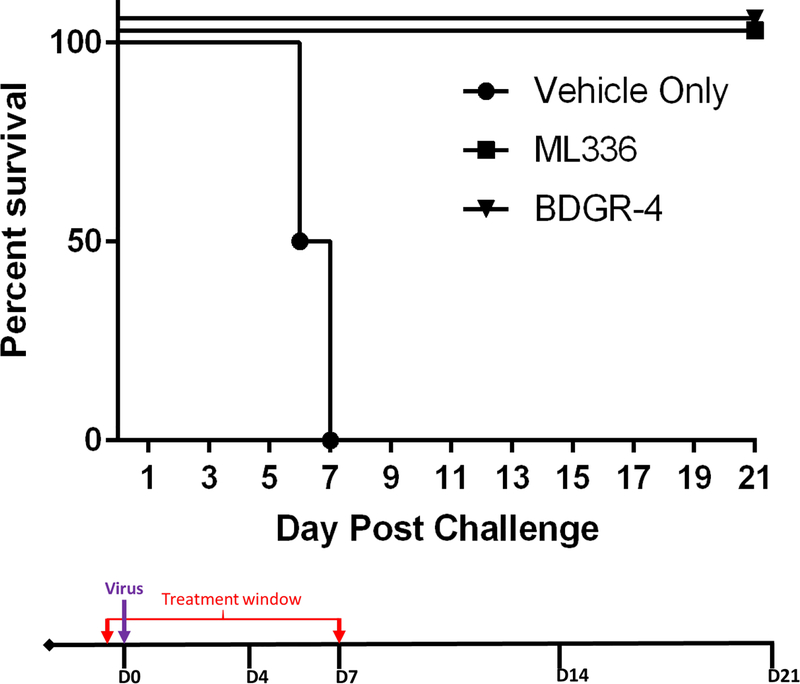
Figure 5.. Prophylactic efficacy of ML336 and BDGR-4 tested in BALB/c mice challenged with VEEV TrD.
Groups of four BALB/c mice per treatment, vehicle, ML336 or BDGR-4, were assessed for survival over 21 days following a s.c. challenge with 10LD50 VEEV TrD. ML336 or BDGR-4 were dosed at 12.5 mg/kg BID delivered by i.p.. Treatments were administered i.p. in a volume of 0.1 ml in 25% PEG400/10% RH40/65% water starting at 2 hours prior to virus infection (D0) and were given BID through D7.
Figure 6.
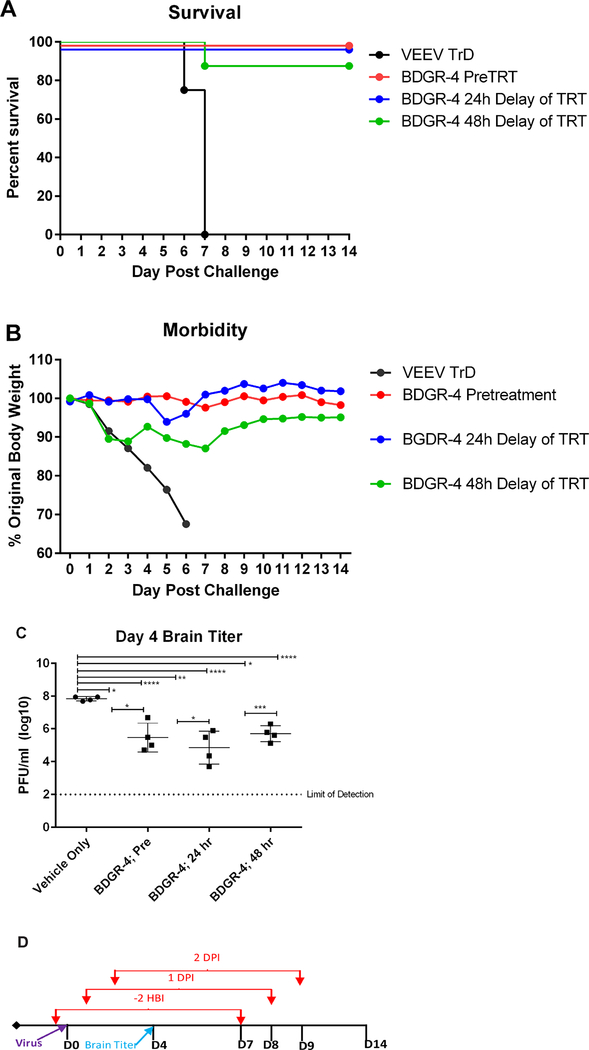
Figure 6.. Prophylactic and therapeutic efficacy of BDGR-4 in BALB/c mice challenged with VEEV TrD.
Groups of eight BALB/c mice per treatment, vehicle, or BDGR-4 at 25 mg/kg/day, were assessed for (A) survival and (B) morbidity over 24 days following a s.c. challenge with 10LD50 VEEV TrD. (C) Four additional mice were used to determine the VEEV TrD titer by plaque assay on day 4. (D) All dosing was BID for a total of 8 days and delivered by i.p. with compound formulated in 25%PEG400/10%RH40/65%Water. Prophylactic doses started at 2 hours prior to virus challenge and therapeutic doses started at 24 or 48 hpi.
Figure 7.
Figure 7.. Prophylactic efficacy of BDGR-4 tested in C57BL/6 mice challenged with EEEV FL93–939.
(A) Survival of C57BL/6 mice infected by s.c. with EEEV and treated with various doses of BDGR-4. (B) Average percent weight change of animals treated with BDGR 4 and infected with EEEV. (C) Treatments were administered i.p. in a volume of 0.1 ml in 25% PEG400/10% RH40/65% water starting at 2 hours prior to virus infection (D0) and were given BID through D7 for a total of 8 days.
Figure 8.
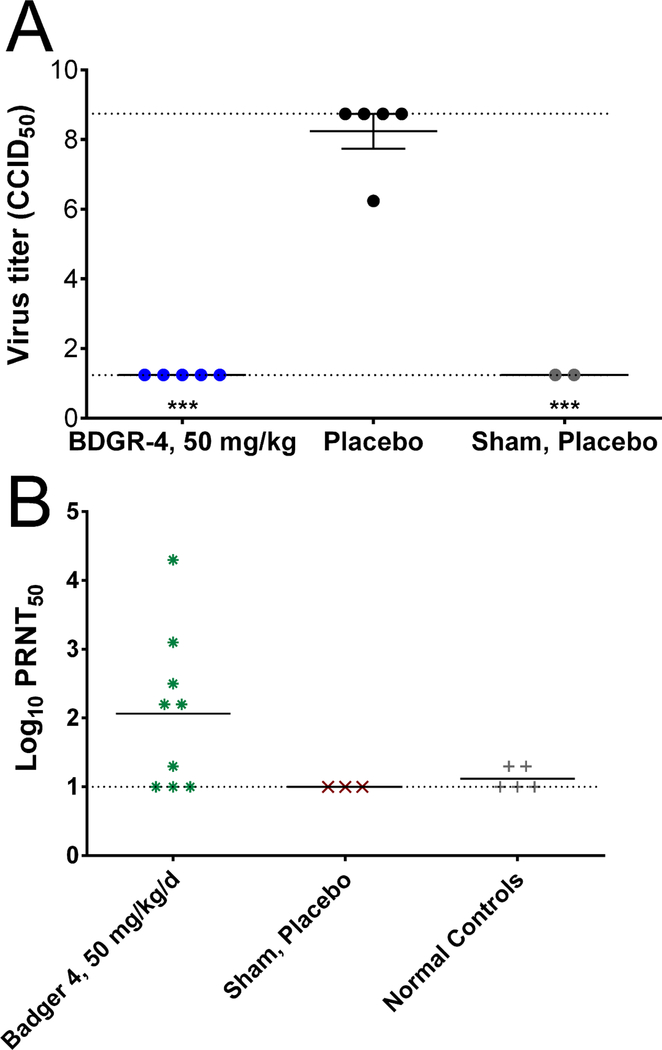
Figure 8.. Virus titers and neutralizing antibody levels from serum of surviving C57BL/6 mice after EEEV challenge of BDGR-4.
(A) Viral titers from brain tissue collected on 6 dpi from mice treated with BDGR-4. (B) Neutralizing antibody levels from mice sera collected 21 days following EEEV challenge of BDGR-4 treated mice. Upper and lower dashed lines represent upper and lower limits of assay detection, respectively. Dashed line represents limit of assay detection.

References

    1. Adcock RS, Chu YK, Golden JE, Chung DH, 2017. Evaluation of anti-Zika virus activities of broad-spectrum antivirals and NIH clinical collection compounds using a cell-based, high-throughput screen assay. Antiviral Res 138, 47–56. - PubMed
    1. Aguilar PV, Estrada-Franco JG, Navarro-Lopez R, Ferro C, Haddow AD, Weaver SC, 2011. Endemic Venezuelan equine encephalitis in the Americas: hidden under the dengue umbrella. Future Virol 6, 721–740. - PMC - PubMed
    1. Calisher CH, 1994. Medically important arboviruses of the United States and Canada. Clin Microbiol Rev 7, 89–116. - PMC - PubMed
    1. Carpentier KS, Morrison TE, 2018. Innate immune control of alphavirus infection. Current opinion in virology 28, 53–60. - PMC - PubMed
    1. Carrera JP, Forrester N, Wang E, Vittor AY, Haddow AD, Lopez-Verges S, Abadia I, Castano E, Sosa N, Baez C, Estripeaut D, Diaz Y, Beltran D, Cisneros J, Cedeno HG, Travassos da Rosa AP, Hernandez H, Martinez-Torres AO, Tesh RB, Weaver SC, 2013. Eastern equine encephalitis in Latin America. N Engl J Med 369, 732–744. - PMC - PubMed

Publication types

MeSH terms