


Artificial intelligence in reproductive medicine
- PMID: 30970326
- PMCID: PMC6733338
- DOI: 10.1530/REP-18-0523
Artificial intelligence in reproductive medicine
Abstract
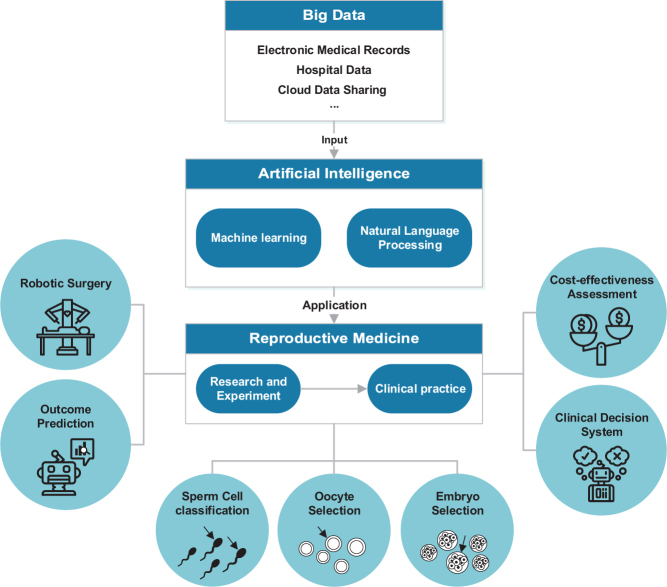
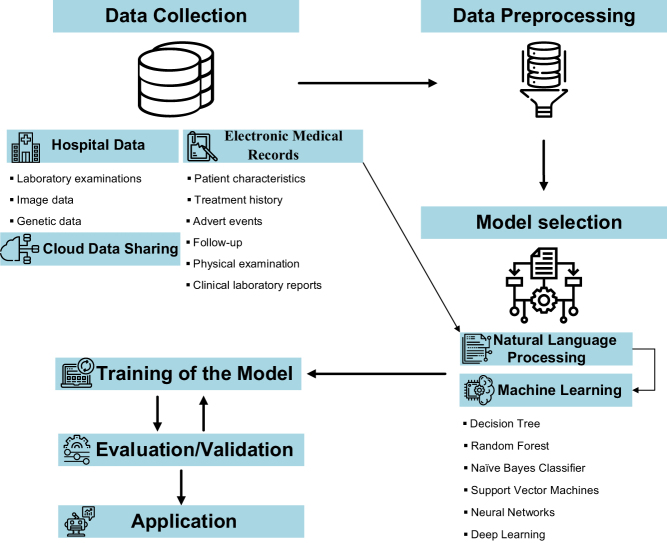
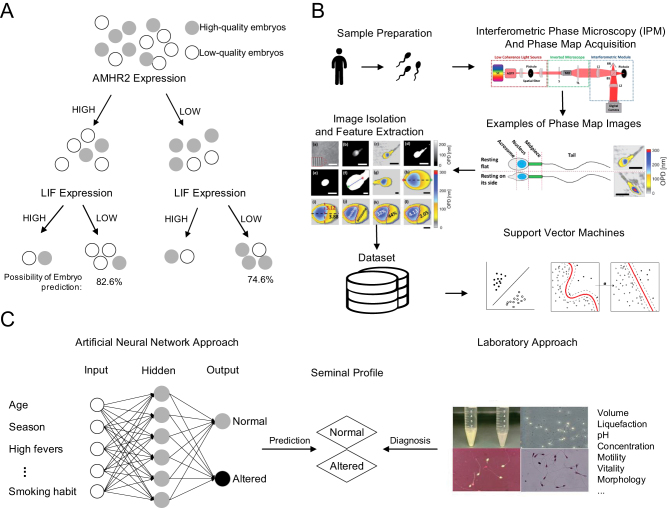
Artificial intelligence (AI) has experienced rapid growth over the past few years, moving from the experimental to the implementation phase in various fields, including medicine. Advances in learning algorithms and theories, the availability of large datasets and improvements in computing power have contributed to breakthroughs in current AI applications. Machine learning (ML), a subset of AI, allows computers to detect patterns from large complex datasets automatically and uses these patterns to make predictions. AI is proving to be increasingly applicable to healthcare, and multiple machine learning techniques have been used to improve the performance of assisted reproductive technology (ART). Despite various challenges, the integration of AI and reproductive medicine is bound to give an essential direction to medical development in the future. In this review, we discuss the basic aspects of AI and machine learning, and we address the applications, potential limitations and challenges of AI. We also highlight the prospects and future directions in the context of reproductive medicine.
Conflict of interest statement
The authors declare that there is no conflict of interest that could be perceived as prejudicing the impartiality of this review.
Figures
References
-
- Abdel-Hamid O, Mohamed A-r, Jiang H, Deng L, Penn G, Yu D. 2014. Convolutional neural networks for speech recognition. IEEE/ACM Transactions on Audio, Speech, and Language Processing 1533–1545. ( 10.1109/TASLP.2014.2339736) - DOI
Publication types
MeSH terms
LinkOut - more resources
Full Text Sources
Other Literature Sources
Miscellaneous
