


Study protocol: exploring the efficacy of cyclophosphamide added to corticosteroids for treating acute exacerbation of idiopathic pulmonary fibrosis; a randomized double-blind, placebo-controlled, multi-center phase III trial (EXAFIP)
- PMID: 30971235
- PMCID: PMC6458697
- DOI: 10.1186/s12890-019-0830-x
Study protocol: exploring the efficacy of cyclophosphamide added to corticosteroids for treating acute exacerbation of idiopathic pulmonary fibrosis; a randomized double-blind, placebo-controlled, multi-center phase III trial (EXAFIP)
Abstract
Background: Idiopathic pulmonary fibrosis (IPF) is a fatal lung disease, with a median survival of 2-3 years and variable natural history, characterized by gradual and progressive deterioration. Acute exacerbation of idiopathic pulmonary fibrosis (AE-IPF) is a severe complication, associated with poor survival and a mortality > 50%. To date, no treatment has proven effective in AE-IPF, with cyclophosphamide (CYC) the only therapy suggested to be effective on survival, primarily based on retrospective series. Considering the high fatality rates of AE-IPF, evaluating the efficacy of immunosuppressive agents in a randomized controlled trial proves crucial, as the results could significantly impact treatment and prognosis of AE-IPF.
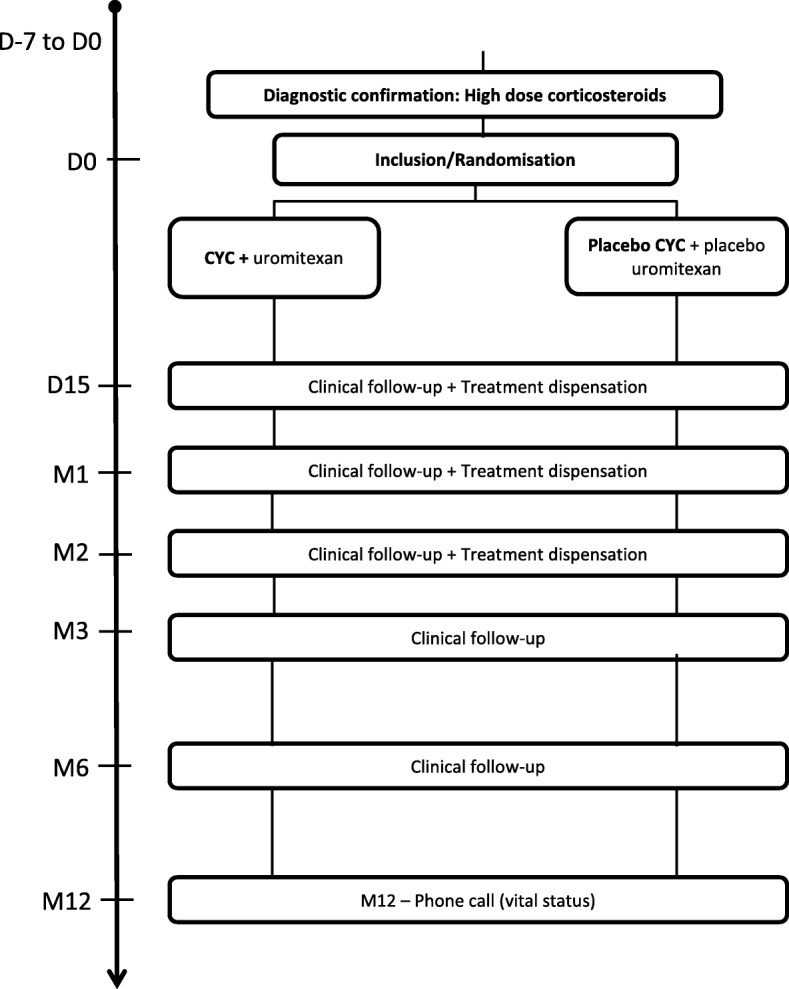
Methods: The EXAFIP study is a French national multicenter double-blind placebo-controlled randomized trial. Its primary objective is to evaluate the efficacy of CYC compared to placebo on early survival in patients treated with corticosteroids. We hypothesize that adding CYC to high-dose corticosteroids would reduce 3-month mortality in AE-IPF patients. The primary outcome is all-cause mortality rate at Month 3; secondary objectives are to evaluate the efficacy of CYC compared to placebo on overall survival at Months 6 and 12, respiratory disease-specific mortality, respiratory morbidity, and chest high-resolution computed tomography features, and to determine prognostic factors in AE-IPF and compare the safety of the two treatment arms during 6 months' follow-up.
Discussion: There is an urgent unmet clinical need for effective AE-IPF treatment. The EXAFIP study is the first large Phase III placebo-controlled randomized trial evaluating the efficacy and safety of CYC added to corticosteroids in treating AE-IPF. The results of this study could significantly impact treatment strategy and prognosis of AE-IPF.
Trial registration: Clinical trials, NCT02460588 ; Date: June 2, 2015, prospectively; Issue date: 14/11/2017; Protocole Amendment Number: 03.
Keywords: Acute exacerbation; Cyclophosphamide; Idiopathic pulmonary fibrosis.
Conflict of interest statement
Ethics approval and consent to participate
This study received approval from the French ethics committee (Comité de protection des personnes Ile de France X, Hôpital Robert Balanger) as well as from the National French Drug Safety Agency (EudraCT: 2015–000492-27). The French Ministry of Health (DGOS) has designated experts’ committee for reviewing the protocol.
Informed written consent will be obtained by the investigator from research participant prior to inclusion in the study. If it is not possible for the person solicited to consent in writing, the consent is certified by a third party. This third party must have no connection with the investigator or the administration manager. A materials consent will be obtained to specifically address the collection of the DAN and RNA biobank (see above: Biological sample collection). Model consent form and other related documentation given to participants and authorised surrogates.
Consent for publication
Not applicable.
Competing interests
The authors declare that they have no competing interests.
Publisher’s Note
Springer Nature remains neutral with regard to jurisdictional claims in published maps and institutional affiliations.
References
Publication types
MeSH terms
Substances
Associated data
Grants and funding
LinkOut - more resources
Full Text Sources
Medical
