


Loop-mediated isothermal amplification (LAMP) approach for detection of heat-resistant Talaromyces flavus species
- PMID: 30971732
- PMCID: PMC6458134
- DOI: 10.1038/s41598-019-42275-x
Loop-mediated isothermal amplification (LAMP) approach for detection of heat-resistant Talaromyces flavus species
Abstract
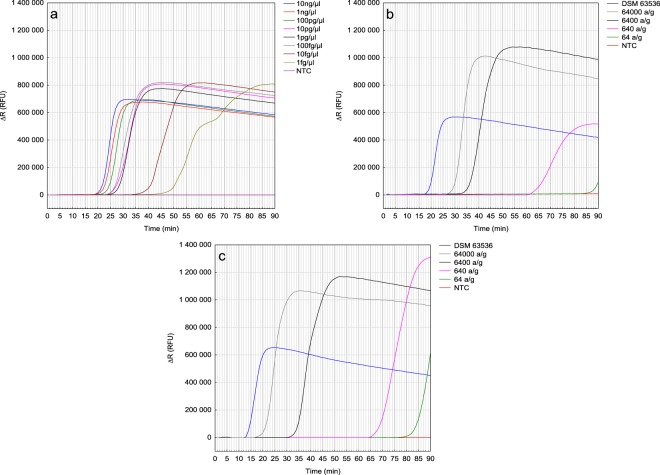
Talaromyces flavus is a soilborne fungus that can contaminate fruits. It constitutes serious influence on heat-processed food spoilage, as T. flavus belongs to the heat-resistant fungi group, which are able to survive the pasteurization process. Moreover T. flavus has been reported to be capable of mycotoxigenicity, therefore they have a serious threat to human health. To maintain the safety of food production, sensitive method for T. flavus detection was developed. The loop mediated amplification, abbreviated LAMP, reactions were designed as specific for detection of DNA replication licensing factor gene of T. flavus. The specificity of assay was confirmed by use of 5 T. flavus strains and 35 other fungal isolates. The achieved limit of detection was 1fg of T. flavus genomic DNA and 64 ascospores in 1 g of strawberry fruits or soil samples.
Conflict of interest statement
The authors declare no competing interests.
Figures
References
-
- Dijksterhuis, J. Heat-Resistant Ascospores. In Food Mycology: A Multifaceted Approach to Fungi and Food (eds Dijksterhuis, J. & Samson, R. A.) 101–117 (CRC Press, 2007).
-
- Amaeze NJ, Ugwuanyi JO, Obeta JAN. Studies Of Heat Resistant Fungi In The Soil: Talaromyces flavus Isolated In Nigerian Soils. New York Sci. J. 2010;3:8–14.
-
- Beuchat, L. R. & Pitt, J. L. Detection and enumeration of heat-resistant molds. In Compendium of the methods for the microbiological examination of food (eds Downes, F. P. & Ito, K.) 217–222 (APHA, 2001).
-
- Dethoup T, Manoch L, Visarathanonth N, Chamswarng C, Kijjoa A. Morphology and Distribution of Talaromyces flavus from Soil and Potential Use as a Biological Control Agent against Plant Pathogenic Fungi. Thai J. Agric. Sci. 2007;40:37–50.
Publication types
MeSH terms
Substances
LinkOut - more resources
Full Text Sources
