


N-Methylation of Amino Acids in Gelatinase Biosynthesis-Activating Pheromone Identifies Key Site for Stability Enhancement with Retention of the Enterococcus faecalis fsr Quorum Sensing Circuit Response
- PMID: 30973007
- PMCID: PMC6570535
- DOI: 10.1021/acsinfecdis.9b00097
N-Methylation of Amino Acids in Gelatinase Biosynthesis-Activating Pheromone Identifies Key Site for Stability Enhancement with Retention of the Enterococcus faecalis fsr Quorum Sensing Circuit Response
Abstract
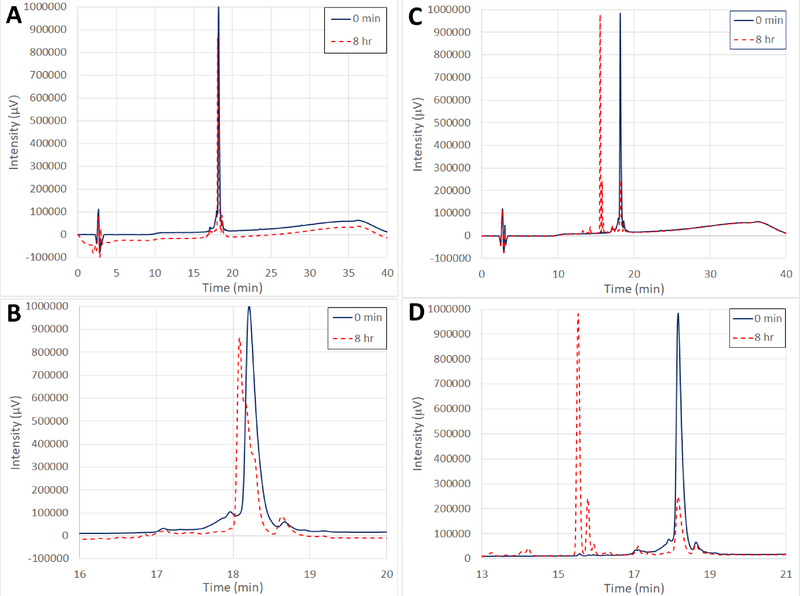
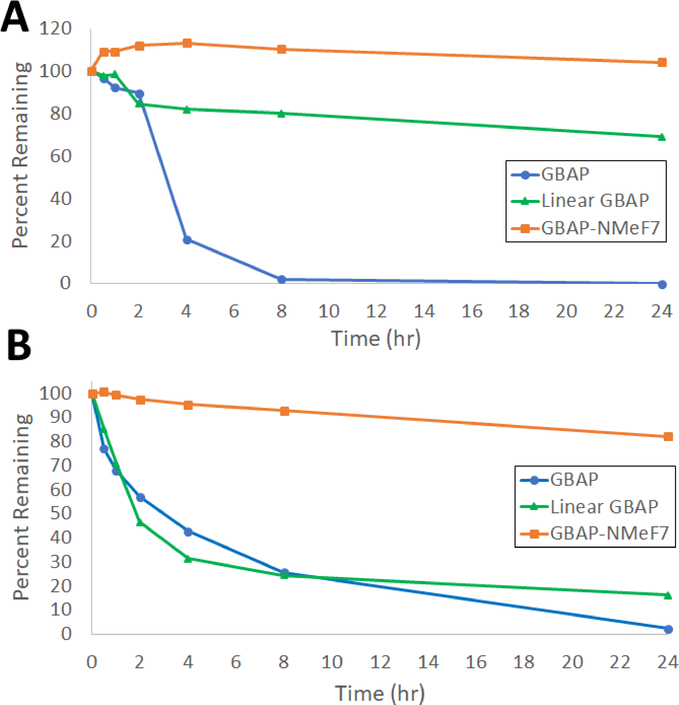
The growing prevalence of multiantibiotic-resistant bacteria necessitates looking at potential alternative approaches for attenuating infections by bacteria while reducing the rate of antibiotic resistance development. Enterococcus faecalis is responsible for a large percentage of clinical enterococci infections, and its pathogenicity has been demonstrated to be influenced by quorum sensing (QS). In this study, we report the systematic study of the relationship between backbone hydrogens and the ability to activate the FsrC receptor. We demonstrate that N-methylation was particularly well-tolerated at one site (Phe7) and granted stability against protease digestion, increasing the peptide half-life relative to the native signal by more than 6-fold. The inclusion of the N-Me-Phe7 modification may be useful for improving the pharmacological properties of E. faecalis QS inhibitors as part of the development of future therapeutic candidates.
Keywords: gelatinase biosynthesis-activating pheromone; metabolic stability; peptidomimetics; quorum sensing.
Conflict of interest statement
The authors declare no competing financial interest.
Figures
References
Publication types
MeSH terms
Substances
Grants and funding
LinkOut - more resources
Full Text Sources
