


High Incidence of Intended Partner Pregnancy Among Men Living With HIV in Rural Uganda: Implications for Safer Conception Services
- PMID: 30973545
- PMCID: PMC6625849
- DOI: 10.1097/QAI.0000000000002053
High Incidence of Intended Partner Pregnancy Among Men Living With HIV in Rural Uganda: Implications for Safer Conception Services
Abstract
Background: Many men with HIV express fertility intentions and nearly half have HIV-uninfected sexual partners. We measured partner pregnancy among a cohort of men accessing antiretroviral therapy in Uganda.
Methods: Self-reported partner pregnancy incidence and bloodwork (CD4, HIV-RNA) were collected quarterly. Interviewer-administered questionnaires assessed men's sexual and reproductive health annually and repeated at time of reported pregnancy (2011-2015). We measured partner pregnancy incidence overall, by pregnancy intention and by reported partner HIV serostatus. We assessed viral suppression (≤400 copies/mL) during the periconception period. Cox proportional hazard regression with repeated events identified predictors of partner pregnancy.
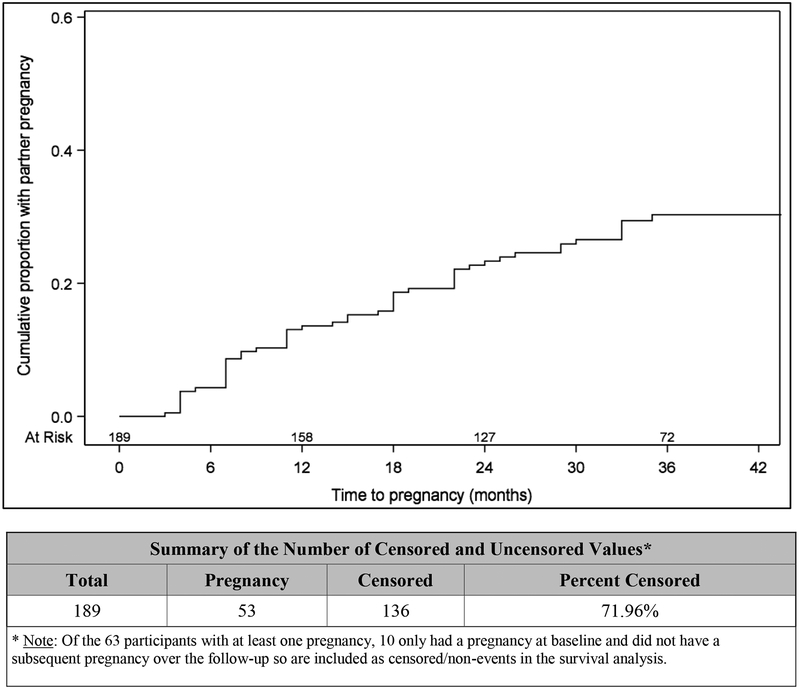
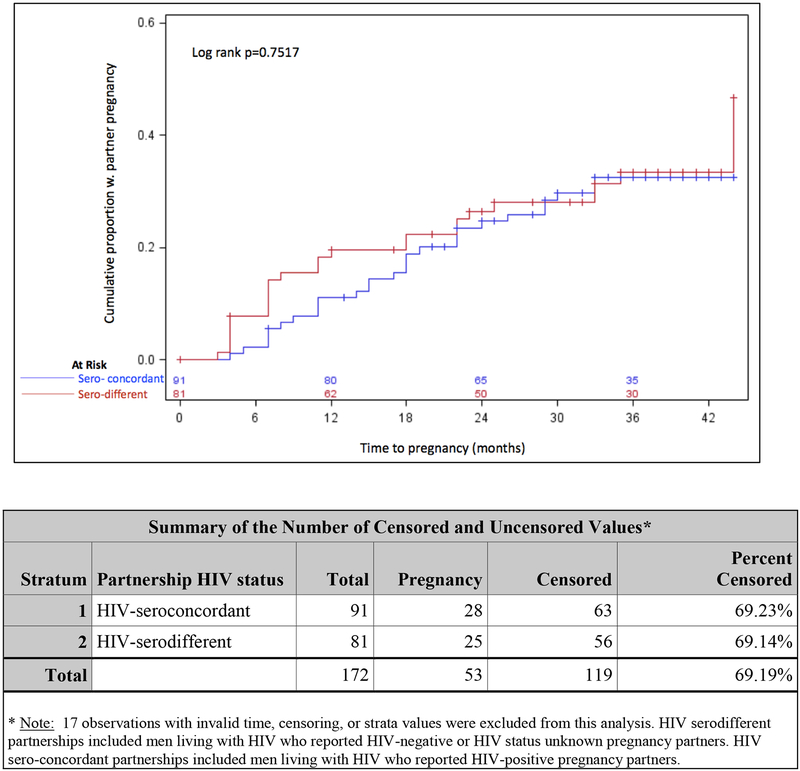
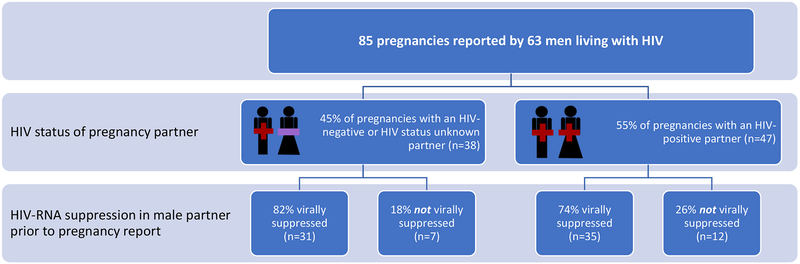
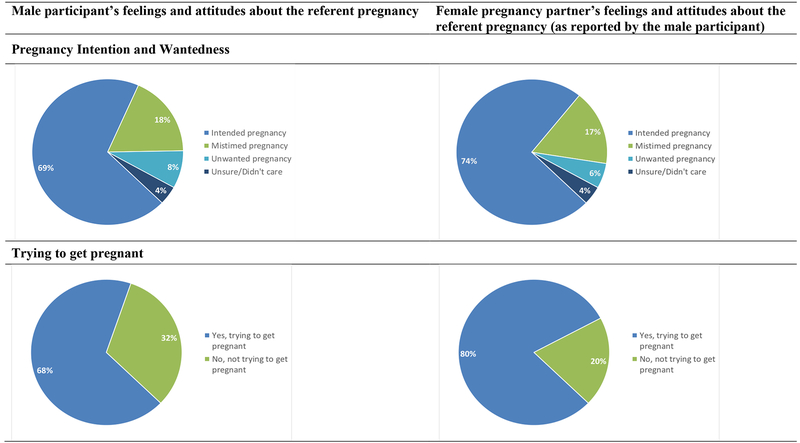
Results: Among 189 men, the baseline median age was 39.9 years (interquartile range: 34.7-47.0), years on antiretroviral therapy was 3.9 (interquartile range: 0.0-5.1), and 51% were virally suppressed. Over 530.2 person-years of follow-up, 63 men reported 85 partner pregnancies (incidence = 16.0/100 person-years); 45% with HIV-serodifferent partners. By 3 years of follow-up, 30% of men reported a partner pregnancy, with no difference by partner HIV serostatus (P = 0.75). Sixty-nine percent of pregnancies were intended, 18% wanted but mistimed, and 8% unwanted. Seventy-eight percent of men were virally suppressed before pregnancy report. Men who were younger [adjusted hazard ratio (aHR): 0.94/yr; 95% confidence interval (CI): 0.89 to 0.99], had incomplete primary education (aHR: 2.95; 95% CI: 1.36 to 6.40), and reported fertility desires (aHR: 2.25; 95% CI: 1.04 to 4.85) had higher probability of partner pregnancy.
Conclusions: A high incidence of intended partner pregnancy highlights the need to address men's reproductive goals within HIV care. Nearly half of pregnancy partners were at-risk for HIV, and one-quarter of men were not virally suppressed during periconception. Safer conception care provides opportunity to support men's health and reproductive goals, while preventing HIV transmission to women and infants.
Conflict of interest statement
Competing interests
All authors declare no competing interests.
Figures
References
-
- Myer L, Morroni C, Rebe K. Prevalence and determinants of fertility intentions of HIV-infected women and men receiving antiretroviral therapy in South Africa. AIDS Patient Care STDS. 2007;21(4):278–285. - PubMed
-
- Nakayiwa S, Abang B, Packel L, et al. Desire for children and pregnancy risk behavior among HIV-infected men and women in Uganda. AIDS Behav. 2006;10(4 Suppl):S95–104. - PubMed
Publication types
MeSH terms
Substances
Grants and funding
LinkOut - more resources
Full Text Sources
Medical
Research Materials
