


Sex-differential DNA methylation and associated regulation networks in human brain implicated in the sex-biased risks of psychiatric disorders
- PMID: 30976086
- PMCID: PMC6788945
- DOI: 10.1038/s41380-019-0416-2
Sex-differential DNA methylation and associated regulation networks in human brain implicated in the sex-biased risks of psychiatric disorders
Abstract
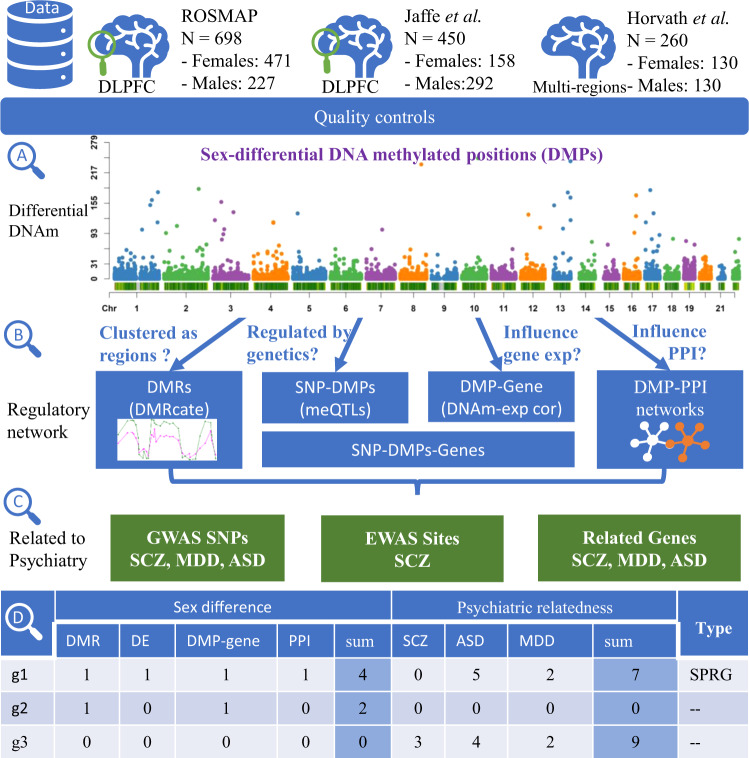
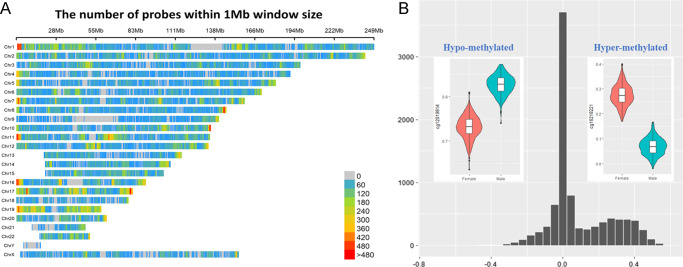
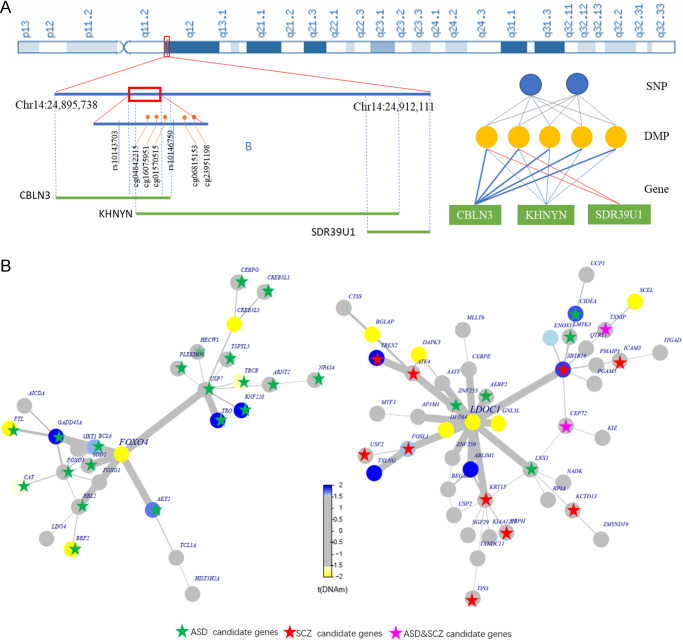
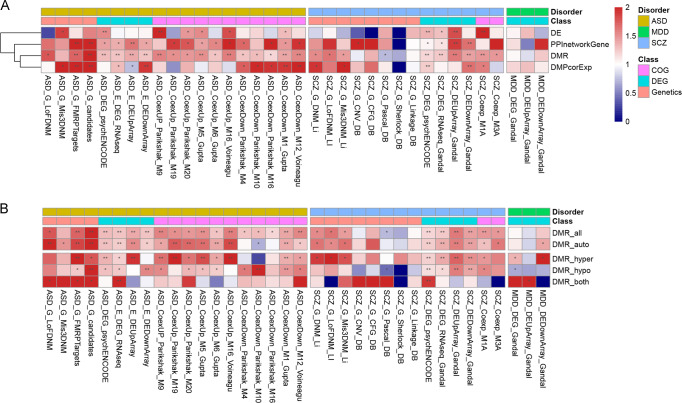
Many psychiatric disorders are characterized by a strong sex difference, but the mechanisms behind sex-bias are not fully understood. DNA methylation plays important roles in regulating gene expression, ultimately impacting sexually different characteristics of the human brain. Most previous literature focused on DNA methylation alone without considering the regulatory network and its contribution to sex-bias of psychiatric disorders. Since DNA methylation acts in a complex regulatory network to connect genetic and environmental factors with high-order brain functions, we investigated the regulatory networks associated with different DNA methylation and assessed their contribution to the risks of psychiatric disorders. We compiled data from 1408 postmortem brain samples in 3 collections to identify sex-differentially methylated positions (DMPs) and regions (DMRs). We identified and replicated thousands of DMPs and DMRs. The DMR genes were enriched in neuronal related pathways. We extended the regulatory networks related to sex-differential methylation and psychiatric disorders by integrating methylation quantitative trait loci (meQTLs), gene expression, and protein-protein interaction data. We observed significant enrichment of sex-associated genes in psychiatric disorder-associated gene sets. We prioritized 2080 genes that were sex-biased and associated with psychiatric disorders, such as NRXN1, NRXN2, NRXN3, FDE4A, and SHANK2. These genes are enriched in synapse-related pathways and signaling pathways, suggesting that sex-differential genes of these neuronal pathways may cause the sex-bias of psychiatric disorders.
Conflict of interest statement
The authors declare that they have no conflict of interest.
Figures
References
-
- Christensen DL, Baio J, Van Naarden Braun K, Bilder D, Charles J, Constantino JN, et al. Prevalence and characteristics of autism spectrum disorder among children aged 8 years—autism and developmental disabilities monitoring network, 11 sites, United States, 2012. Morb Mortal Wkly Rep Surveill Summ. 2016;65:1–23. - PMC - PubMed
-
- Abel KM, Drake R, Goldstein JM. Sex differences in schizophrenia. Int Rev Psychiatry. 2010;22:417–28. - PubMed
-
- Kornstein SG, Schatzberg AF, Thase ME, Yonkers KA, McCullough JP, Keitner GI, et al. Gender differences in chronic major and double depression. J Affect Disord. 2000;60:1–11. - PubMed
Publication types
MeSH terms
Grants and funding
LinkOut - more resources
Full Text Sources
Medical
