


Role of the Gut-Liver Axis in Liver Inflammation, Fibrosis, and Cancer: A Special Focus on the Gut Microbiota Relationship
- PMID: 30976737
- PMCID: PMC6442695
- DOI: 10.1002/hep4.1331
Role of the Gut-Liver Axis in Liver Inflammation, Fibrosis, and Cancer: A Special Focus on the Gut Microbiota Relationship
Abstract
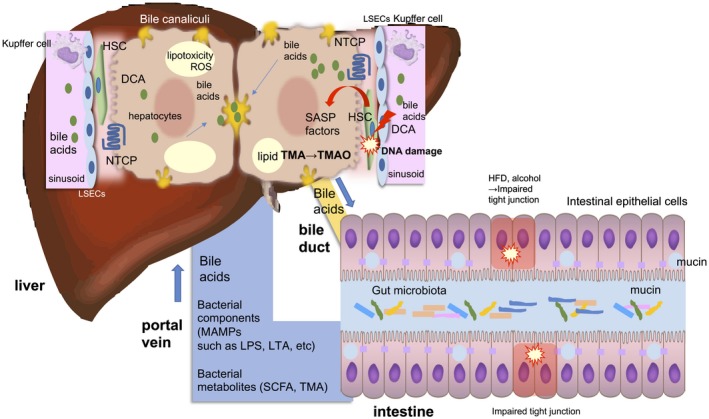
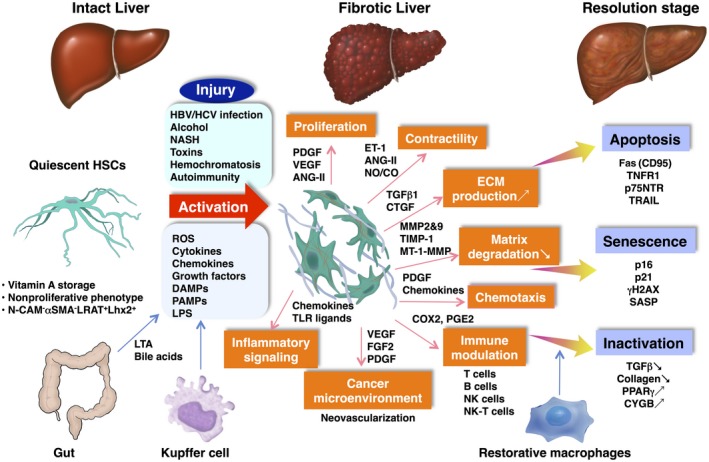
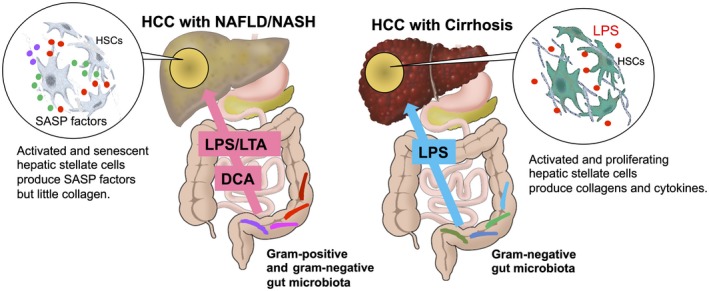
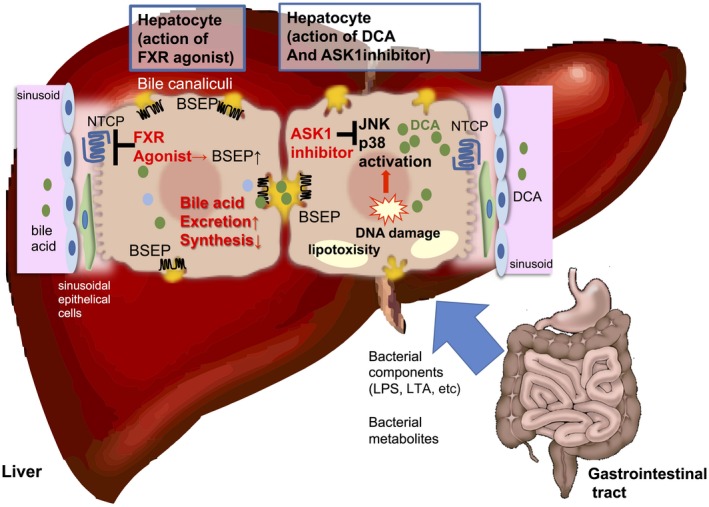
The gut and the liver are anatomically and physiologically connected, and this "gut-liver axis" exerts various influences on liver pathology. The gut microbiota consists of various microorganisms that normally coexist in the human gut and have a role of maintaining the homeostasis of the host. However, once homeostasis is disturbed, metabolites and components derived from the gut microbiota translocate to the liver and induce pathologic effects in the liver. In this review, we introduce and discuss the mechanisms of liver inflammation, fibrosis, and cancer that are influenced by gut microbial components and metabolites; we include recent advances in molecular-based therapeutics and novel mechanistic findings associated with the gut-liver axis and gut microbiota.
Figures
References
-
- Wiest R, Albillos A, Trauner M, Bajaj JS, Jalan R. Targeting the gut‐liver axis in liver disease. J Hepatol 2017;67:1084‐1103. Erratum. J Hepatol 2018;68:1336. - PubMed
Publication types
LinkOut - more resources
Full Text Sources
