


The role of the protein-RNA recognition code in neurodegeneration
- PMID: 30980111
- PMCID: PMC11105320
- DOI: 10.1007/s00018-019-03096-3
The role of the protein-RNA recognition code in neurodegeneration
Abstract
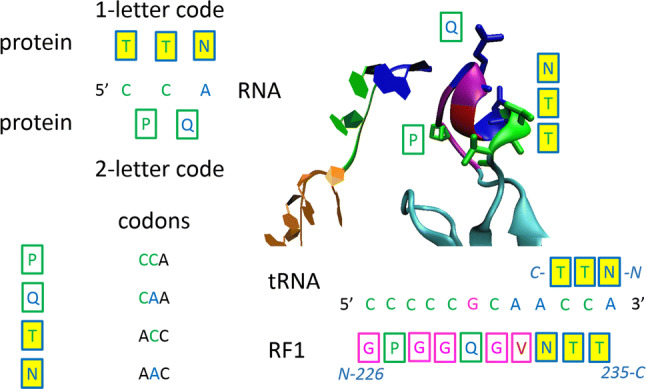
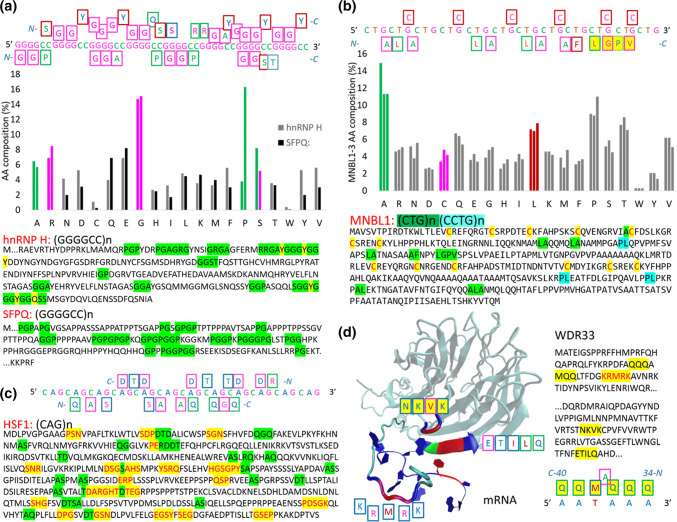
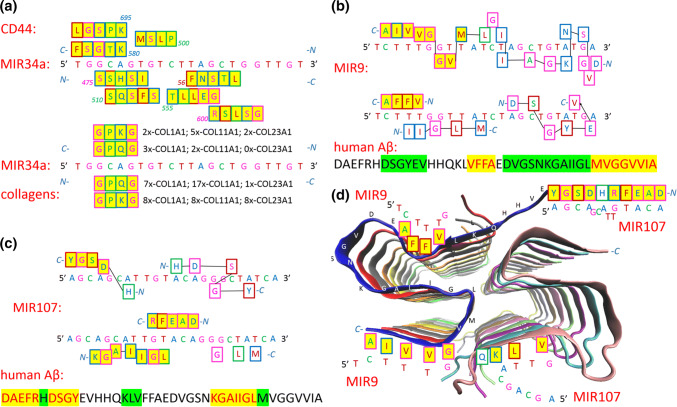
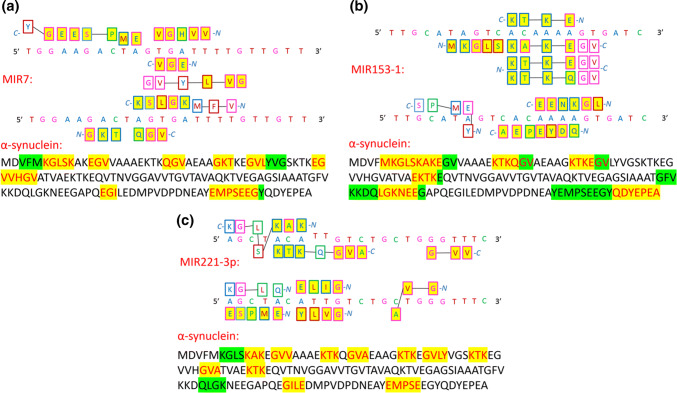
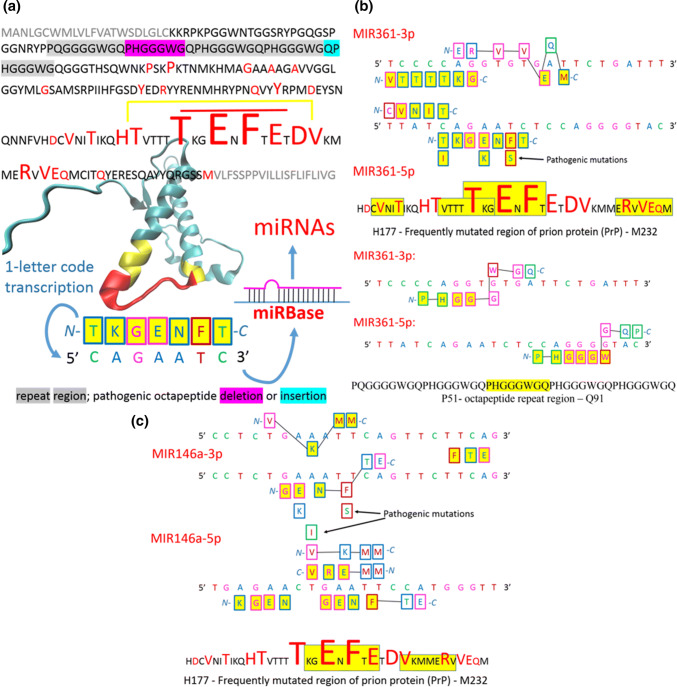
MicroRNAs are small endogenous RNAs that pair and bind to sites on mRNAs to direct post-transcriptional repression. However, there is a possibility that microRNAs directly influence protein structure and activity, and this influence can be termed post-translational riboregulation. This conceptual review explores the literature on neurodegenerative disorders. Research on the association between neurodegeneration and RNA-repeat toxicity provides data that support a protein-RNA recognition code. For example, this code explains why hnRNP H and SFPQ proteins, which are involved in amyotrophic lateral sclerosis, are sequestered by the (GGGGCC)n repeat sequence. Similarly, it explains why MNBL proteins and (CTG)n repeats in RNA, which are involved in myotonic dystrophy, are sequestered into RNA foci. Using this code, proteins involved in diseases can be identified. A simple protein BLAST search of the human genome for amino acid repeats that correspond to the nucleotide repeats reveals new proteins among already known proteins that are involved in diseases. For example, the (CAG)n repeat sequence, when transcribed into possible peptide sequences, leads to the identification of PTCD3, Rem2, MESP2, SYPL2, WDR33, COL23A1, and others. After confirming this approach on RNA repeats, in the next step, the code was used in the opposite manner. Proteins that are involved in diseases were compared with microRNAs involved in those diseases. For example, a reasonable correspondence of microRNA 9 and 107 with amyloid-β-peptide (Aβ42) was identified. In the last step, a miRBase search for micro-nucleotides, obtained by transcription of a prion amino acid sequence, revealed new microRNAs and microRNAs that have previously been identified as involved in prion diseases. This concept provides a useful key for designing RNA or peptide probes.
Keywords: Alzheimer’s disease; Huntington’s disease; Molecular recognition; Non-coding RNA; Parkinson’s disease; Prion diseases.
Figures
References
-
- Dunham I, Kundaje A, Aldred SF, Collins PJ, Davis CA, Doyle F, Epstein CB, Frietze S, Harrow J, Kaul R, Khatun J, Lajoie BR, Landt SG, Lee B-, Pauli F, Rosenbloom KR, et al. An integrated encyclopedia of DNA elements in the human genome. Nature. 2012;489:57–74. doi: 10.1038/nature11247. - DOI - PMC - PubMed
Publication types
MeSH terms
Substances
Grants and funding
LinkOut - more resources
Full Text Sources
Research Materials
