


Time-Varying Clearance and Impact of Disease State on the Pharmacokinetics of Avelumab in Merkel Cell Carcinoma and Urothelial Carcinoma
- PMID: 30980481
- PMCID: PMC6617853
- DOI: 10.1002/psp4.12406
Time-Varying Clearance and Impact of Disease State on the Pharmacokinetics of Avelumab in Merkel Cell Carcinoma and Urothelial Carcinoma
Abstract
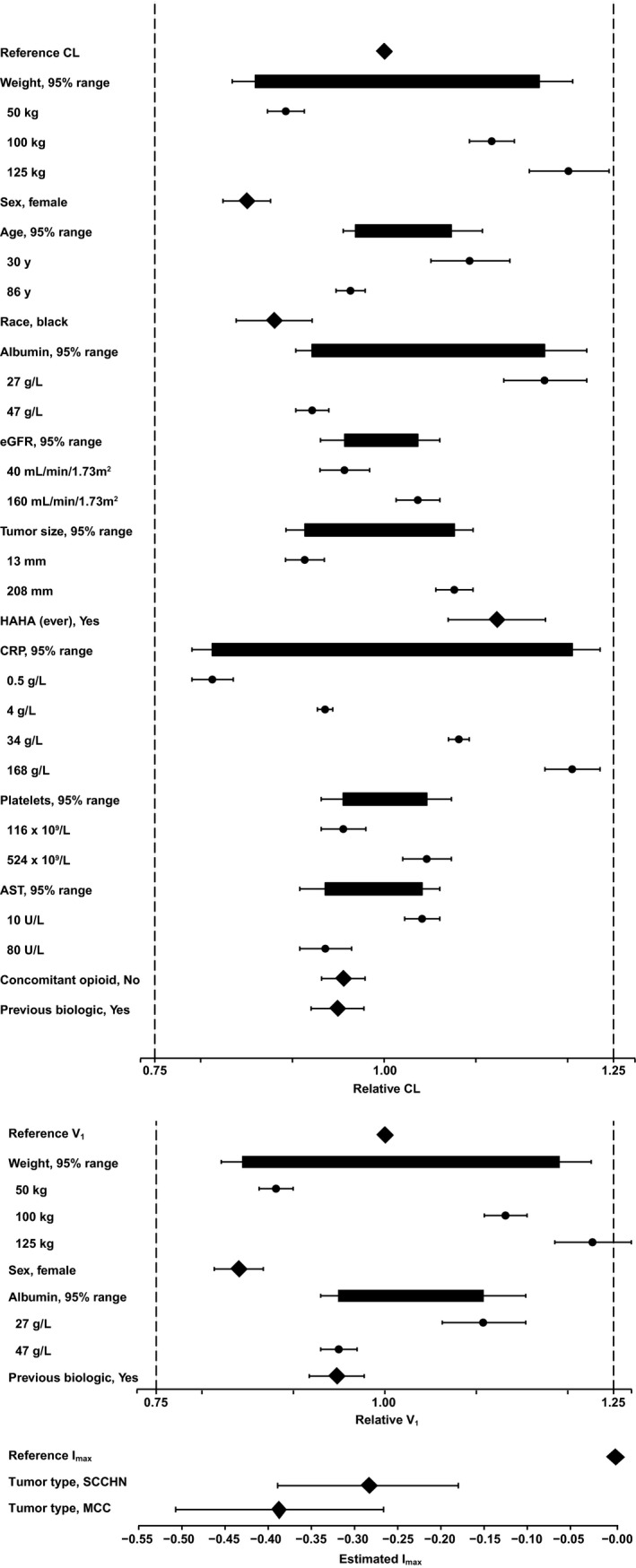
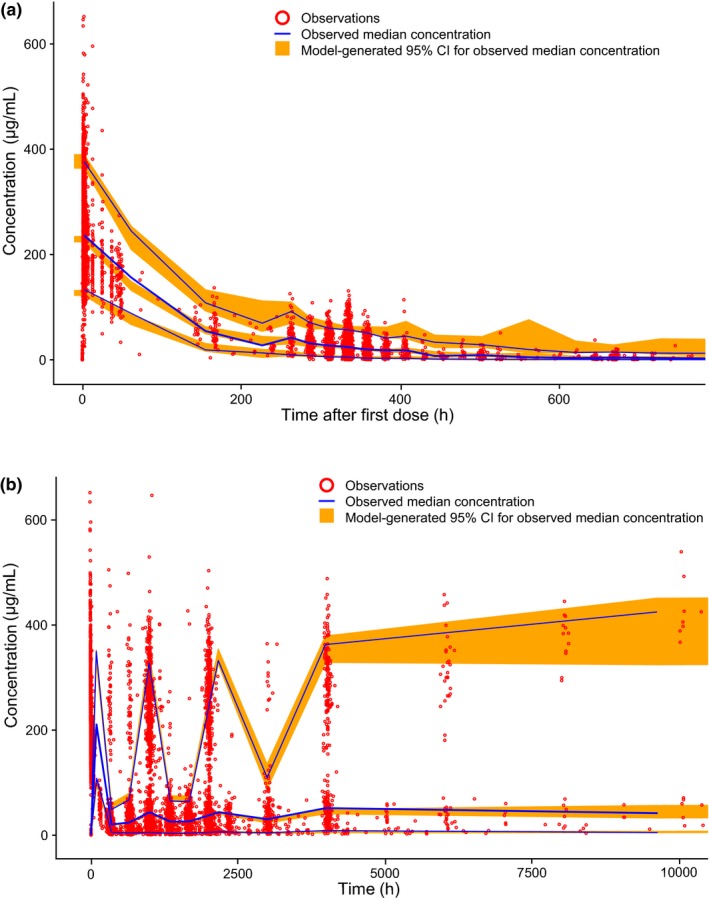
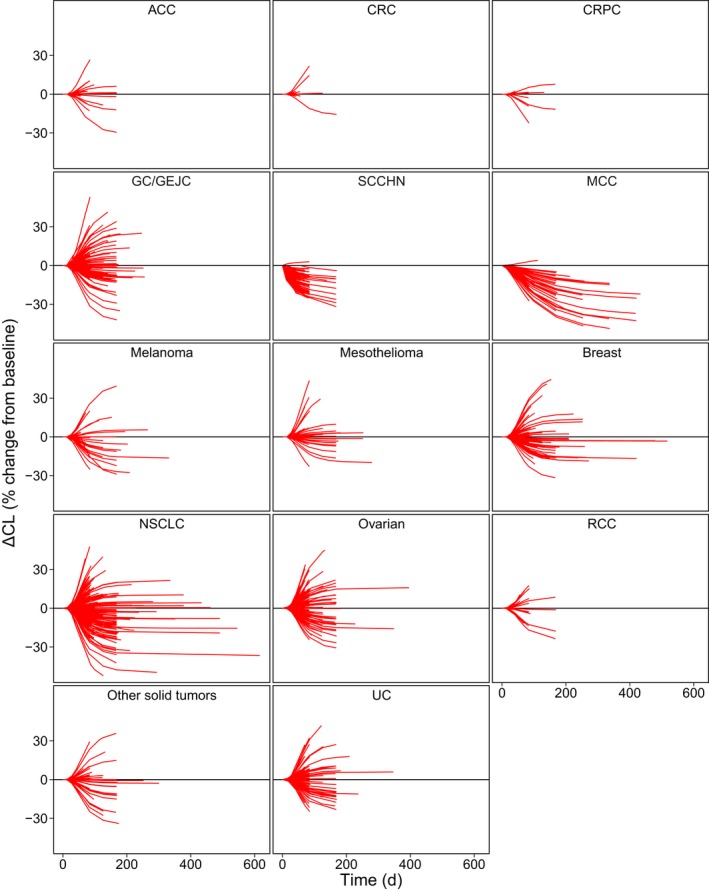
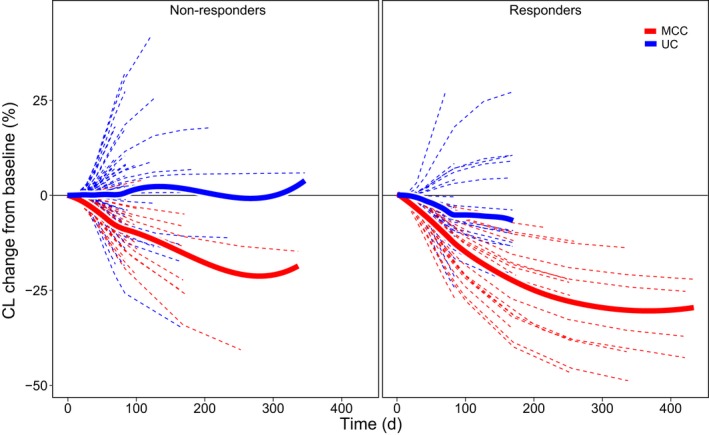
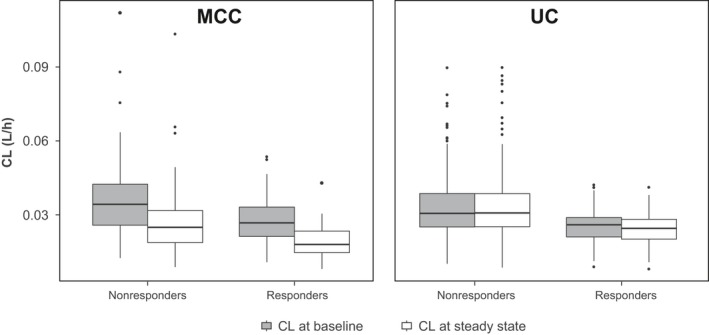
Avelumab, a human anti-programmed death ligand 1 immunoglobulin G1 antibody, has shown efficacy and manageable safety in multiple tumors. A two-compartment population pharmacokinetic model for avelumab incorporating intrinsic and extrinsic covariates and time-varying clearance (CL) was identified based on data from 1,827 patients across three clinical studies. Of 14 tumor types, a decrease in CL over time was more notable in metastatic Merkel cell carcinoma and squamous cell carcinoma of the head and neck, which had maximum decreases of 32.1% and 24.7%, respectively. The magnitude of reduction in CL was higher in responders than in nonresponders. Significant covariate effects of baseline weight, baseline albumin, and sex were identified on both CL and central distribution volume. Significant covariate effects of black/African American race, C-reactive protein, and immunogenicity were found on CL. None of the covariate or time-dependent effects were clinically important or warranted dose adjustment.
© 2019 The Authors CPT: Pharmacometrics & Systems Pharmacology published by Wiley Periodicals, Inc. on behalf of the American Society for Clinical Pharmacology and Therapeutics.
Conflict of interest statement
J.J.W. and J.R.W. were employed as consultants by Merck Healthcare KGaA at the time the analysis was performed. B.B. and A.K. are employees of Merck Healthcare KGaA. H.D., Y.V., J.T.W., and B.N. are employees of EMD Serono, business of Merck Healthcare KGaA. P.G. is an employee of Merck Serono S.A., Lausanne, Switzerland, an affiliate of Merck Healthcare KGaA. S.B. and C.L.B. are employees of Pfizer Inc.
Figures
References
-
- Dong, H. , et al Tumor‐associated B7‐H1 promotes T‐cell apoptosis: a potential mechanism of immune evasion. Nat. Med. 8, 793–800 (2002). - PubMed
-
- Hirano, F. , et al Blockade of B7‐H1 and PD‐1 by monoclonal antibodies potentiates cancer therapeutic immunity. Cancer Res. 65, 1089–1096 (2005). - PubMed
-
- Hamilton, G. & Rath, B. Avelumab: combining immune checkpoint inhibition and antibody‐dependent cytotoxicity. Expert Opin. Biol. Ther. 17, 515–523 (2017). - PubMed
Publication types
MeSH terms
Substances
LinkOut - more resources
Full Text Sources
Medical
Molecular Biology Databases
Research Materials
