


Sleep spindle characteristics in adolescents
- PMID: 30981174
- PMCID: PMC6684236
- DOI: 10.1016/j.clinph.2019.02.019
Sleep spindle characteristics in adolescents
Abstract
Objective: Sleep changes substantially during adolescence; however, our understanding of age-related differences in specific electroencephalographic waveforms during this developmental period is limited.
Method: Sigma power, spindle characteristics and cognitive data were calculated for fast (∼13 Hz) central and slow (∼11 Hz) frontal sleep spindles for a large cross-sectional sample of adolescents (N = 134, aged 12-21 years, from the National Consortium on Alcohol and NeuroDevelopment in Adolescence (NCANDA) study).
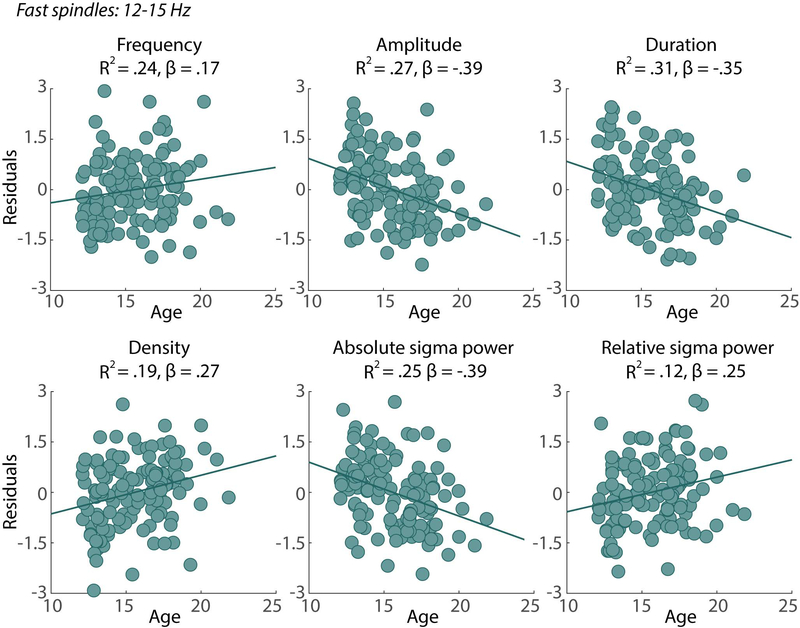
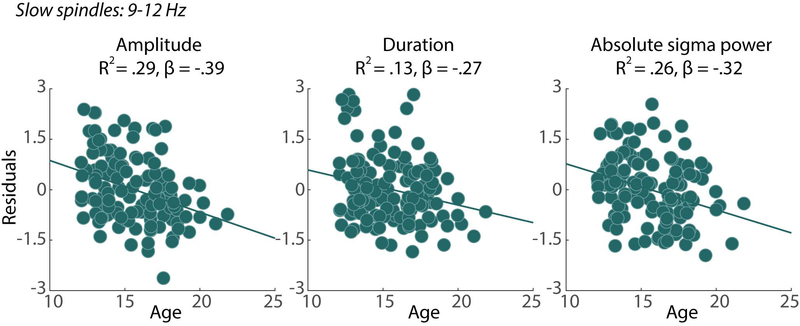
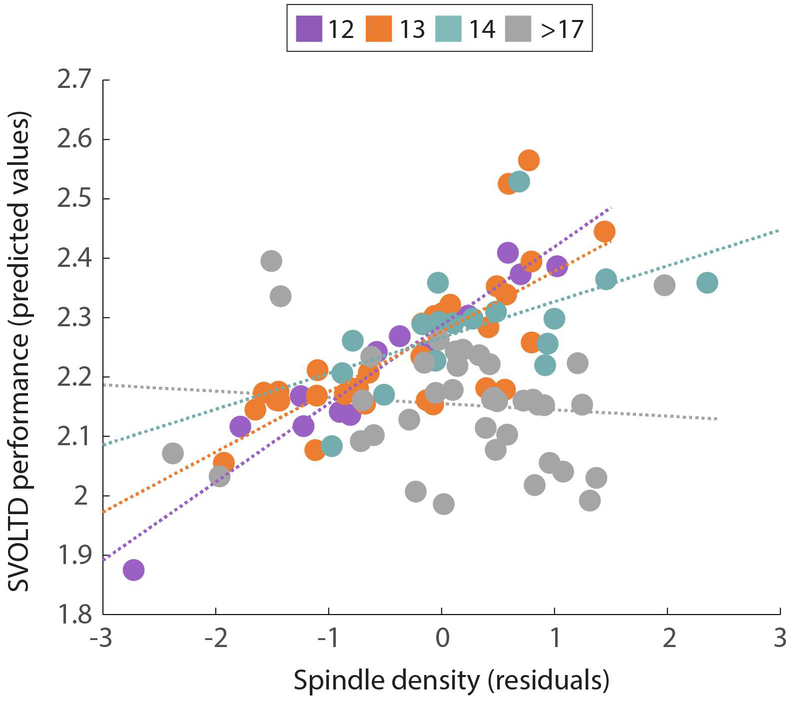
Results: Older age (and advanced pubertal development) was associated with lower absolute sigma power and greater fast spindle density, with spindles having a shorter duration and smaller amplitude and occurring at a faster average frequency than at a younger age. Spindle characteristics were not directly associated with cognition. An indirect relationship (age * density) provided some evidence for an association between better episodic memory performance and greater spindle density only for younger adolescents.
Conclusion: Spindle characteristics in adolescents differed according to age, possibly reflecting underlying differences in thalamo-cortical connectivity, and may play a role in episodic memory early in adolescence.
Significance: Sleep spindles may serve as a marker of adolescent development, likely reflecting brain maturational status. Investigating specific spindle characteristics, in addition to sigma power, is necessary to fully characterize spindles during adolescence.
Keywords: Adolescence; Cognition; Development; EEG; Memory; Sigma.
Copyright © 2019 International Federation of Clinical Neurophysiology. Published by Elsevier B.V. All rights reserved.
Conflict of interest statement
Conflict of interest
None of the authors have potential conflicts of interest to be disclosed.
Figures
References
-
- Baker FC, Driver HS. Circadian rhythms, sleep, and the menstrual cycle. Sleep Med 2007;8:613–22. - PubMed
-
- Berry RB, Brooks R, Gamaldo CE, Harding SM, Marcus CL, Vaughn BV. The AASM manual for the scoring of sleep and associated events Rules, Terminology and Technical Specifications. Darien, Illinois: American Academy of Sleep Medicine; 2012.
Publication types
MeSH terms
Grants and funding
LinkOut - more resources
Full Text Sources
Medical
