Apigenin Alleviates Myocardial Reperfusion Injury in Rats by Downregulating miR-15b
- PMID: 30983593
- PMCID: PMC6481235
- DOI: 10.12659/MSM.912014
Apigenin Alleviates Myocardial Reperfusion Injury in Rats by Downregulating miR-15b
Abstract
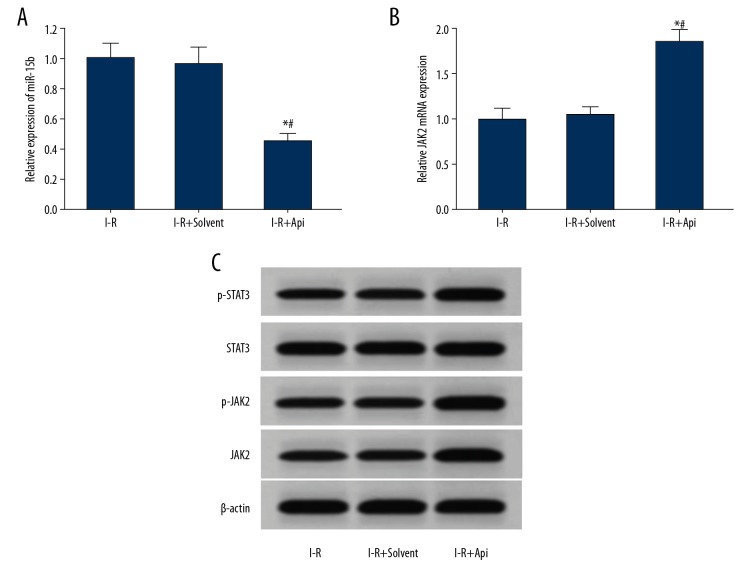
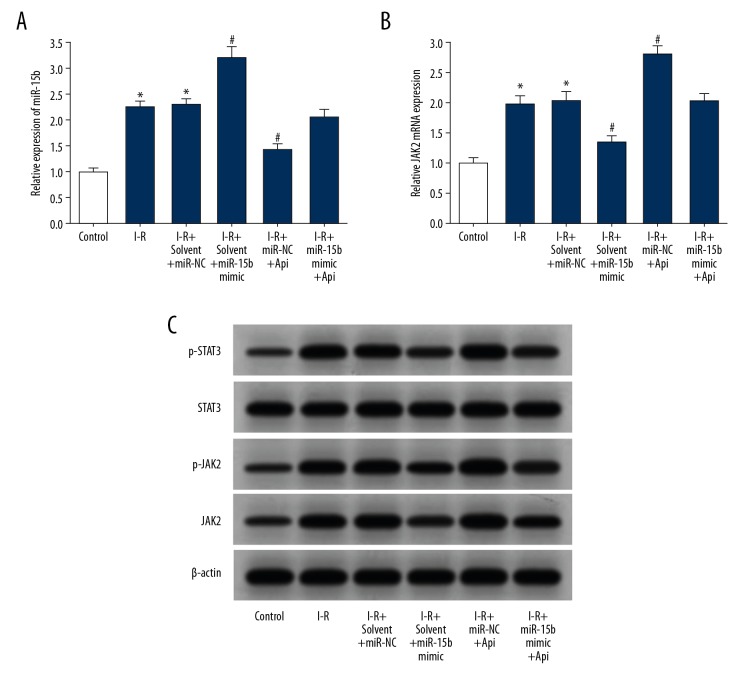
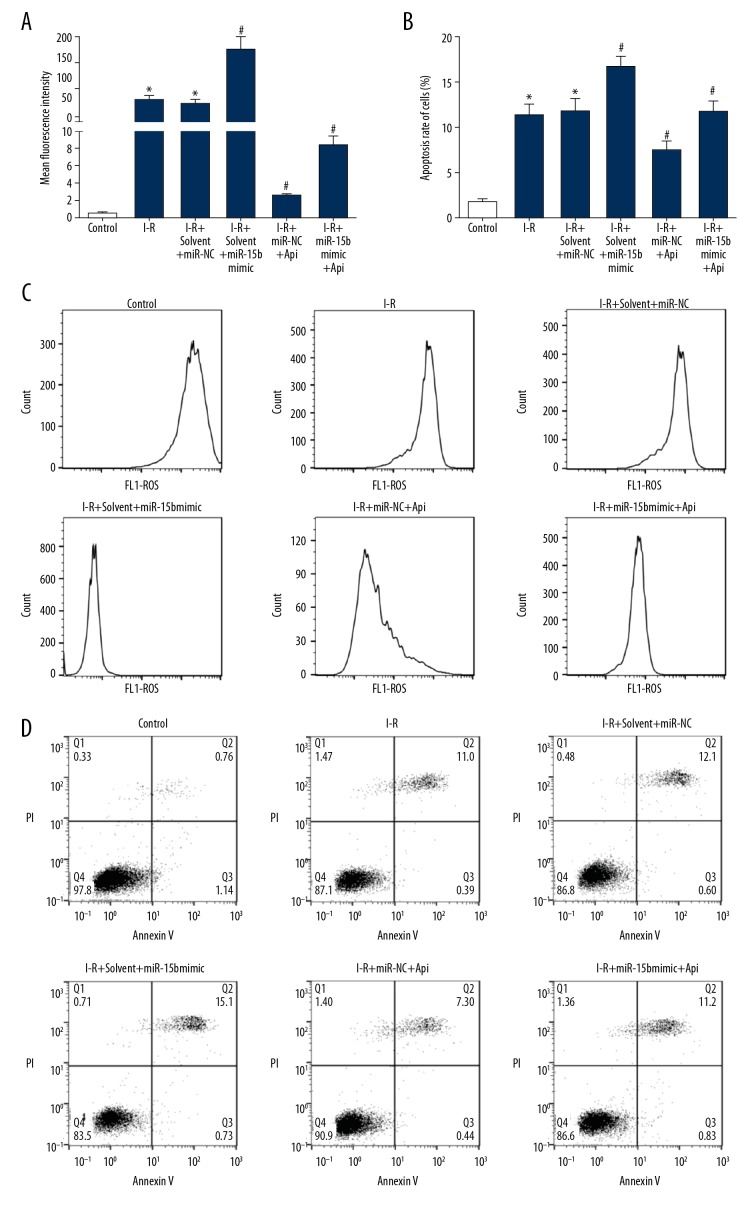
BACKGROUND We investigated whether apigenin could mitigate myocardial reperfusion injury in rats, and a possible mechanism was proposed. MATERIAL AND METHODS The I-R injury model was established in rats along with a sham group as control, and the expressions of microRNA-15b (miR-15b), JAK2, and p-JAK2 in the myocardia of the 2 groups were detected. Apoptosis and reactive oxygen species (ROS) were also detected. Rats in the I-R injury model were divided into 3 groups in vivo: the 1I-R group, the 2I-R+solvent group, and the 3I-R+apigenin group. Expression of miR-15b, JAK2, p-JAK2, STAT3, and p-STAT3 in the myocardia of the 3 groups were detected. ROS content, apoptosis, MDA content, SOD, and CAT activities were detected. Rat myocardial H9C2 cells were cultured in vitro and divided into 5 treatment groups in vitro; expressions of miR-15b, JAK2, p-JAK2, STAT3, and p-STAT3 in H9C2 cells were detected, and the apoptosis and ROS content were detected by flow cytometry. RESULTS We found that the increased miR-15b expression during myocardial I-R injury in rats downregulated the expression of JAK2 and activity of the JAK2-STAT3 pathway, promoted myocardial apoptosis and ROS production, and aggravated myocardial I-R injury. Apigenin treatment can downregulate miR-15b expression, increase the expression of JAK2 and the activity of JAK2-STAT3 pathway, reduce myocardial apoptosis and ROS production, and alleviate myocardial I-R injury. CONCLUSIONS Api treatment downregulated the expression of miR-15b and upregulated the expression of JAK2 and the activity of the JAK2-STAT3 pathway, thereby alleviating myocardial I-R injury, cardiomyocyte apoptosis, and ROS production in vitro.
Conflict of interest statement
None.
Figures
References
-
- Giustino G, Dangas GD. Ischemia-reperfusion injury and ischemic post-conditioning in acute myocardial infarction: Lost in translation. Catheter Cardiovasc Interv. 2017;90(7):1068–69. - PubMed
-
- Pinelli S, Agrinier N, Bouchahda N, et al. Myocardial reperfusion for acute myocardial infarction under an optimized antithrombotic medication: What can you expect in daily practice? Cardiovasc Revasc Med. 2018;19(5):369–81. - PubMed
-
- Vogel B, Mehta SR, Mehran R. Reperfusion strategies in acute myocardial infarction and multivessel disease. Nat Rev Cardiol. 2017;14(11):665–78. - PubMed
-
- Yang H, Ma P, Cao Y, et al. ECPIRM, a potential therapeutic agent for cutaneous T-cell lymphoma, inhibits cell proliferation and promotes apoptosis via a JAK/STAT pathway the biological effect of ECPIRM in CTCL cell. Anticancer Agents Med Chem. 2017;32(7):1452–63. - PubMed
MeSH terms
Substances
LinkOut - more resources
Full Text Sources
Miscellaneous