


Immunopathogenesis of Behcet's Disease
- PMID: 30984205
- PMCID: PMC6449449
- DOI: 10.3389/fimmu.2019.00665
Immunopathogenesis of Behcet's Disease
Abstract
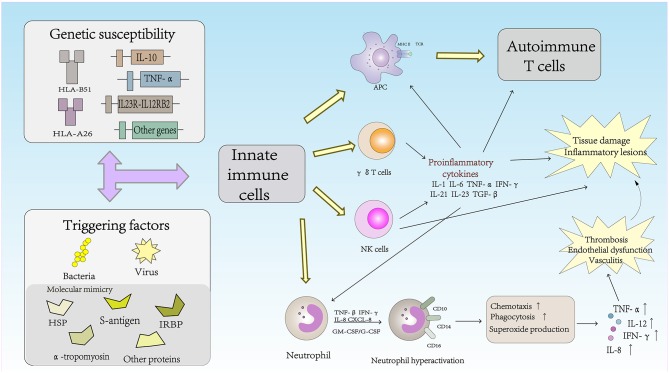
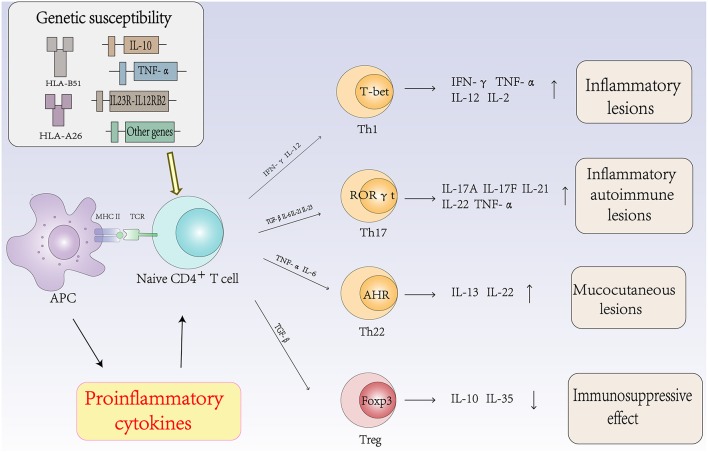
Behcet's disease (BD) is a chronic systemic inflammatory vasculitis of unknown etiology characterized by recurrent episodes of oral aphthous ulcers, genital ulcers, skin lesions, ocular lesions, and other manifestations. Although the pathogenesis of BD is unclear, some studies have shown that immunological aberrations play an important role in the development and progression of BD. Infection-related trigger factors, including antigens and autoantigens, are believed to mediate the development of BD in patients with a genetic predisposition and subsequently activate the innate and adaptive immune systems, resulting in the production of numerous cytokines and chemokines to combat the infection-related factors. The study of the immunological mechanism of BD paves the way for the development of innovative therapies. Recently, novel biotherapy approaches, including interferon-α (IFN-α), tumor necrosis factor-α (TNF-α) antagonists, and other agents that target interleukins and their receptors, have shown promising results in the treatment of patients with refractory BD and have improved the prognosis of BD. In this review, we provide the current concepts of BD immunopathogenesis.
Keywords: Behcet's disease; autoimmune diseases; biotherapy/target therapies; cytokines; pathogenesis.
Figures

References
Publication types
MeSH terms
Substances
LinkOut - more resources
Full Text Sources
Other Literature Sources
Medical
