


Harboring Contaminants in Repeatedly Reprocessed Pedicle Screws
- PMID: 30984497
- PMCID: PMC6448207
- DOI: 10.1177/2192568218784298
Harboring Contaminants in Repeatedly Reprocessed Pedicle Screws
Abstract
Study design: It consisted of evaluation of the pedicle screws for presence of residual nonmicrobial contaminants and tabulation of the minimum steps and time required for reprocessing implants as per guidelines and its comparison with actual practice.
Objective: An evaluation of the nonmicrobial contaminants prevalent on the pedicle screws used for spine surgery and the underlying practice cause behind the source.
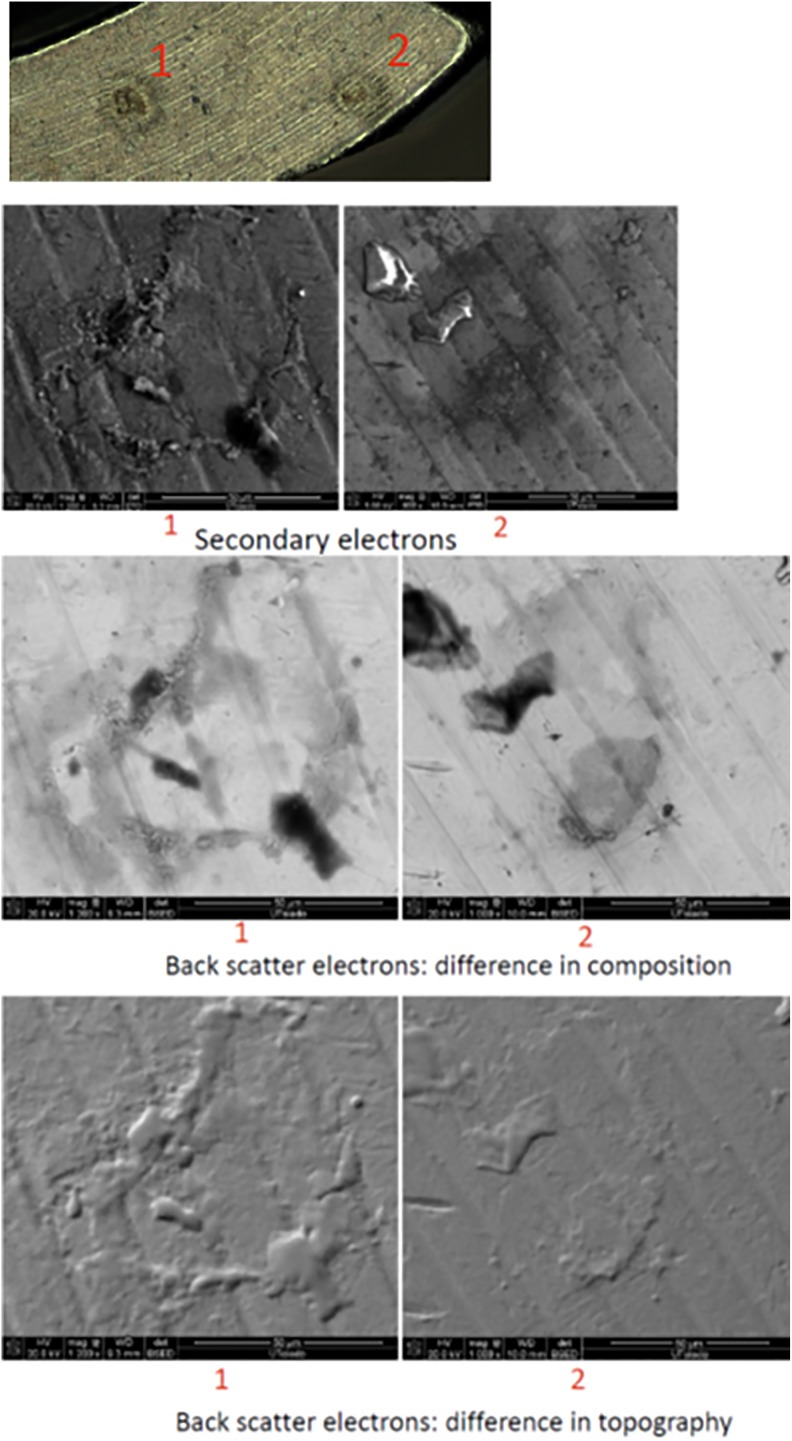
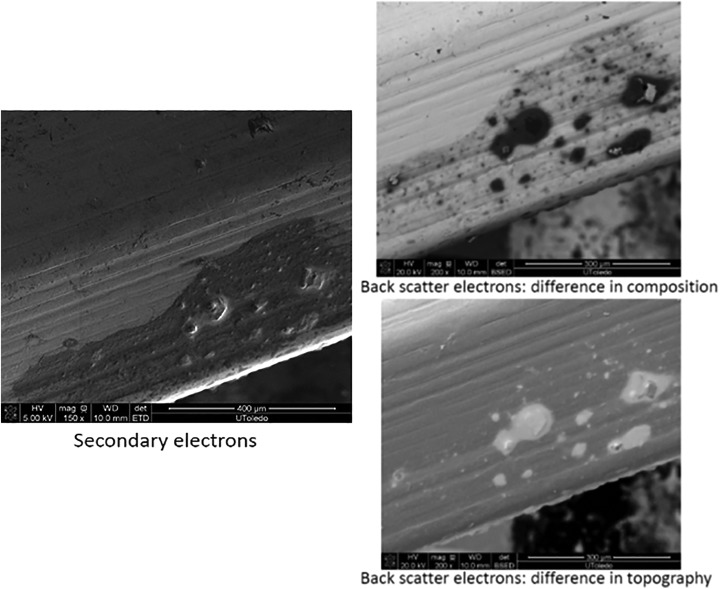
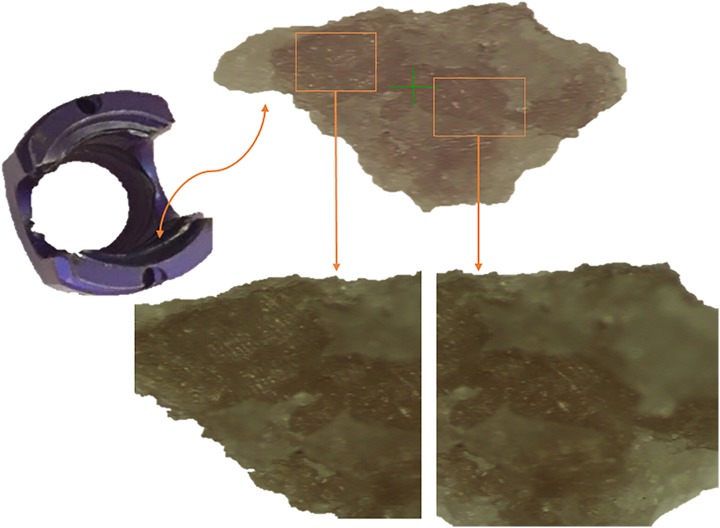
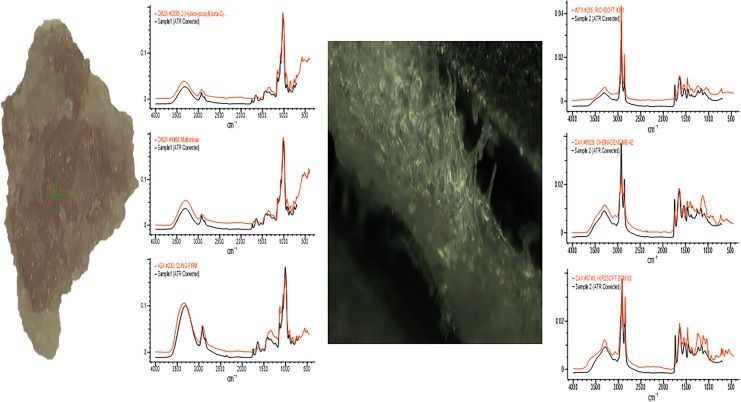
Methods: The first component consisted of a random selection of 6 pedicle screws and its assessment using optical microscopy, scanning electron microscopy with energy dispersive spectroscopy, and Fourier transform infrared spectroscopy. The second component consisted of review of implant reprocessing guidelines and its applicability.
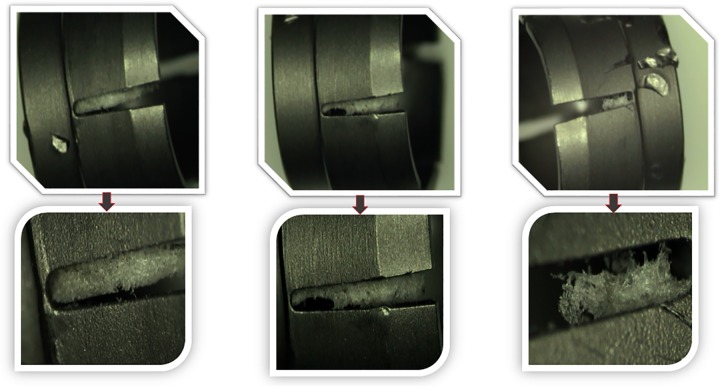
Results: Three types of contaminants were identified: corrosion, saccharide of unknown origin, and soap residue mixed with and were mostly present at the interfaces with low permeability. In addition, manufacturer's guideline recommends 19 hours of reprocessing, whereas the real-time observation revealed a turnaround time of 1 hour 17 minutes.
Conclusion: Repeatedly reprocessed pedicle screws host corrosion, carbohydrate, fat, and soap, which could be a cause of surgical site infection and inflammatory responses postsurgery. The cause behind it is the impracticality of repeated cleaning and inspection of such devices.
Keywords: SPD; SSI; implant exposure; preoperative implant handling; sterile processing department; surgical site infection; terminally sterile devices.
Conflict of interest statement
Declaration of Conflicting Interests: The author(s) declared the following potential conflicts of interest with respect to the research, authorship, and/or publication of this article: Coauthors are employed or have stock options in Spinal Balance Inc, a company providing sterile orthopedic implants, in addition to their respective academic affiliations.
Figures
References
-
- Bell MA. Hospital uses team approach to improve processes, reduce costs. AORN J. 1998;68:68–72. - PubMed
-
- Chobin N, Trattler B. Perspectives from sterile processing and perioperative services. Mater Manag Health Care. 2003;12:22–25. - PubMed
-
- Swanson SC. Shifting the sterile processing department paradigm: a mandate for change. AORN J. 2008;88:241–247. - PubMed
-
- Alfa MJ. The “Pandora’s box” dilemma: reprocessing of implantable screws and plates in orthopedic tray sets. Biomed Instrum Technol. 2012;(suppl):55–59. - PubMed
LinkOut - more resources
Full Text Sources
