Distinct evolutionary dynamics of horizontal gene transfer in drug resistant and virulent clones of Klebsiella pneumoniae
- PMID: 30986243
- PMCID: PMC6483277
- DOI: 10.1371/journal.pgen.1008114
Distinct evolutionary dynamics of horizontal gene transfer in drug resistant and virulent clones of Klebsiella pneumoniae
Abstract
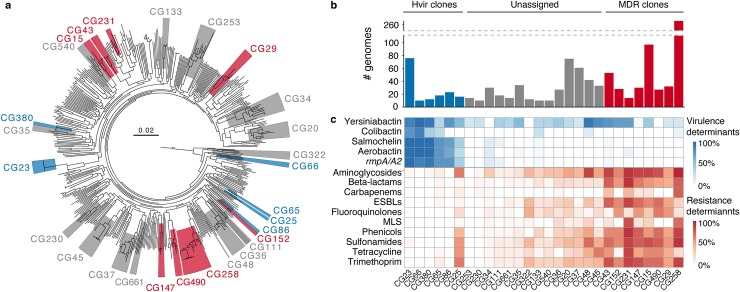
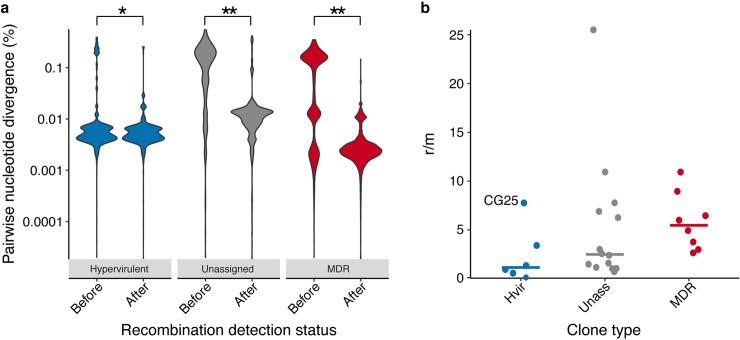
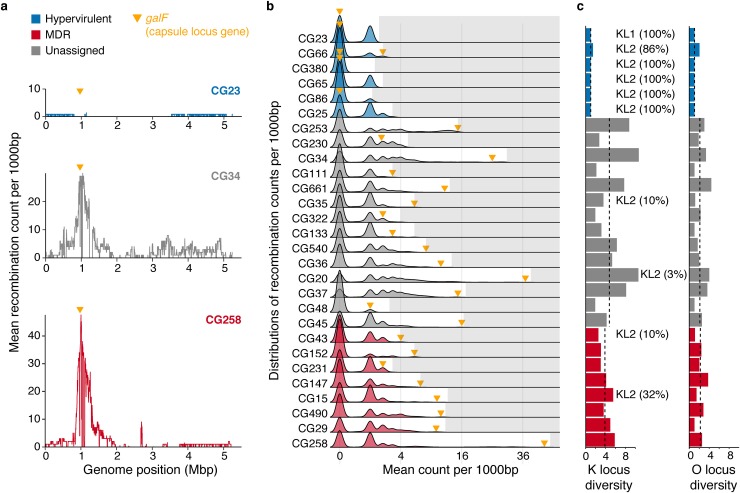
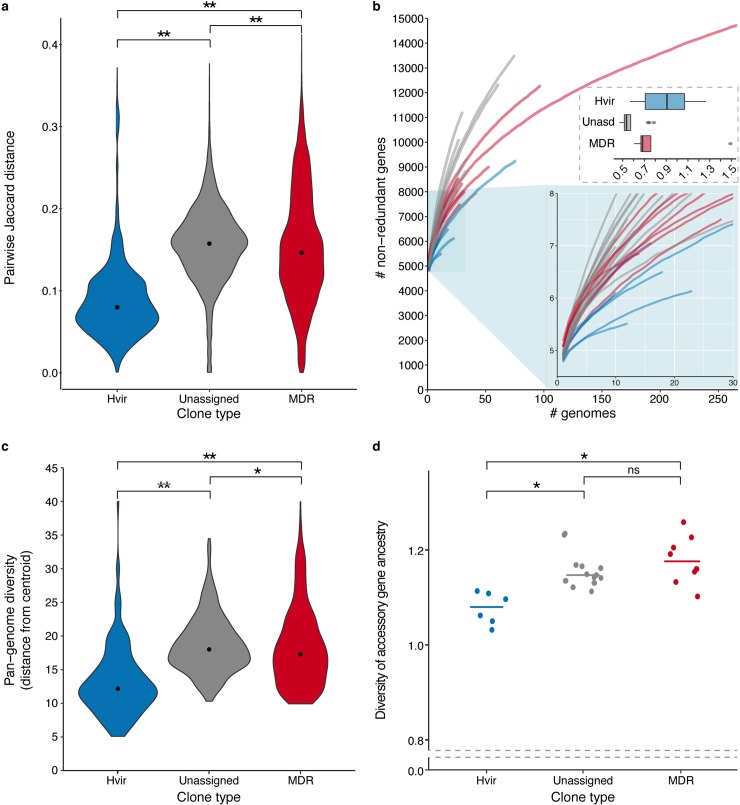
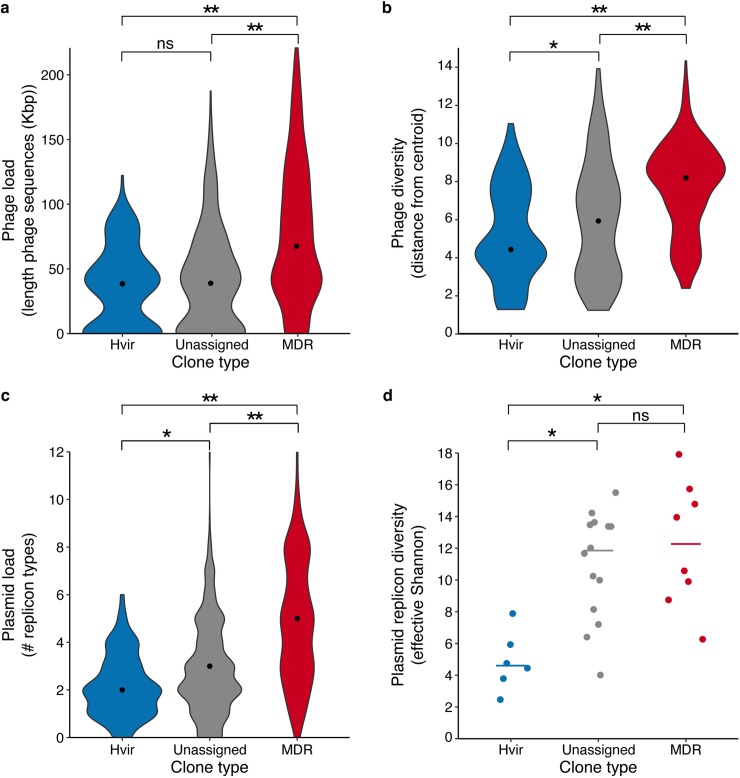
Klebsiella pneumoniae has emerged as an important cause of two distinct public health threats: multi-drug resistant (MDR) healthcare-associated infections and drug susceptible community-acquired invasive infections. These pathotypes are generally associated with two distinct subsets of K. pneumoniae lineages or 'clones' that are distinguished by the presence of acquired resistance genes and several key virulence loci. Genomic evolutionary analyses of the most notorious MDR and invasive community-associated ('hypervirulent') clones indicate differences in terms of chromosomal recombination dynamics and capsule polysaccharide diversity, but it remains unclear if these differences represent generalised trends. Here we leverage a collection of >2200 K. pneumoniae genomes to identify 28 common clones (n ≥ 10 genomes each), and perform the first genomic evolutionary comparison. Eight MDR and 6 hypervirulent clones were identified on the basis of acquired resistance and virulence gene prevalence. Chromosomal recombination, surface polysaccharide locus diversity, pan-genome, plasmid and phage dynamics were characterised and compared. The data showed that MDR clones were highly diverse, with frequent chromosomal recombination generating extensive surface polysaccharide locus diversity. Additional pan-genome diversity was driven by frequent acquisition/loss of both plasmids and phage. In contrast, chromosomal recombination was rare in the hypervirulent clones, which also showed a significant reduction in pan-genome diversity, largely driven by a reduction in plasmid diversity. Hence the data indicate that hypervirulent clones may be subject to some sort of constraint for horizontal gene transfer that does not apply to the MDR clones. Our findings are relevant for understanding the risk of emergence of individual K. pneumoniae strains carrying both virulence and acquired resistance genes, which have been increasingly reported and cause highly virulent infections that are extremely difficult to treat. Specifically, our data indicate that MDR clones pose the greatest risk, because they are more likely to acquire virulence genes than hypervirulent clones are to acquire resistance genes.
Conflict of interest statement
The authors have declared that no competing interests exist.
Figures
References
-
- Holt KE, Wertheim H, Zadoks RN, Baker S, Whitehouse CA, Dance D, et al. Genomic analysis of diversity, population structure, virulence, and antimicrobial resistance in Klebsiella pneumoniae, an urgent threat to public health. Proc Natl Acad Sci U S A. 2015;112: E3574–81. 10.1073/pnas.1501049112 - DOI - PMC - PubMed
Publication types
MeSH terms
Substances
LinkOut - more resources
Full Text Sources
Other Literature Sources
Medical