


Comparing signals of natural selection between three Indigenous North American populations
- PMID: 30988184
- PMCID: PMC6511053
- DOI: 10.1073/pnas.1819467116
Comparing signals of natural selection between three Indigenous North American populations
Abstract
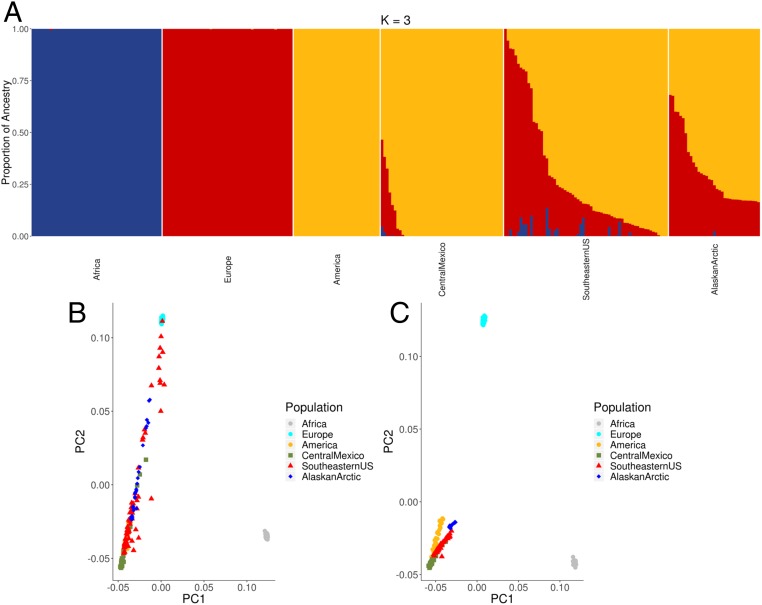
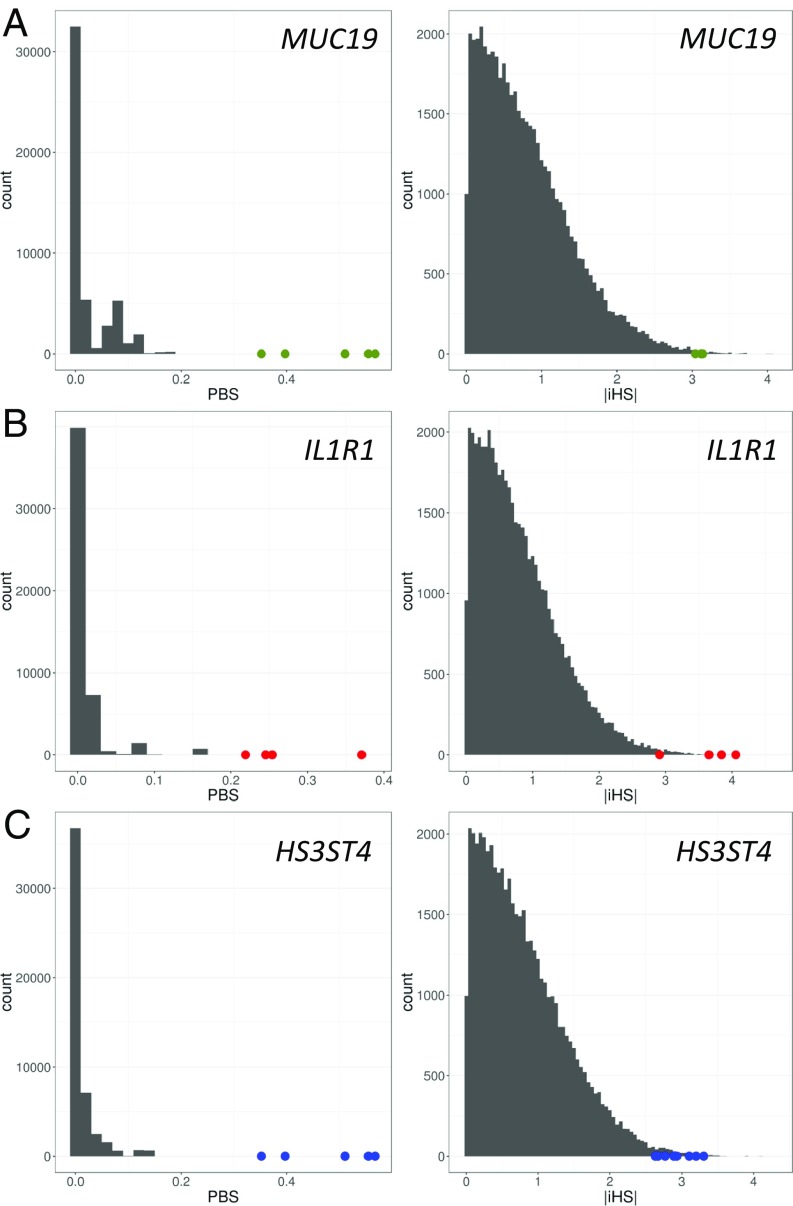
While many studies have highlighted human adaptations to diverse environments worldwide, genomic studies of natural selection in Indigenous populations in the Americas have been absent from this literature until very recently. Since humans first entered the Americas some 20,000 years ago, they have settled in many new environments across the continent. This diversity of environments has placed variable selective pressures on the populations living in each region, but the effects of these pressures have not been extensively studied to date. To help fill this gap, we collected genome-wide data from three Indigenous North American populations from different geographic regions of the continent (Alaska, southeastern United States, and central Mexico). We identified signals of natural selection in each population and compared signals across populations to explore the differences in selective pressures among the three regions sampled. We find evidence of adaptation to cold and high-latitude environments in Alaska, while in the southeastern United States and central Mexico, pathogenic environments seem to have created important selective pressures. This study lays the foundation for additional functional and phenotypic work on possible adaptations to varied environments during the history of population diversification in the Americas.
Keywords: Alaskan Natives; Native Americans; human evolutionary genetics; natural selection; population genomics.
Conflict of interest statement
The authors declare no conflict of interest.
Figures

References
-
- Bolnick DA, Raff JA, Springs LC, Reynolds AW, Miró-Herrans AT. Native American genomics and population histories. Annu Rev Anthropol. 2016;45:319–340.
Publication types
MeSH terms
LinkOut - more resources
Full Text Sources
Miscellaneous
