


Differentiation Capacity of Monocyte-Derived Multipotential Cells on Nanocomposite Poly(e-caprolactone)-Based Thin Films
- PMID: 30989043
- PMCID: PMC6439045
- DOI: 10.1007/s13770-019-00185-z
Differentiation Capacity of Monocyte-Derived Multipotential Cells on Nanocomposite Poly(e-caprolactone)-Based Thin Films
Abstract
Background: Μonocyte-derived multipotential cells (MOMCs) include progenitors capable of differentiation into multiple cell lineages and thus represent an ideal autologous transplantable cell source for regenerative medicine. In this study, we cultured MOMCs, generated from mononuclear cells of peripheral blood, on the surface of nanocomposite thin films.
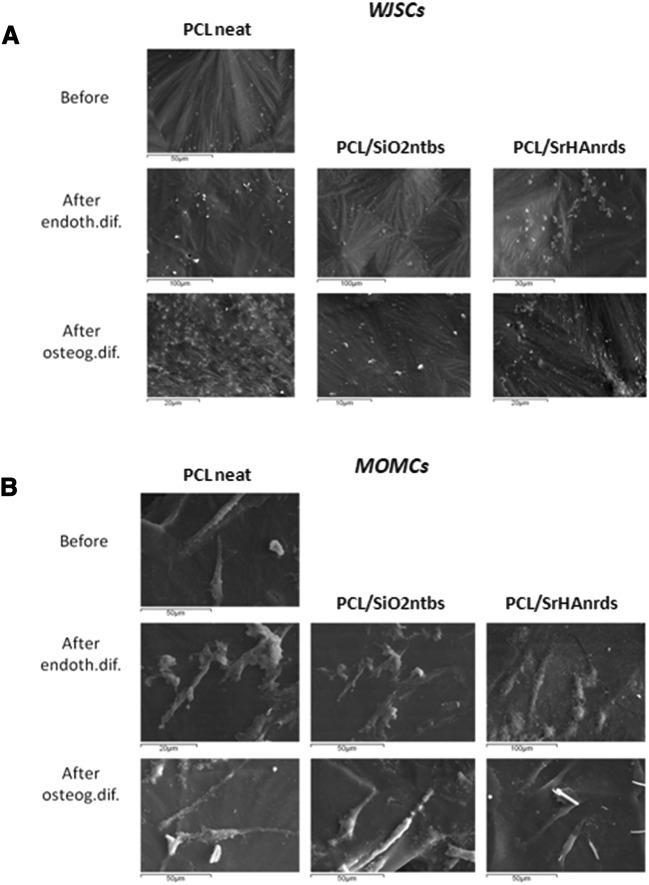
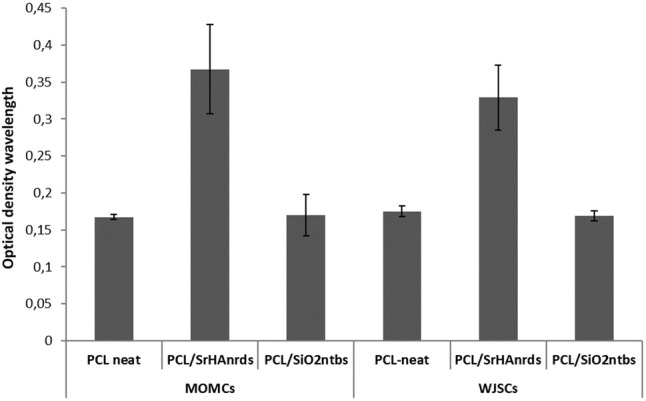
Methods: For this purpose, nanocomposite Poly(e-caprolactone) (PCL)-based thin films containing either 2.5 wt% silica nanotubes (SiO2ntbs) or strontium hydroxyapatite nanorods (SrHAnrds), were prepared using the spin-coating method. The induced differentiation capacity of MOMCs, towards bone and endothelium, was estimated using flow cytometry, real-time polymerase chain reaction, scanning electron microscopy and fluorescence microscopy after cells' genetic modification using the Sleeping Beauty Transposon System aiming their observation onto the scaffolds. Moreover, Wharton's Jelly Mesenchymal Stromal Cells were cultivated as a control cell line, while Human Umbilical Vein Endothelial Cells were used to strengthen and accelerate the differentiation procedure in semi-permeable culture systems. Finally, the cytotoxicity of the studied materials was checked with MTT assay.
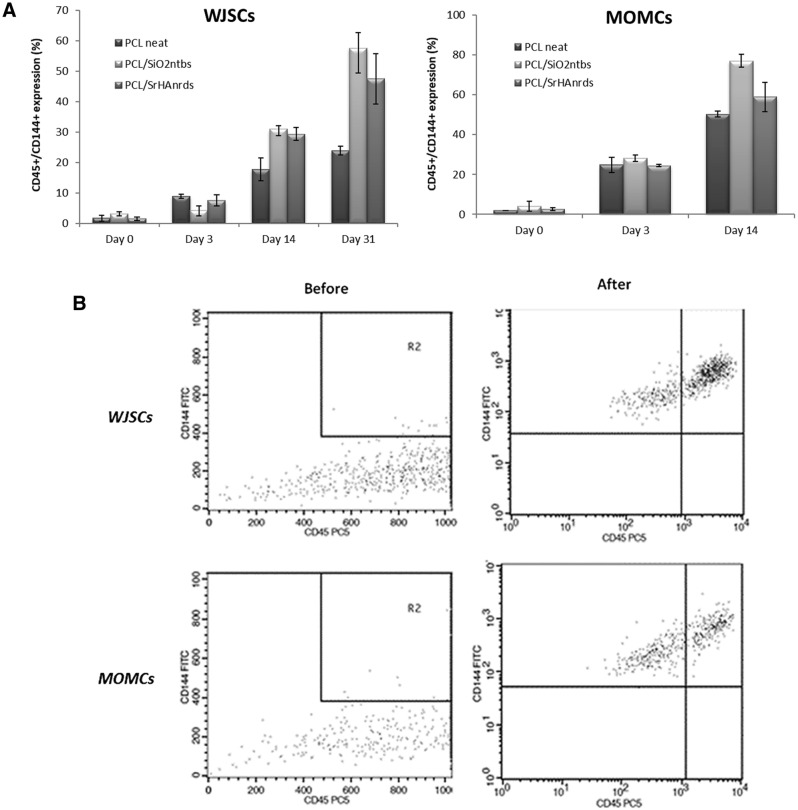
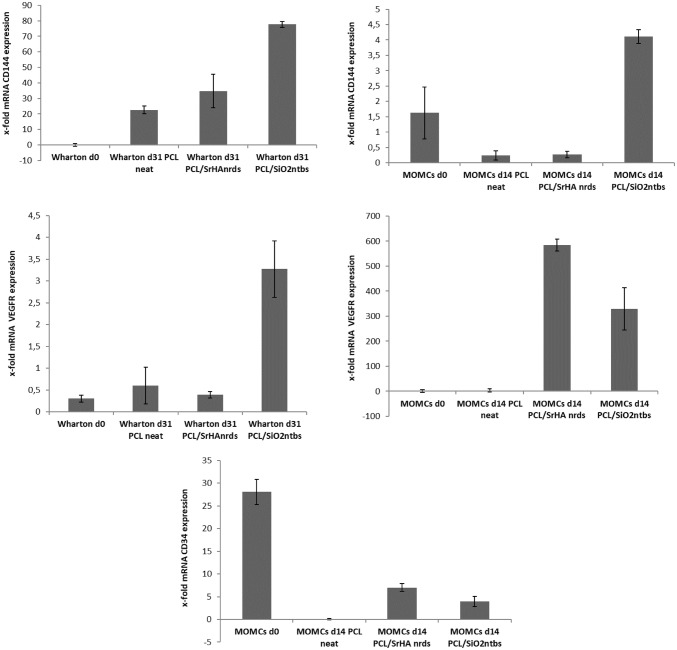
Results: The highest differentiation capacity of MOMCs was observed on PCL/SiO2ntbs 2.5 wt% nanocomposite film, as they progressively lost their native markers and gained endothelial lineage, in both protein and transcriptional level. In addition, the presence of SrHAnrds in the PCL matrix triggered processes related to osteoblast bone formation.
Conclusion: To conclude, the differentiation of MOMCs was selectively guided by incorporating SiO2ntbs or SrHAnrds into a polymeric matrix, for the first time.
Keywords: Monocyte-derived multipotential cells; Poly(ε-caprolactone); Silica nanotubes; Strontium hydroxyapatite nanorods.
Conflict of interest statement
The authors declare that they have no conflict of interest.This study was approved by the Ethics Committee of Aristotle University of Thessaloniki, School of Medicine (390-9/1.7.2017) and University Hospital AXEPA of Thessaloniki (3868/24.1.2018). This research involves Human Participants after their informed consent. Peripheral blood samples were collected from healthy volunteer donors while mesenchymal stromal cells and HUVEC were isolated from Wharton’s jelly after parents approval during stem cell banking in Biohellenika SA Biotechnology Company.
Figures
References
-
- O’Brien FJ. Biomaterials & scaffolds for tissue engineering. Mater Today (Kidlington) 2011;14:88–95. doi: 10.1016/S1369-7021(11)70058-X. - DOI
MeSH terms
Substances
LinkOut - more resources
Full Text Sources