


Prevalence and risk factors of stroke in the elderly in Northern China: data from the National Stroke Screening Survey
- PMID: 30989368
- PMCID: PMC6517347
- DOI: 10.1007/s00415-019-09281-5
Prevalence and risk factors of stroke in the elderly in Northern China: data from the National Stroke Screening Survey
Abstract
Background: The overall global burden of stroke is considerable and increasing. In China, stroke is the leading cause of death and disability.
Methods: For this study, we used data from the National Stroke Screening Survey in 2012 and the 2010 Chinese population from sixth National Census of Populations to calculate a standardized (by age, gender, and education) stroke prevalence. Prevalence, risk factors, and management of stroke were compared by gender, age, and site.
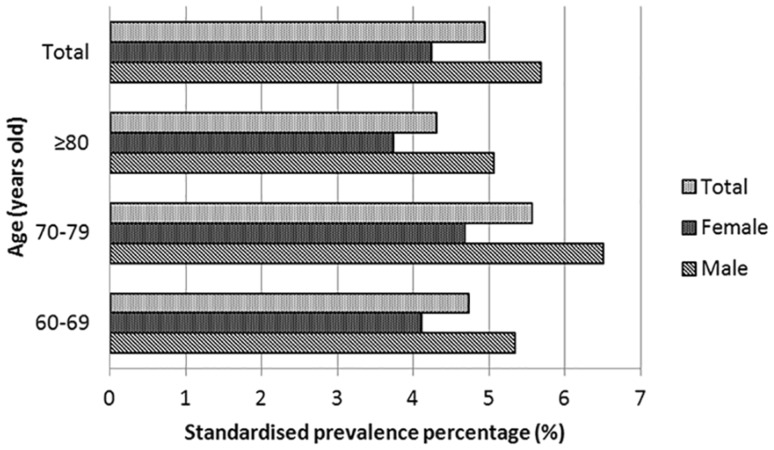
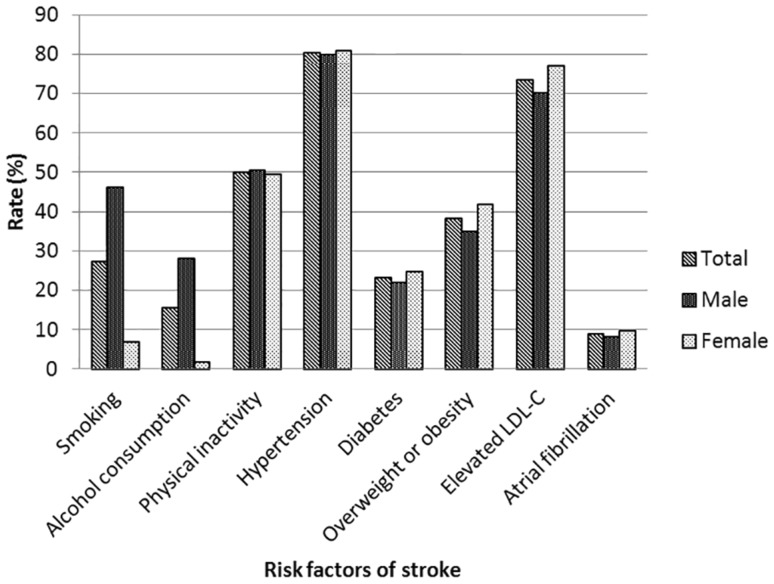
Findings: The standardized prevalence rate of survival stroke patients in study population aged 60 and older was 4.94% in total. Hypertension was the most prevalent risk factor for stroke. Compared to men, women were more likely to have diabetes, obesity, elevated low-density lipoprotein cholesterol (LDL-C), and atrial fibrillation (P < 0.05). Men were far more likely to drink and smoke than women (P < 0.05). The rates of diabetes and atrial fibrillation were substantially higher in urban than those in rural stroke survivors (P < 0.05). Rural stroke survivors exhibited higher rates of smoking and alcohol consumption than urban stroke survivors (P < 0.05).
Interpretation: The stroke prevalence in China is in line with median worldwide stroke prevalence. Traditional risk factors remain highly prevalent in stroke survivors, among which hypertension was the most common. Stroke prevalence rates and risk factors varied by age, sex, and sociogeological factors.
Keywords: Elderly; Prevalence; Risk factors; Stroke.
Conflict of interest statement
Conflicts of interest
The authors have no conflicts of interest to declare.
Ethical standards
The study protocol was approved by the Ethics committee of Nation Project Office of Stroke Prevention and Control of Ministry of Health (Beijing, China).
Informed consent
Subjects have given their written informed consent. The study protocol has been approved by the research institute’s committee on human research.
Figures
References
-
- Bonita RMS, Truelsen T, Bogousslavsky J, Toole J, Yatsu F. The global stroke initiative. Lancet Neurol. 2004;3(7):391–393. - PubMed
-
- Feigin VL, Forouzanfar MH, Krishnamurthi R, Mensah GA, Connor M, Bennett DA, Moran AE, Sacco RL, Anderson L, Truelsen T, O’Donnell M, Venketasubramanian N, Barker-Collo S, Lawes CM, Wang W, Shinohara Y, Witt E, Ezzati M, Naghavi M, Murray C. Global and regional burden of stroke during 1990–2010: findings from the Global Burden of Disease Study 2010. Lancet. 2014;383(9913):245–254. - PMC - PubMed
-
- Kim JS. Stroke in Asia: a global disaster. Int J Stroke. 2014;9(7):856–857. - PubMed
-
- Qian Jia L-PL, Yong-Jun, Wang Stroke in China. Clin Exp Pharmacol Physiol. 2010;37:259–264. - PubMed
MeSH terms
LinkOut - more resources
Full Text Sources
Medical
