


Screening hysteroscopy in subfertile women and women undergoing assisted reproduction
- PMID: 30991443
- PMCID: PMC6472583
- DOI: 10.1002/14651858.CD012856.pub2
Screening hysteroscopy in subfertile women and women undergoing assisted reproduction
Abstract
Background: Screening hysteroscopy in infertile women with unexplained infertility, or prior to intrauterine insemination (IUI) or in vitro fertilisation (IVF) may reveal intrauterine pathology that may not be detected by routine transvaginal ultrasound. Hysteroscopy, whether purely diagnostic or operative may improve reproductive outcomes.
Objectives: To assess the effectiveness and safety of screening hysteroscopy in subfertile women undergoing evaluation for infertility, and subfertile women undergoing IUI or IVF.
Search methods: We searched the Cochrane Gynaecology and Fertility Group Specialised Register, CENTRAL CRSO, MEDLINE, Embase, ClinicalTrials.gov, and the World Health Organization International Clinical Trials Registry Platform (September 2018). We searched reference lists of relevant articles and handsearched relevant conference proceedings.
Selection criteria: Randomised controlled trials comparing screening hysteroscopy versus no intervention in subfertile women wishing to conceive spontaneously, or before undergoing IUI or IVF.
Data collection and analysis: We independently screened studies, extracted data, and assessed the risk of bias. The primary outcomes were live birth rate and complications following hysteroscopy. We analysed data using risk ratio (RR) and a fixed-effect model. We assessed the quality of the evidence by using GRADE criteria.
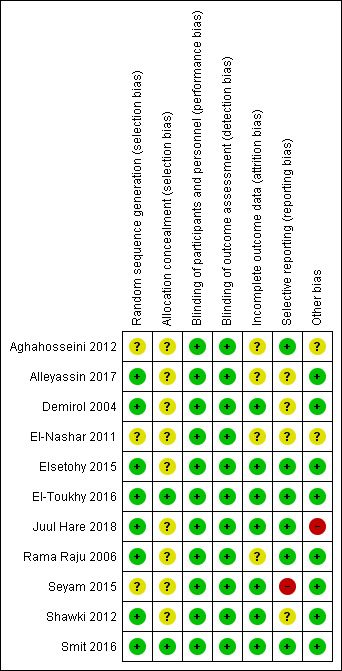
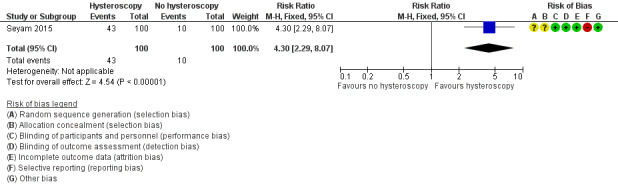
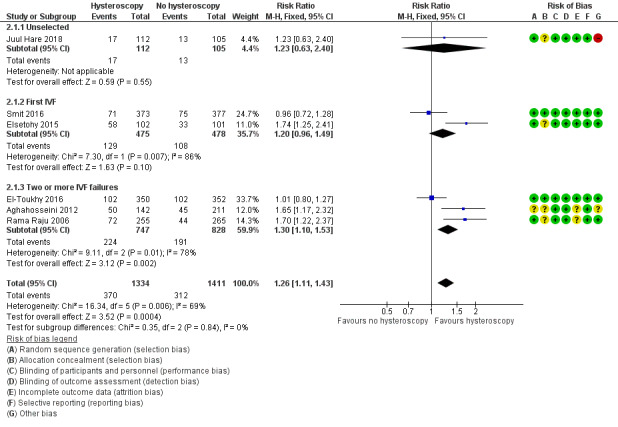
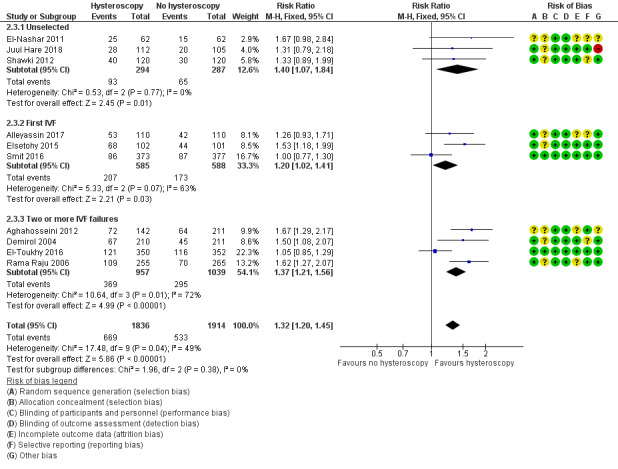
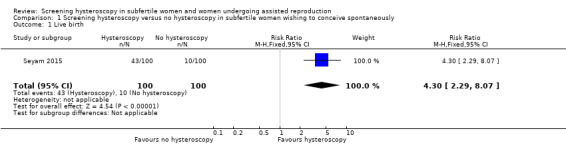
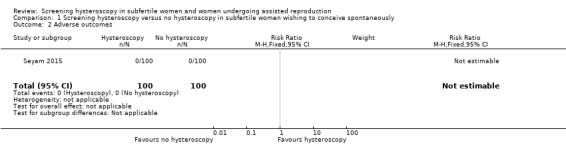
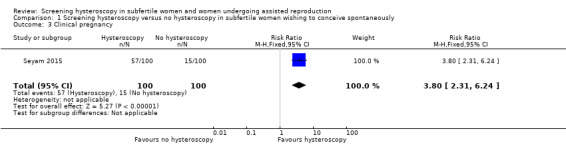
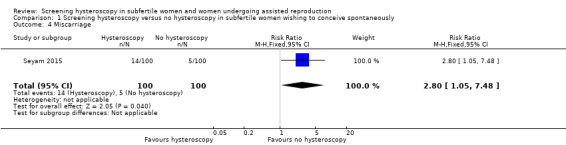
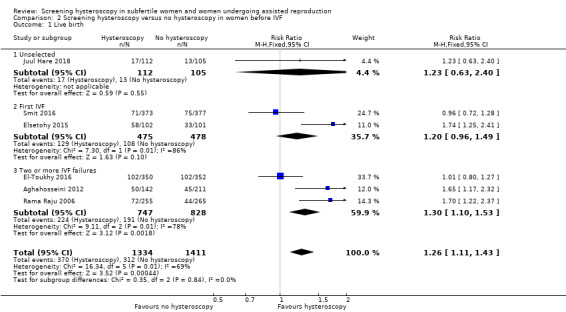
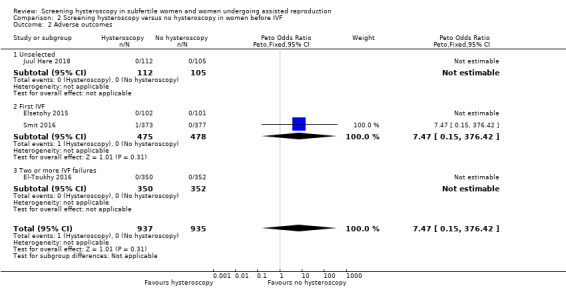
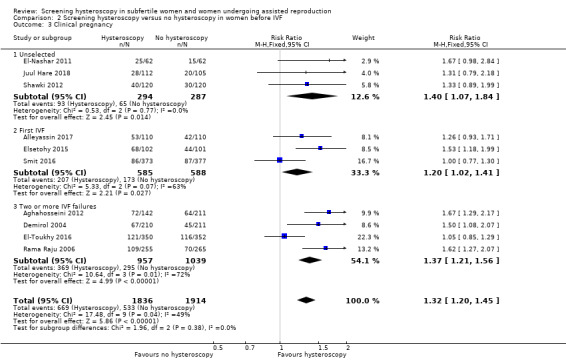
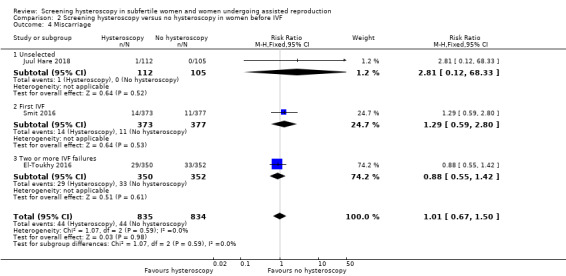
Main results: We retrieved 11 studies. We included one trial that evaluated screening hysteroscopy versus no hysteroscopy, in women with unexplained subfertility, who were trying to conceive spontaneously. We are uncertain whether ongoing pregnancy rate improves following a screening hysteroscopy in women with at least two years of unexplained subfertility (RR 4.30, 95% CI 2.29 to 8.07; 1 RCT; participants = 200; very low-quality evidence). For a typical clinic with a 10% ongoing pregnancy rate without hysteroscopy, performing a screening hysteroscopy would be expected to result in ongoing pregnancy rates between 23% and 81%. The included study reported no adverse events in either treatment arm. We are uncertain whether clinical pregnancy rate is improved (RR 3.80, 95% CI 2.31 to 6.24; 1 RCT; participants = 200; very low-quality evidence), or miscarriage rate increases (RR 2.80, 95% CI 1.05 to 7.48; 1 RCT; participants = 200; very low-quality evidence), following screening hysteroscopy in women with at least two years of unexplained subfertility.We included ten trials that included 1836 women who had a screening hysteroscopy and 1914 women who had no hysteroscopy prior to IVF. Main limitations in the quality of evidence were inadequate reporting of study methods and higher statistical heterogeneity. Eight of the ten trials had unclear risk of bias for allocation concealment.Performing a screening hysteroscopy before IVF may increase live birth rate (RR 1.26, 95% CI 1.11 to 1.43; 6 RCTs; participants = 2745; I² = 69 %; low-quality evidence). For a typical clinic with a 22% live birth rate, performing a screening hysteroscopy would be expected to result in live birth rates between 25% and 32%. However, sensitivity analysis done by pooling results from trials at low risk of bias showed no increase in live birth rate following a screening hysteroscopy (RR 0.99, 95% CI 0.82 to 1.18; 2 RCTs; participants = 1452; I² = 0%).Only four trials reported complications following hysteroscopy; of these, three trials recorded no events in either group. We are uncertain whether a screening hysteroscopy is associated with higher adverse events (Peto odds ratio 7.47, 95% CI 0.15 to 376.42; 4 RCTs; participants = 1872; I² = not applicable; very low-quality evidence).Performing a screening hysteroscopy before IVF may increase clinical pregnancy rate (RR 1.32, 95% CI 1.20 to 1.45; 10 RCTs; participants = 3750; I² = 49%; low-quality evidence). For a typical clinic with a 28% clinical pregnancy rate, performing a screening hysteroscopy would be expected to result in clinical pregnancy rates between 33% and 40%.There may be little or no difference in miscarriage rate following screening hysteroscopy (RR 1.01, 95% CI 0.67 to 1.50; 3 RCTs; participants = 1669; I² = 0%; low-quality evidence).We found no trials that compared a screening hysteroscopy versus no hysteroscopy before IUI.
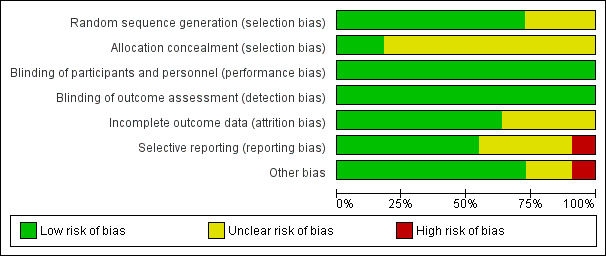
Authors' conclusions: At present, there is no high-quality evidence to support the routine use of hysteroscopy as a screening tool in the general population of subfertile women with a normal ultrasound or hysterosalpingogram in the basic fertility work-up for improving reproductive success rates.In women undergoing IVF, low-quality evidence, including all of the studies reporting these outcomes, suggests that performing a screening hysteroscopy before IVF may increase live birth and clinical pregnancy rates. However, pooled results from the only two trials with a low risk of bias did not show a benefit of screening hysteroscopy before IVF.Since the studies showing an effect are those with unclear allocation concealment, we are uncertain whether a routine screening hysteroscopy increases live birth and clinical pregnancy, be it for all women, or those with two or more failed IVF attempts. There is insufficient data to draw conclusions about the safety of screening hysteroscopy.
Conflict of interest statement
Mohan S Kamath, Jan Bosteels, Srividya Seshadri, Steven Weyers, and Sesh Kamal Sunkara have no conflicts of interest to declare.
Thomas M D’Hooghe, MD, PhD, is a Professor in Reproductive Medicine, Department of Development and Regeneration, University of Leuven (KU Leuven), Belgium, and Professor Adjunct, Department of Obstetrics and Gynecology, Yale University, New Haven, USA. Since October 2015, he has been Vice‐President and Head of Global Medical Affairs Fertility, Merck KGaA, Darmstadt, Germany. His participation in this publication is part of his academic work. Merck KGaA is not involved in the development or marketing of products related to hysteroscopy. Professor D'Hooghe's employment by Merck is not in breach of Cochrane's Commercial Sponsorship Policy (clause 2), as he does not have a real or potential financial interest in the outcome of this review. This matter was referred to Cochrane's Funding Arbiter for advice.
Ben Willem J Mol has received consultancy fees from ObsEva Geneva, Guerbet, and Merck; payment for review preparation from European Journal of Obstetrics and Gynecology and Reproductive Biology; and travel, accommodation, and meeting expenses for various non‐commercial scientific meetings. Ben Willem J Mol was author of a trial included in the review (Smit 2016). He did not participate in selection of the studies or in extracting data from that study.
Frank J Broekmans has received monetary compensation for the following: member of the external advisory board for Merck Serono and Ferring, the Netherlands; educational activities for Ferring BV, the Netherlands; consultancy work for Gedeon Richter, Belgium; strategic co‐operation with Roche on automated anti‐Müllerian hormone (AMH) assay development; and research co‐operation with Ansh Labs. Frank K Broekmans was author of a trial included in the review (Smit 2016). He did not participate in selection of the studies or in extracting data from that study.
Figures

Update of
References
References to studies included in this review
Aghahosseini 2012 {published data only}
-
- Aghahosseini M, Ebrahimi N, Mahdavi A, Aleyasin A, Safdarian L, Sina S. Hysteroscopy prior to assisted reproductive technique in women with recurrent implantation failure improves pregnancy likelihood. Fertility and Sterility 2012;98(Suppl 3):S4.
Alleyassin 2017 {published data only}
-
- Alleyassin A, Abiri A, Agha‐Hosseini M, Sarvi F. The value of routine hysteroscopy before the first intracytoplasmic sperm injection treatment cycle. Gynecologic and Obstetric Investigation 2017;82(2):125‐30. - PubMed
Demirol 2004 {published data only}
-
- Demirol A, Gurgan T. Effect of treatment of intrauterine pathologies with office hysteroscopy in patients with recurrent IVF failure. Reproductive Biomedicine Online 2004;8(5):590‐4. - PubMed
El‐Nashar 2011 {published data only}
-
- El‐nashar IH, Nasr A. The role of hysteroscopy before intracytoplasmic sperm injection (ICSI): a randomized controlled trial. Fertility and Sterility 2011;96(Suppl 3):S266.
Elsetohy 2015 {published data only}
-
- Elsetohy KA, Askalany AH, Hassan M, Dawood Z. Routine office hysteroscopy prior to ICSI vs. ICSI alone in patients with normal transvaginal ultrasound: a randomized controlled trial. Archives of Gynecology and Obstetrics 2015;291(1):193‐9. - PubMed
El‐Toukhy 2016 {published data only}
-
- El‐Toukhy T, Campo R, Khalaf Y, Tabanelli C, Gianaroli L, Gordts SS, et al. Hysteroscopy in recurrent in‐vitro fertilisation failure (TROPHY): a multicentre, randomised controlled trial. Lancet 2016;387(100382):614‐21. - PubMed
Juul Hare 2018 {unpublished data only}
-
- NCT01743391. Hysteroscopy before in vitro fertilization ‐ does it improve the outcome?. clinicaltrials.gov/ct2/show/NCT01743391 (first posted 6 December 2012).
Rama Raju 2006 {published data only}
-
- Rama Raju GA, Shashi Kumari G, Krishna KM, Prakash GJ, Madan K. Assessment of uterine cavity by hysteroscopy in assisted reproduction programme and its influence on pregnancy outcome. Archives of Gynecology and Obstetrics 2006;274(3):160‐4. - PubMed
Seyam 2015 {published data only}
Shawki 2012 {published data only}
-
- Shawki HE, Elmorsy M, Eissa MK. Routine office hysteroscopy prior to ICSI and its impact on assisted reproduction program outcome: a randomized controlled trial. Middle East Fertility Society Journal 2012;17(1):14‐21. [DOI: 10.1016/j.mefs.2011.04.005] - DOI
Smit 2016 {published data only}
-
- Smit J, Kasius JC, Eijkemans MJC, Torrance HL, Mol BW, Broekmans FJM. The effectiveness of hysteroscopy prior to IVF: a randomized controlled trial (inSIGHT study). Human Reproduction 2015;30:i305.
-
- Smit JG, Kasius JC, Eijkemans MJ, Koks CA, Golde R, Nap AW, et al. Hysteroscopy before in‐vitro fertilisation (inSIGHT): a multicentre, randomised controlled trial. Lancet 2016;387(10038):2622‐9. - PubMed
References to studies excluded from this review
Brown 2000 {published data only}
-
- Brown SE, Coddington CC, Schnorr J, Toner JP, Gibbons W, Oehninger S. Evaluation of outpatient hysteroscopy,saline infusion hysterosonography, and hysterosalpingography in infertile women: a prospective, randomized study. Fertility and Sterility 2000;74(5):1029‐34. - PubMed
El‐Khayat 2015 {published data only}
-
- El‐Khayat W, Elsadek M, Saber W. Comparing the effect of office hysteroscopy with endometrial scratch versus office hysteroscopy on intrauterine insemination outcome: a randomized controlled trial. European Journal of Obstetrics, Gynecology, & Reproductive Biology 2015;194:96‐100. [DOI: 10.1016/j.ejogrb.2015.08.025; PUBMED: 26344351] - DOI - PubMed
Fatemi 2010 {published data only}
-
- Fatemi HM, Kasius JC, Timmermans A, Disseldorp J, Fauser BC, Devroey P, et al. Prevalence of unsuspected uterine cavity abnormalities diagnosed by office hysteroscopy prior to in vitro fertilization. Human Reproduction 2010;25(8):1959‐65. - PubMed
Hebeisha 2018 {published data only}
-
- Hebeisha SA, Moiety FS, Samir M, Hussein M. Effect of endometrial injury on implantation and pregnancy rates: a randomised controlled trial. Clinical and Experimental Obstetrics and Gynecology 2018;45(1):105‐8.
Kamel 2015 {published data only}
-
- Kamel M, Elsedeek M, Mohamed K. Should office hysteroscopy be done routinely before first ICSI trial?. Journal of Minimally Invasive Gynecology 2015;22(6S):S111‐2. - PubMed
Kasius 2013 {published data only}
-
- Kasius JC, Eijkemans RJ, Mol BW, Fauser BC, Fatemi HM, Broekmans FJ. Cost‐effectiveness of hysteroscopy screening for infertile women. Reproductive Biomedicine Online 2013;26(6):619‐26. - PubMed
Shokeir 2016 {published data only}
-
- Shokeir T, Ebrahim M, El‐Mogy H. Hysteroscopic‐guided local endometrial injury does not improve natural cycle pregnancy rate in women with unexplained infertility: randomized controlled trial. Journal of Obstetrics and Gynaecology Research 2016;42(11):1553‐7. [DOI: 10.1111/jog.13077; PUBMED: 27363928 ] - DOI - PubMed
Siristatidis 2017 {published data only}
-
- Siristatidis C, Kreatsa M, Koutlaki N, Galazios G, Pergialiotis V, Papantoniou N. Endometrial injury for RIF patients undergoing IVF/ICSI: a prospective non‐randomized controlled trial. Gynecology Endocrinology 2017;33(4):297‐300. - PubMed
Wang 2011 {published data only}
-
- Wang MM, Hao CF, Bao HC. Clinical efficacy of Chinese herbal retention enema combined with intrauterine douching for patients with endometritis. Zhongguo Zhong Xi Yi Jie He Za Zhi 2011;31(5):639‐42. - PubMed
Zhang 2015 {published data only}
-
- Zhang XL, Fu YL, Kang Y, Qi C, Zhang QH, Kuang YP. Clinical observations of sequential therapy with Chinese medicine and hysteroscopic mechanical stimulation of the endometrium in infertile patients with repeated implantation failure undergoing frozen‐thawed embryo transfer. Chinese Journal of Integrative Medicine 2015;21(4):249‐53. - PubMed
References to studies awaiting assessment
Moramezi 2012 {published data only}
-
- Moramezi F, Barati M, Mohammadjafari R, Barati S, Hemadi M. Effect of hysteroscopy before intra uterine insemination on fertility in infertile couples. Pakistan Journal of Biological Sciences: PJBS 2012;15(19):942‐6. [PUBMED: 24159691] - PubMed
References to ongoing studies
NCT02245750 {unpublished data only}
-
- NCT02245750. Value of routine hysteroscopy prior to IVF/ICSI cycles. clinicaltrials.gov/ct2/show/NCT02245750 (first posted 22 September 2014).
NCT03173404 {unpublished data only}
-
- NCT03173404. Benefits of hysteroscopy prior to performing a cycle of in vitro fertilization/intracytoplasmic sperm injection. clinicaltrials.gov/ct2/show/NCT03173404 (first posted 1 June 2017).
PACTR201402000691997 {unpublished data only}
-
- PACTR201402000691997. Role of hysteroscopy before first trial ICSI: A prospective randomized controlled trial. apps.who.int/trialsearch/Trial2.aspx?TrialID=PACTR201402000691997 (registered 29 October 2013).
UMIN000025679 {unpublished data only}
-
- UMIN000025679. The evaluation for IFCR (intrauterine fiberscope and curettage of the endometrium) by a prospective randomized controlled trial. upload.umin.ac.jp/cgi‐open‐bin/icdr_e/ctr_view.cgi?recptno=R000029541 (last modified 14 January 2017).
Additional references
Ahmad 2017
ASRM 2016
-
- Practice Committee of the American Society for Reproductive Medicine (ASRM). Uterine septum: a guideline. Fertility and Sterility 2016;106(3):530‐40. - PubMed
Barash 2003
-
- Barash A, Dekel N, Fieldust S, Segal I, Schechtman E, Granot I. Local injury to the endometrium doubles the incidence of successful pregnancies in patients undergoing in vitro fertilization. Fertility and Sterility 2003;79(6):1317‐22. - PubMed
Boivin 2007
-
- Boivin J, Bunting L, Collins JA, Nygren KG. International estimates of infertility prevalence and treatment‐seeking: potential need and demand for infertility medical care. Human Reproduction 2007;22(6):1506‐12. - PubMed
Bosteels 2015
Campo 2014
Crosignani 2000
-
- Crosignani PG, Rubin BL. Optimal use of infertility diagnostic tests and treatments. The ESHRE Capri Workshop Group. Human Reproduction 2000;15(3):723‐32. - PubMed
Di Spiezio Sardo 2016
-
- Spiezio Sardo A, Carlo C, Minozzi S, Spinelli M, Pistotti V, Alviggi C, et al. Efficacy of hysteroscopy in improving reproductive outcomes of infertile couples: a systematic review and meta‐analysis. Human Reproduction Update 2016;22(4):479‐96. - PubMed
EIM/ESHRE 2016
-
- European IVF‐Monitoring Consortium (EIM), European Society of Human Reproduction and Embryology (ESHRE), Kupka MS, D'Hooghe T, Ferraretti AP, Mouzon J, Erb K, Castilla JA, et al. Assisted reproductive technology in Europe, 2011: results generated from European registers by ESHRE. Human Reproduction 2016;31(2):233‐48. - PubMed
El‐Toukhy 2008
-
- El‐Toukhy T, Sunkara SK, Coomarasamy A, Grace J, Khalaf Y. Outpatient hysteroscopy and subsequent IVF cycle outcome: a systematic review and meta‐analysis. Reproductive Biomedicine Online 2008;16(5):712‐9. - PubMed
Fiorentino 2014
-
- Fiorentino F, Bono S, Biricik A, Nuccitelli A, Cotroneo E, Cottone G, et al. Application of next‐generation sequencing technology for comprehensive aneuploidy screening of blastocysts in clinical preimplantation genetic screening cycles. Human Reproduction 2014;29(12):2802‐13. - PubMed
GRADEpro GDT [Computer program]
-
- McMaster University (developed by Evidence Prime). GRADEpro GDT [GRADEpro Guideline Development Tool [Software].]. Version accessed 4 November 2018. Hamilton (ON): McMaster University (developed by Evidence Prime), 2015.
Higgins 2011
-
- Higgins JPT, Green S, editor(s). Cochrane Handbook for Systematic Reviews of Interventions Version 5.1.0 (updated March 2011). The Cochrane Collaboration, 2011. Available from handbook.cochrane.org.
Jansen 2000
-
- Jansen FW, Vredevoogd CB, Ulzen K, Hermans J, Trimbos JB, Trimbos‐Kemper TC. Complications of hysteroscopy: a prospective, multicenter study. Obstetrics & Gynecology 2000;96(2):266‐70. - PubMed
Lefebre 2011
-
- Lefebvre C, Manheimer E, Glanville J. Chapter 6: Searching for studies. In: Higgins JPT, Green S, editor(s). Cochrane Handbook for Systematic Reviews of Interventions Version 5.1.0 (updated March 2011). The Cochrane Collaboration, 2011. Available from handbook.cochrane.org.
Mansour 2014
-
- Mansour R, Ishihara O, Adamson GD, Dyer S, Mouzon J, Nygren KG, et al. International Committee for Monitoring Assisted Reproductive Technologies World Report: Assisted Reproductive Technology 2006. Human Reproduction 2014;29:1536‐51. - PubMed
Nastri 2015
NICE 2013
-
- National Institute for Health and Care Excellence (NICE). Fertility: assessment and treatment for people with fertility problems. NICE guideline (CG156). www.nice.org.uk/guidance/cg156 Last updated: September 2017.
Oliveira 2003
-
- Oliveira FG, Abdelmassih VG, Diamond MP, Dozortsev D, Nagy ZP, Abdelmassih R. Uterine cavity findings and hysteroscopic interventions in patients undergoing in vitro fertilization‐embryo transfer who repeatedly cannot conceive. Fertility and Sterility 2003;80(6):1371‐5. - PubMed
Pundir 2014
-
- Pundir J, Pundir V, Omanwa K, Khalaf Y, El‐Toukhy T. Hysteroscopy prior to the first IVF cycle: a systematic review and meta‐analysis. Reproductive Biomedicine Online 2014;28(2):151‐61. - PubMed
Ragni 2005
-
- Ragni G, Diaferia D, Vegetti W, Colombo M, Arnoldi M, Crosignani PG. Effectiveness of sonohysterography in infertile patient work‐up: a comparison with transvaginal ultrasonography and hysteroscopy. Gynecologic and Obstetric Investigation 2005;59(4):184‐8. - PubMed
RevMan 2014 [Computer program]
-
- Nordic Cochrane Centre, The Cochrane Collaboration. Review Manager 5 (RevMan 5). Version 5.3. Copenhagen: Nordic Cochrane Centre, The Cochrane Collaboration, 2014.
Salle 1999
-
- Salle B, Gaucherand P, Saint Hilaire P, Rudigoz RC. Transvaginal sonohysterographic evaluation of intrauterine adhesions. Journal of Clinical Ultrasound 1999;27(3):131‐4. - PubMed
Singh 2011
-
- Singh M, Chaudhry P, Asselin E. Bridging endometrial receptivity and implantation: network of hormones, cytokines, and growth factors. Journal of Endocrinology 2011;210(1):5‐14. - PubMed
Taylor 2008
-
- Taylor E, Gomel V. The uterus and fertility. Fertility and Sterility 2008;89:1‐16. - PubMed
Zegers‐Hochschild 2017
-
- Zegers‐Hochschild F, Adamson GD, Dyer S, Racowsky C, Mouzon J, Sokol R, et al. The international glossary on infertility and fertility care, 2017. Fertility and Sterility 2017;108(3):393‐406. - PubMed
Publication types
MeSH terms
LinkOut - more resources
Full Text Sources
Medical
