


Preferences for aspects of antenatal and newborn screening: a systematic review
- PMID: 30991967
- PMCID: PMC6469127
- DOI: 10.1186/s12884-019-2278-7
Preferences for aspects of antenatal and newborn screening: a systematic review
Abstract
Background: Many countries offer screening programmes to unborn and newborn babies (antenatal and newborn screening) to identify those at risk of certain conditions to aid earlier diagnosis and treatment. Technological advances have stimulated the development of screening programmes to include more conditions, subsequently changing the information required and potential benefit-risk trade-offs driving participation. Quantifying preferences for screening programmes can provide programme commissioners with data to understand potential demand, the drivers of this demand, information provision required to support the programmes and the extent to which preferences differ in a population. This study aimed to identify published studies eliciting preferences for antenatal and newborn screening programmes and provide an overview of key methods and findings.
Methods: A systematic search of electronic databases for key terms identified eligible studies (discrete choice experiments (DCEs) or best-worst scaling (BWS) studies related to antenatal/newborn testing/screening published between 1990 and October 2018). Data were systematically extracted, tabulated and summarised in a narrative review.
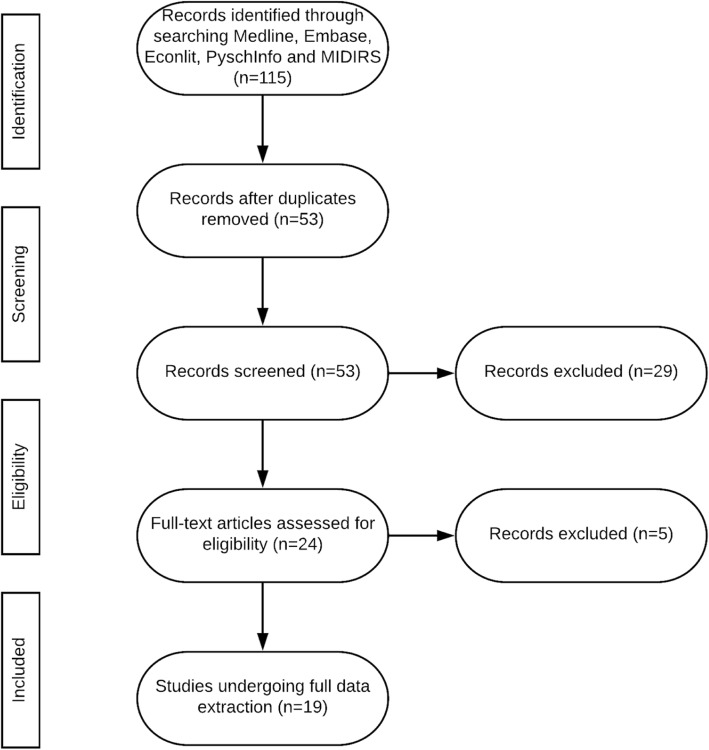
Results: A total of 19 studies using a DCE or BWS to elicit preferences for antenatal (n = 15; 79%) and newborn screening (n = 4; 21%) programmes were identified. Most of the studies were conducted in Europe (n = 12; 63%) but there were some examples from North America (n = 2; 11%) and Australia (n = 2; 11%). Attributes most commonly included were accuracy of screening (n = 15; 79%) and when screening occurred (n = 13; 68%). Other commonly occurring attributes included information content (n = 11; 58%) and risk of miscarriage (n = 10; 53%). Pregnant women (n = 11; 58%) and healthcare professionals (n = 11; 58%) were the most common study samples. Ten studies (53%) compared preferences across different respondents. Two studies (11%) made comparisons between countries. The most popular analytical model was a standard conditional logit model (n = 11; 58%) and one study investigated preference heterogeneity with latent class analysis.
Conclusion: There is an existing literature identifying stated preferences for antenatal and newborn screening but the incorporation of more sophisticated design and analytical methods to investigate preference heterogeneity could extend the relevance of the findings to inform commissioning of new screening programmes.
Keywords: Antenatal; Best-worst scaling; Discrete choice experiment; Newborn; Preferences; Screening; Systematic review.
Conflict of interest statement
Ethics approval and consent to participate
Not applicable.
Consent for publication
Not applicable.
Competing interests
The authors have no competing interests to declare.
Publisher’s Note
Springer Nature remains neutral with regard to jurisdictional claims in published maps and institutional affiliations.
References
-
- Public Health England. Antenatal and newborn screening: introduction [internet]. 2017 [cited 2018 Jan 9]. Available from: https://assets.publishing.service.gov.uk/government/uploads/system/uploa....
Publication types
MeSH terms
Grants and funding
LinkOut - more resources
Full Text Sources
Medical
