. 2019 Apr 16;9(1):6150.
doi: 10.1038/s41598-019-42602-2.

Advances in the role of HCV nonstructural protein 5a (NS5A) of 3a genotype in inducing insulin resistance by possible phosphorylation of AKT/PKB

Affiliations

Advances in the role of HCV nonstructural protein 5a (NS5A) of 3a genotype in inducing insulin resistance by possible phosphorylation of AKT/PKB

Faiza Shams et al. Sci Rep. .

Abstract

HCV genes interfere with host cellular genes and play crucial role in pathogenesis. The mechanism under which HCV genes induce insulin resistance is not much clear. This study is aimed to examine the role of HCV NS5A in inducing insulin resistance by examining its affect in the phosphorylation level of AKT/PKB. In the present study, HepG2 cells were transfected with HCV NS5A and after 24 hours of transfection, protein was extracted from cells that were pre induced with insulin at three different time intervals i.e. 1hour, 2 hours and 3hours. Dot Blot analysis was performed to study the phosphorylation level of AKT. Results showed that there is clear upregulation of serine 473 phosphorylation level of AKT in NS5A transfected cells as compared with control (without NS5A). In conclusion, upregulation of serine 473 phosphorylation by NS5A of HCV genotype 3a suggests that this gene impairs the normal insulin AKT/PKB signaling pathway that leads towards insulin resistance and Type 2 diabetes mellitus. Therefore, HCV non-structural protein NS5A should be considered as promising candidate to be studied in detail for HCV induced insulin resistance and should be regarded as a therapeutically important target for the prevention of chronic liver diseases.


Conflict of interest statement

The authors declare no competing interests.

Figures
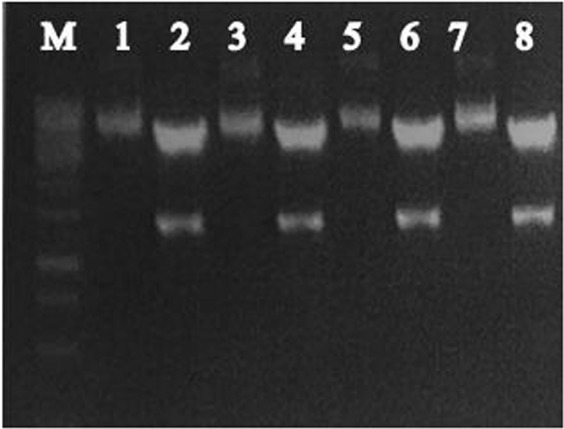
Figure 1
Figure 1
Confirmation of pcDNA 3.1/NS5A HCV construct by Restriction digestion. The pcDNA 3.1/NS5A HCV construct was double digested with BamHI and NotIwhich gives the exact product of 1356 bp and 5.4 kb and analyzed on 1% agarose gel. Lane M: 1 kb DNA ladder; Lane 1,3, 5, 7: undigested pcDNA 3.1/NS5A HCV construct; lane 2, 4, 6, 8: double digested NS5A product of 1356 bp.
Figure 2
Figure 2
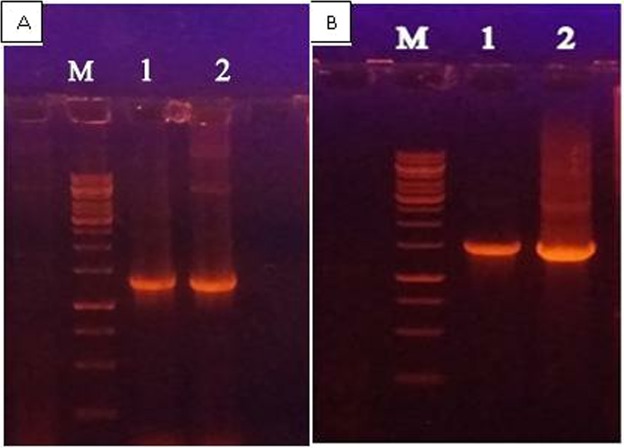
(A) Confirmation of pcDNA 3.1/NS5A HCV construct by PCR amplification using gene specific primers of NS5A of HCV 3a on 1.2% agarose gel. Lane M: 1 kb DNA ladder, Lane 1–2: NS5A gene of 1356 bp. (B) Confirmation of pcDNA 3.1/NS5A HCV construct by PCR amplification of NS5A genes using vector specific primers (T7 and BGH) on 1.2% agarose gel. Lane M: 1 kb DNA Marker, Lane 1–2: NS5Aof ~1356 Kb.
Figure 3
Figure 3
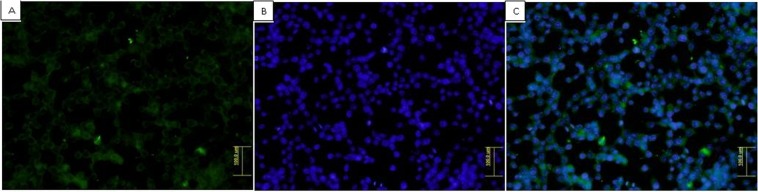
Immunofluoresence assay. (A) Staining with FITC. (B) Counter staining with DAPI&. (C) Merged. Transfected HepG2 cells were grown on cover slip at 37 °C. After 24 hours cells were fixed with 4% ice cold PFA, followed by blocking with 5% BSA and then incubation with primary antibody against HCV NS5A. Secondary antibody conjugated with FITC was used and performed microscopy. The results showed that NS5A protein was localized in the cytoplasm.
Figure 4
Figure 4
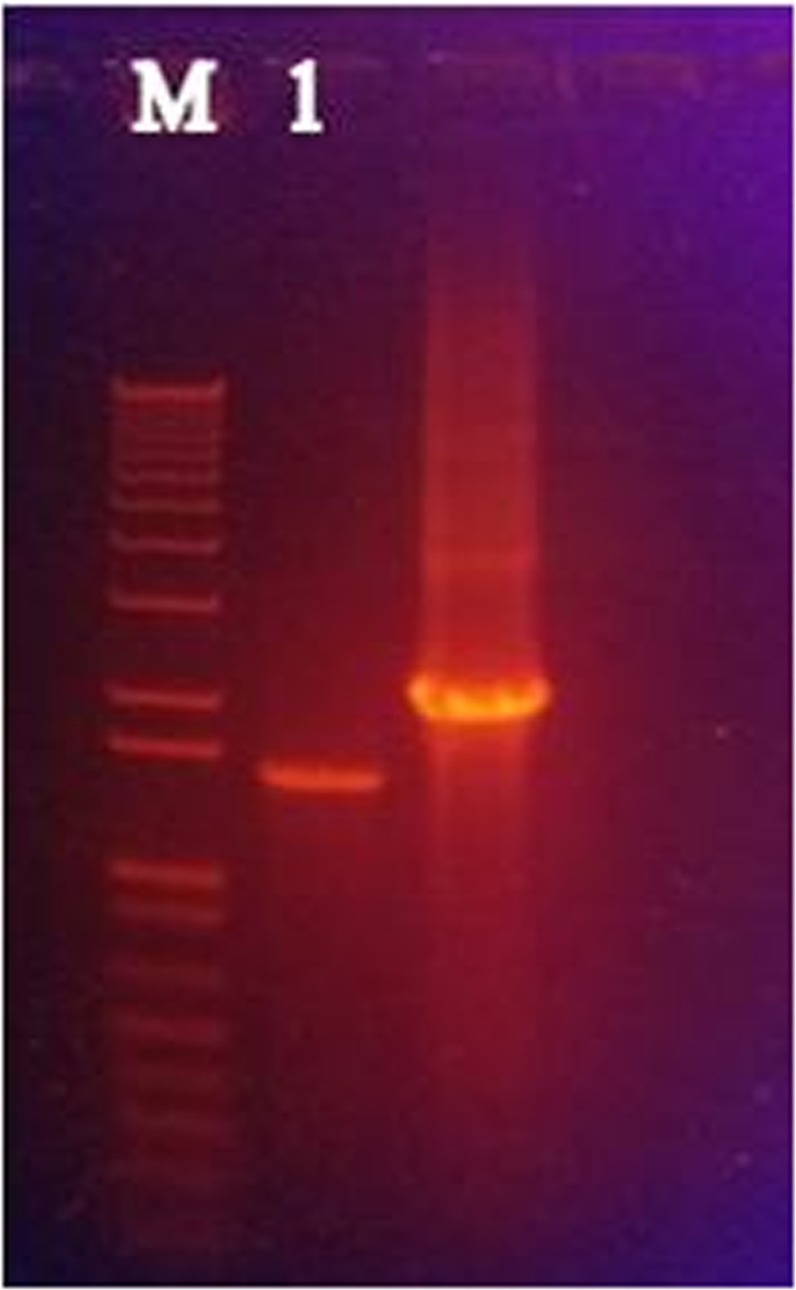
Confirmation of transfection by PCR amplification using gene specific primers. Lane M: 1Kb plus DNA Marker; Lane 1: NS5A of ~1356 bp.
Figure 5
Figure 5
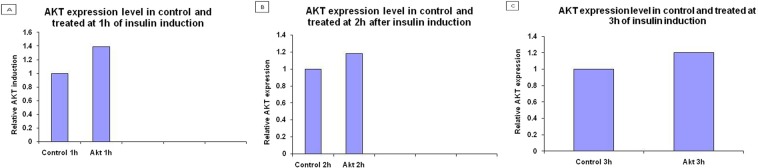
Expression analysis of Akt/PKB gene after 1,2 and 3 hours in figure (AC) respectively of insulin induction in transfected vs. control through Real Time PCR. HepG2 cells were transfected with pcDNA3.1/NS5A HCV construct and allowed to proliferate. Insulin induction was given for 1 hour, 2 hours and 3 hours shown in figure (AC) respectively followed by total cellular RNA extraction and cDNA synthesis after 24hrs post transfection and relative RNA determination was carried out using Real Time PCR. GAPDH was used as internal control.
Figure 6
Figure 6
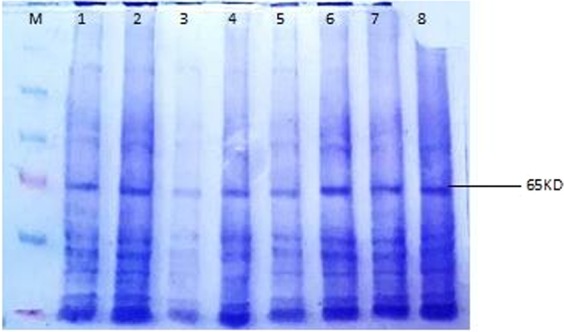
Protein Expression Profiling of NS5A transfected HepG-2 cell line and control by SDS-PAGE (12%) for Detection of Akt/PKB. The expected band of 65 KDa was observed in each of the transfected and control protein sample on the gel. Lane M: Prestained protein marker; Lane 1: Control 1 hour; Lane 2:NS5A transfected 1 hour; Lane 3: Control 2 hour; Lane 4: NS5A transfected 2 hour; Lane 5: Control 3 hours; Lane 6:NS5A transfected 3 hour.
Figure 7
Figure 7
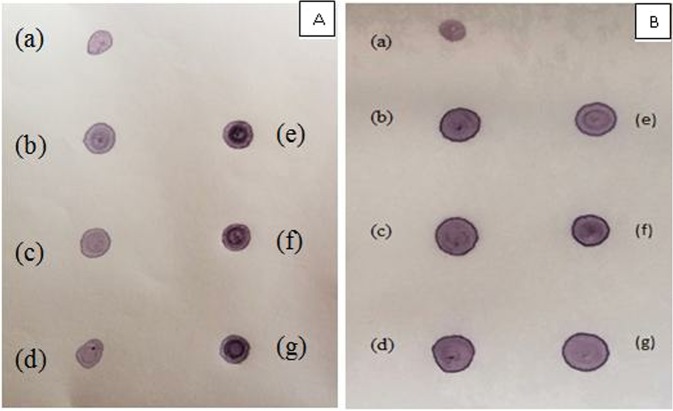
(A) Upregulation of serine 473 of Akt by NS5A gene of HCV genotype 3a at three different time intervals 1 h, 2, 3 h in control vs NS5A transfected. a: -ve control; b: control 3 h; c: control 2 h; d control 1 h; e: NS5A transfected 3 h; f: NS5A transfected 2 h; g: NS5A transfected 1 h. (B) Actin (Internal control) was confirmed in all control and transfected samples by dot bot analysis using specific antibody. a: -ve control; b: control 3 h; c: control 2 h; d: control 1 h; e: NS5A transfected 3 h; f: NS5A transfected 2 h; g: NS5A transfected 1 h.

Similar articles

References

    1. Jeevitha E, Sree KS, Kumar P, Kuchana V, Reddy T. Hepatitis C virus infection and treatment: a mini review. Int J Recent. Sci Res. 2015;6:5933–5937.
    1. Eslam M, Khattab MA, Harrison SA. Insulin resistance and hepatitis C: an evolving story. Gut, gut. 2011;2010:228262. - PubMed
    1. Bugianesi E, McCullough AJ, Marchesini G. Insulin resistance: a metabolic pathway to chronic liver disease. Hepatology. 2005;42:987–1000. doi: 10.1002/hep.20920. - DOI - PubMed
    1. Sheikh MY, Choi J, Qadri I, Friedman JE, Sanyal AJ. Hepatitis C virus infection: molecular pathways to metabolic syndrome. Hepatology. 2008;47:2127–2133. doi: 10.1002/hep.22269. - DOI - PubMed
    1. Hsieh M-J, et al. Hepatitis C virus E2 protein involve in insulin resistance through an impairment of Akt/PKB and GSK3β signaling in hepatocytes. BMC gastroenterology. 2012;12:74. doi: 10.1186/1471-230X-12-74. - DOI - PMC - PubMed

MeSH terms

Substances