


miRNA-210-3p regulates trophoblast proliferation and invasiveness through fibroblast growth factor 1 in selective intrauterine growth restriction
- PMID: 30993882
- PMCID: PMC6533475
- DOI: 10.1111/jcmm.14335
miRNA-210-3p regulates trophoblast proliferation and invasiveness through fibroblast growth factor 1 in selective intrauterine growth restriction
Abstract
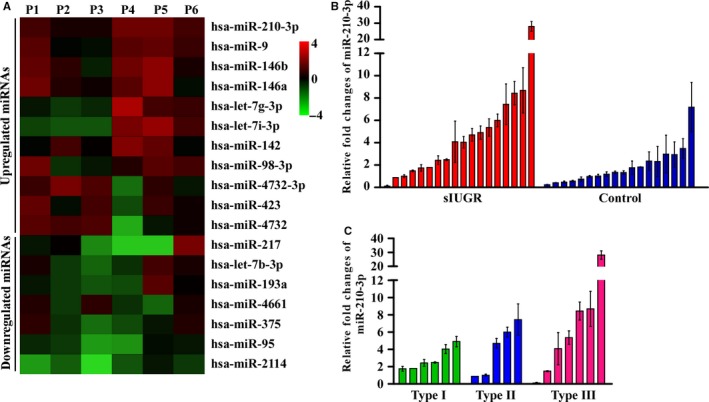
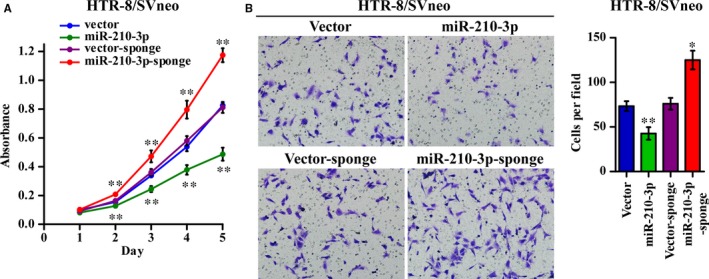
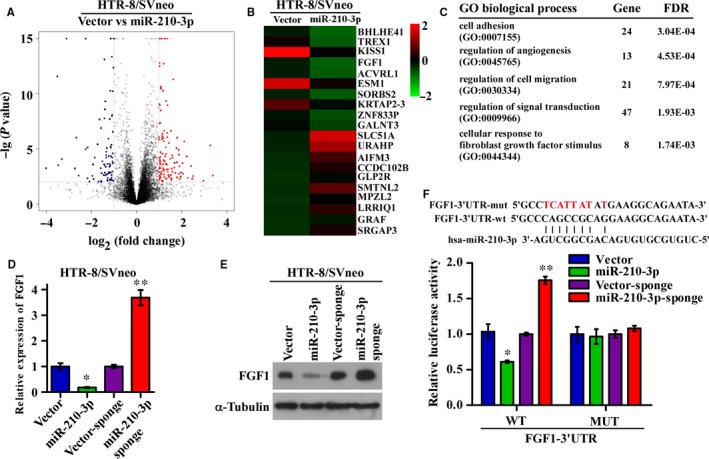
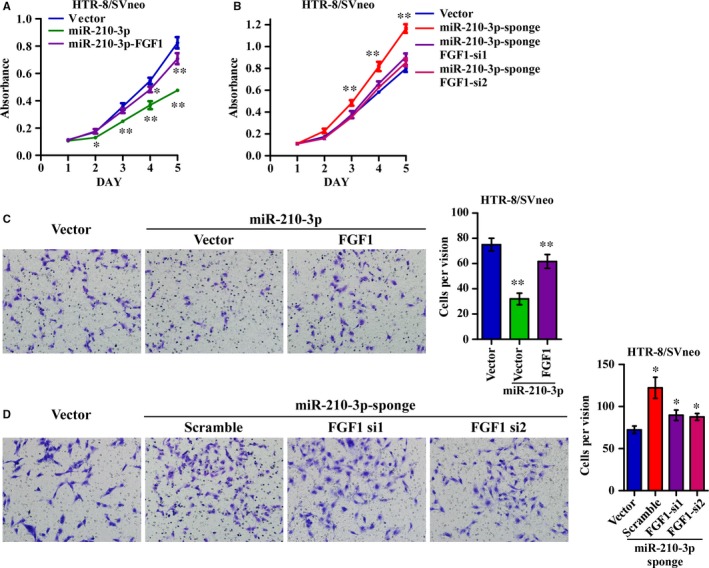
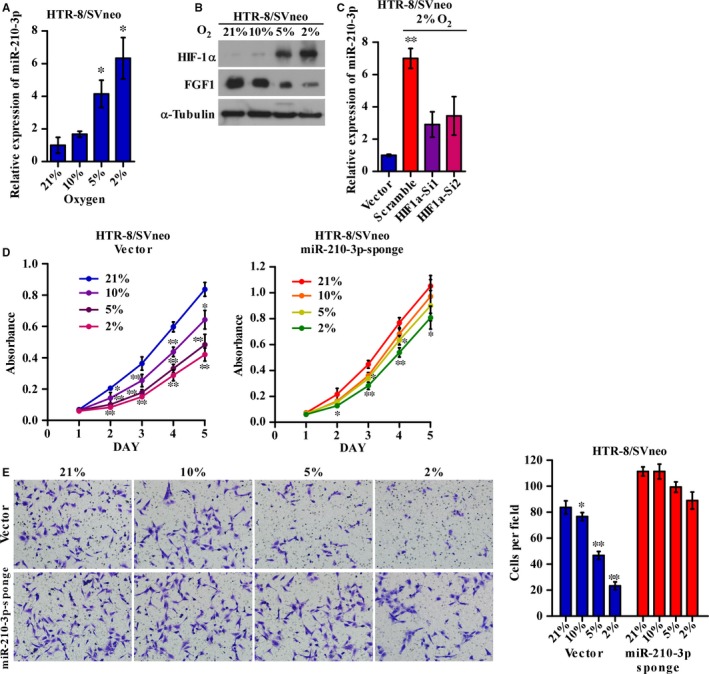
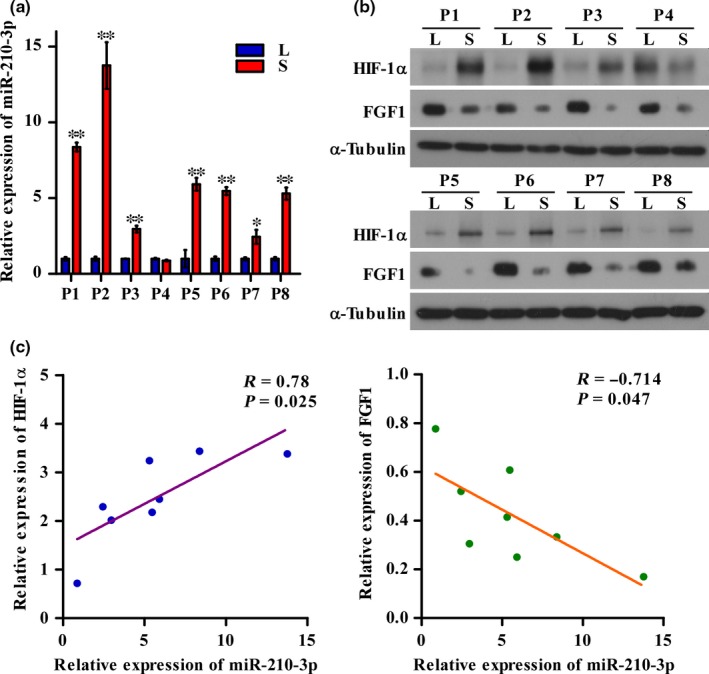
Selective intrauterine growth restriction (sIUGR), which affects approximately 10%-15% of monochorionic (MC) twin pregnancies, is highly associated with intrauterine foetal death and neurological impairment in both twins. Data suggest that unequal sharing of the single placenta is the main contributor to birth weight discordance. While MC twins and their placenta derive from a single zygote and harbour almost identical genetic material, the underlying mechanisms of phenotypic discrepancies in MC twins remain unclear. MicroRNAs are small non-coding RNA molecules that regulate gene expression but do not change the DNA sequence. Our preliminary study showed that microRNA-210-3p (miR-210-3p) was significantly upregulated in the placental share of the smaller sIUGR twin. Here, we investigate the potential role of miR-210-3p in placental dysplasia, which generally results from dysfunction of trophoblast cells. Functional analysis revealed that miR-210-3p, induced by hypoxia-inducible factor 1α (HIF1α) under hypoxic conditions, suppressed the proliferation and invasiveness of trophoblast cell lines. Further RNA sequencing analysis and luciferase reporter assays were performed, revealing that fibroblast growth factor 1 (FGF1) is an influential target gene of miR-210-3p. Moreover, correlations among miR-210-3p levels, HIF1α and FGF1 expression and the smaller placental share were validated in sIUGR specimens. These findings suggest that upregulation of miR-210-3p may contribute to impaired placentation of the smaller twin by decreasing FGF1 expression in sIUGR.
Keywords: fibroblast growth factor 1; miRNA-210-3p; monochorionic twins; selective intrauterine growth restriction; trophoblast.
© 2019 The Authors. Journal of Cellular and Molecular Medicine published by John Wiley & Sons Ltd and Foundation for Cellular and Molecular Medicine.
Conflict of interest statement
The authors confirm that there are no conflicts of interest.
Figures
References
-
- Bennasar M, Eixarch E, Martinez JM, Gratacós E. Selective intrauterine growth restriction in monochorionic diamniotic twin pregnancies. Semin Fetal Neonatal Med. 2017;22:376‐382. - PubMed
-
- Emery SP, Bahtiyar MO, Moise KJ. The North American Fetal Therapy Network consensus statement: management of complicated monochorionic gestations. Obstet Gynecol. 2015;126:575‐584. - PubMed
-
- Gratacós E, Carreras E, Becker J, et al. Prevalence of neurological damage in monochorionic twins with selective intrauterine growth restriction and intermittent absent or reversed end‐diastolic umbilical artery flow. Ultrasound Obstet Gynecol. 2004;24:159‐163. - PubMed
-
- Lewi L, Gucciardo L, Huber A, et al. Clinical outcome and placental characteristics of monochorionic diamniotic twin pairs with early‐ and late‐onset discordant growth. Am J Obstet Gynecol. 2008;199):511.e1‐511.e7. - PubMed
Publication types
MeSH terms
Substances
LinkOut - more resources
Full Text Sources
