


IgG4-related disease: Association with a rare gene variant expressed in cytotoxic T cells
- PMID: 30993913
- PMCID: PMC6565556
- DOI: 10.1002/mgg3.686
IgG4-related disease: Association with a rare gene variant expressed in cytotoxic T cells
Abstract
Background: Family screening of a 48-year-old male with recently diagnosed IgG4-related disease (IgG4-RD) revealed unanticipated elevations in plasma IgG4 in his two healthy teenaged sons.
Methods: We performed gene sequencing, immune cell studies, HLA typing, and analyses of circulating cytotoxic CD4+ T lymphocytes and plasmablasts to seek clues to pathogenesis. DNA from a separate cohort of 99 patients with known IgG4-RD was also sequenced for the presence of genetic variants in a specific gene, FGFBP2.
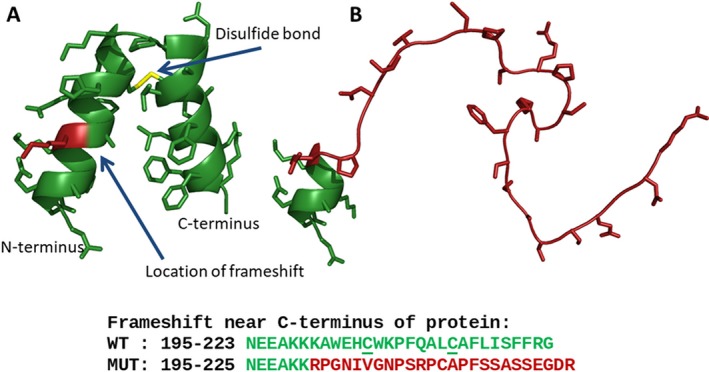
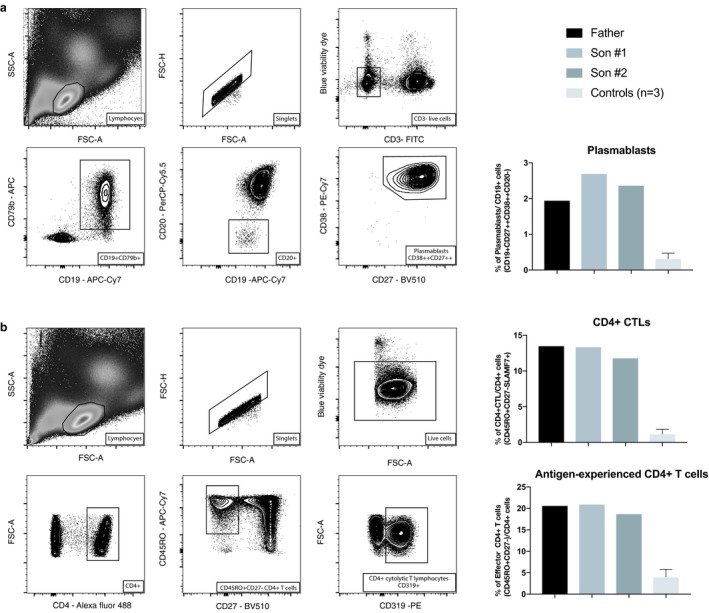
Results: The three share a previously unreported heterozygous single base deletion in fibroblast growth factor binding protein type 2 (FGFBP2), which causes a frameshift in the coding sequence. The FGFBP2 protein is secreted by cytotoxic T-lymphocytes and binds fibroblast growth factor. The variant sequence in the FGFBP2 protein is predicted to form a disordered random coil rather than a helical-turn-helix structure, unable to adopt a stable conformation. The proband and the two sons had 5-10-fold higher numbers of circulating cytotoxic CD4 + T cells and plasmablasts compared to matched controls. The three members also share a homozygous missense common variant in FGFBP2 found in heterozygous form in ~40% of the population. This common variant was found in 73% of an independent, well characterized IgG4-RD cohort, showing enrichment in idiopathic IgG4-RD.
Conclusions: The presence of a shared deleterious variant and homozygous common variant in FGFBP2 in the proband and sons strongly implicates this cytotoxic T cell product in the pathophysiology of IgG4-RD. The high prevalence of a common FGFBP2 variant in sporadic IgG4-RD supports the likelihood of participation in disease.
Keywords: IgG4-RD; cytotoxic lymphocytes; heritable.
© 2019 The Authors. Molecular Genetics & Genomic Medicine published by Wiley Periodicals, Inc.
Conflict of interest statement
None declared.
Figures
References
Publication types
MeSH terms
Substances
Grants and funding
LinkOut - more resources
Full Text Sources
Medical
Research Materials
Miscellaneous
