


Potential role of MRN-100, an iron-based compound, in upregulating production of cytokine IL-10 in human dendritic cells to promote an anti-inflammatory response in vitro
- PMID: 30994016
- PMCID: PMC6472165
- DOI: 10.1177/2058738419844932
Potential role of MRN-100, an iron-based compound, in upregulating production of cytokine IL-10 in human dendritic cells to promote an anti-inflammatory response in vitro
Abstract
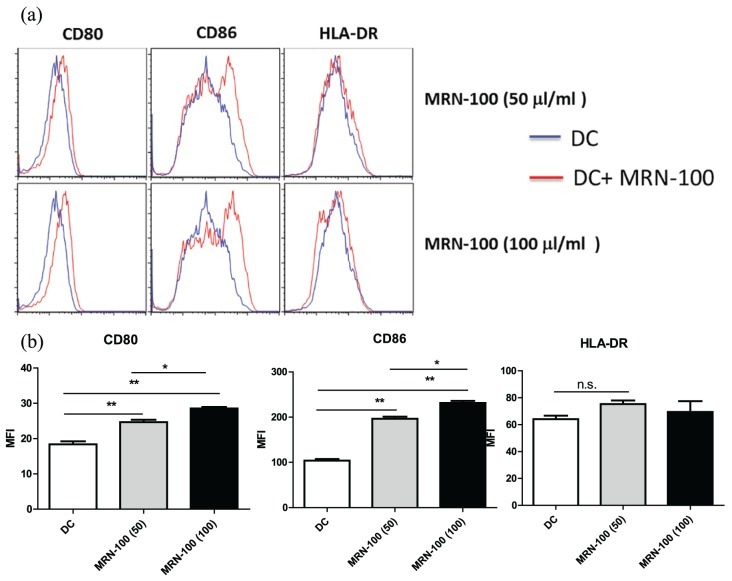
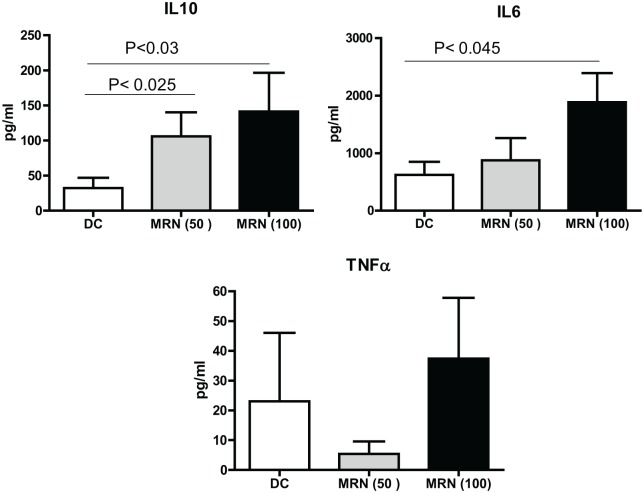
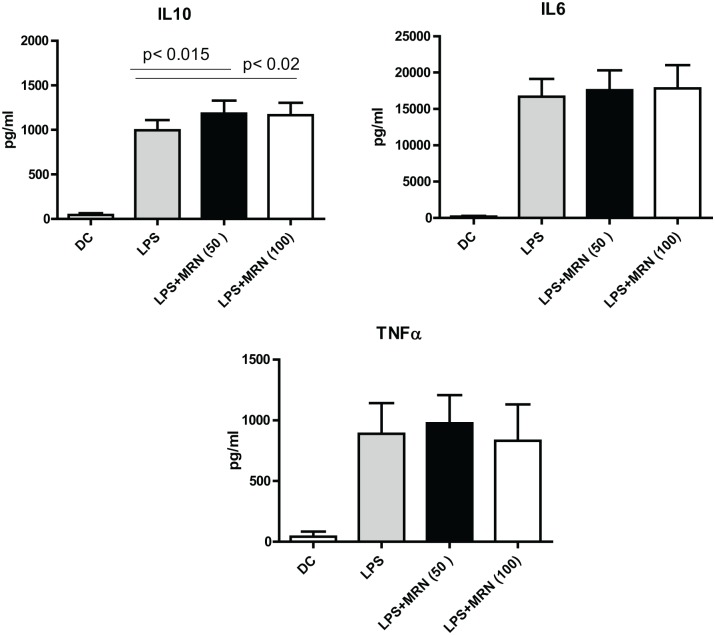
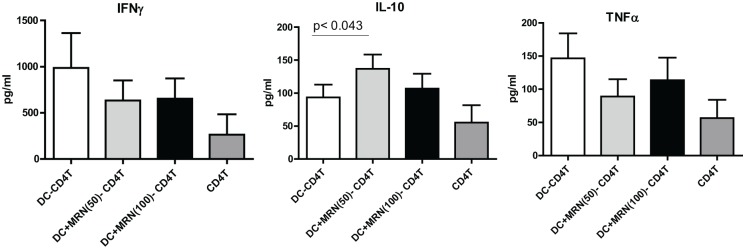
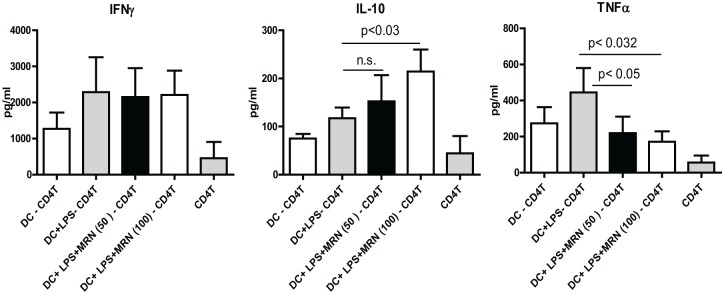
The hydroferrate fluid MRN-100, an iron-based compound with potent antioxidant characteristics, was examined to identify its possible anti-inflammatory effects on human dendritic cells (DCs) in vitro. Human monocyte-derived DCs were treated with MRN-100 at two concentrations (50 and 100 μL/mL) for 24 h and then stimulated with or without lipopolysaccharides (LPS). The expression of DC maturation markers was assessed by flow cytometry and the production of cytokines was determined by enzyme-linked immunosorbent assay (ELISA). Functional assay was performed by co-culturing MRN-100-treated and untreated DCs with allogeneic naïve CD4+ T cells and assaying the T cells' cytokine production. Results show that treatment with MRN-100 significantly upregulated the co-stimulatory molecules CD80 and CD86 and increased human leukocyte antigen-DR (HLA-DR) though not significantly. MRN-100 treatment also significantly increased the production of the anti-inflammatory cytokine interleukin (IL)-10. On the other hand, MRN-100 significantly induced the secretion of pro-inflammatory cytokines such as IL-6 only at high concentrations. Furthermore, DCs pretreated with MRN-100 and either stimulated or not with LPS were able to prime CD4+ T cells to secrete significant amounts of IL-10 while inhibiting the secretion of pro-inflammatory cytokine tumor necrosis factor (TNF)-α. These results indicate that MRN-100 is a powerful anti-inflammatory agent that promotes the generation of an anti-inflammatory immune response in vitro. MRN-100 could be beneficial for treating patients with inflammatory diseases, including arthritis and type 1 diabetes, and its potential benefits should be examined in clinical trials.
Keywords: CD4+ T cells; MRN-100; anti-inflammatory; dendritic cells; hydroferrate fluid.
Conflict of interest statement
Figures
References
-
- Cross M, Smith E, Hoy D, et al. (2014) The global burden of rheumatoid arthritis: Estimates from the Global Burden of Disease 2010 study. Annals of the Rheumatic Diseases 73(7): 1316–1322. - PubMed
-
- Molodecky NA, Soon IS, Rabi DM, et al. (2012) Increasing incidence and prevalence of the inflammatory bowel diseases with time, based on systematic review. Gastroenterology 142: 46–54.e42; quiz e30. - PubMed
-
- Guariguata L. Estimating the worldwide burden of type 1 diabetes. Available at: https://www.idf.org/component/attachments/attachments.html?id=275&task=d... (accessed 16 March 2019).
-
- Furfaro F, Fiorino G, Allocca M, et al. (2016) Emerging therapeutic targets and strategies in Crohn’s disease. Expert Review of Gastroenterology & Hepatology 10(6): 735–744. - PubMed
-
- Singh JA, Saag KG, Bridges SL, Jr, et al. (2016) 2015. American College of Rheumatology guideline for the treatment of rheumatoid arthritis. Arthritis & Rheumatology 68(1): 1–25. - PubMed
MeSH terms
Substances
LinkOut - more resources
Full Text Sources
Other Literature Sources
Medical
Research Materials
